(Practical Lesson – Monday, 5 February)
In this experiment you are asked to measure the time taken for a ball to fall from large heights.
Click on the leave a comment link to give details of precautions you took to ensure your results were as accurate as possible.
Try to list down all of the things you did to make sure you got the best results you could.
I am expecting a photo / image / video as well as a few words to explain what you were doing.
Mr Shone
Some photos / videos taken during the session:
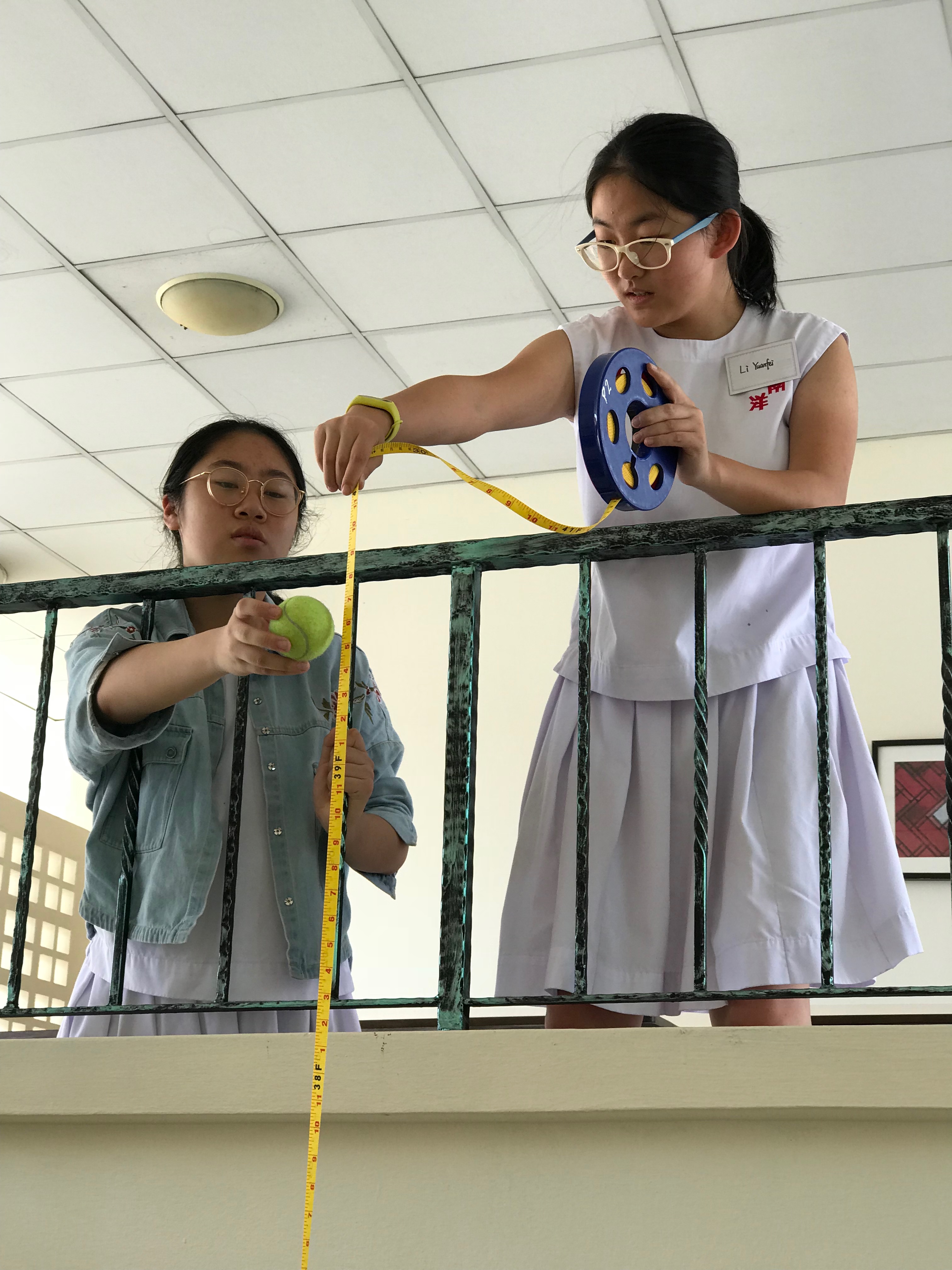
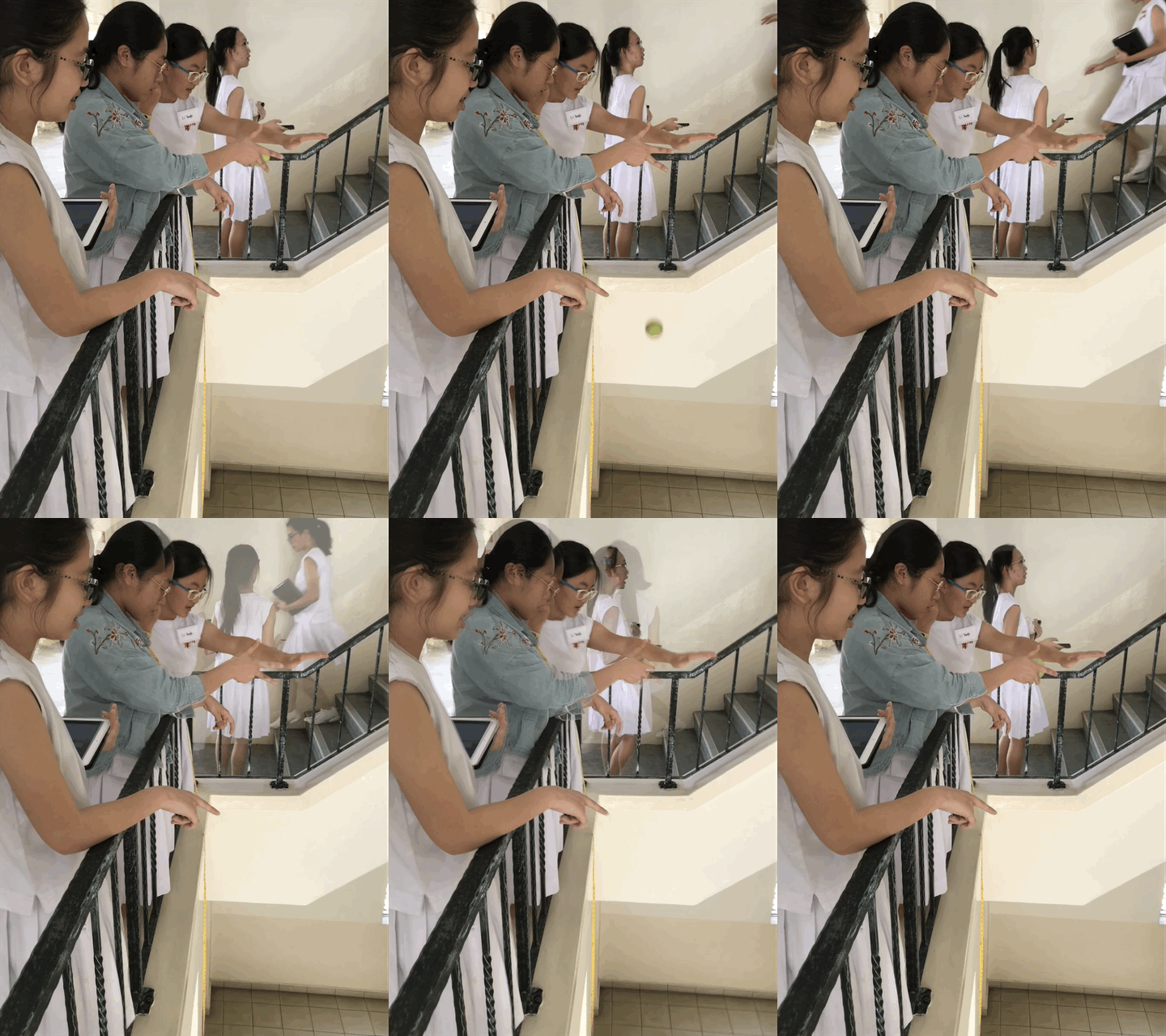
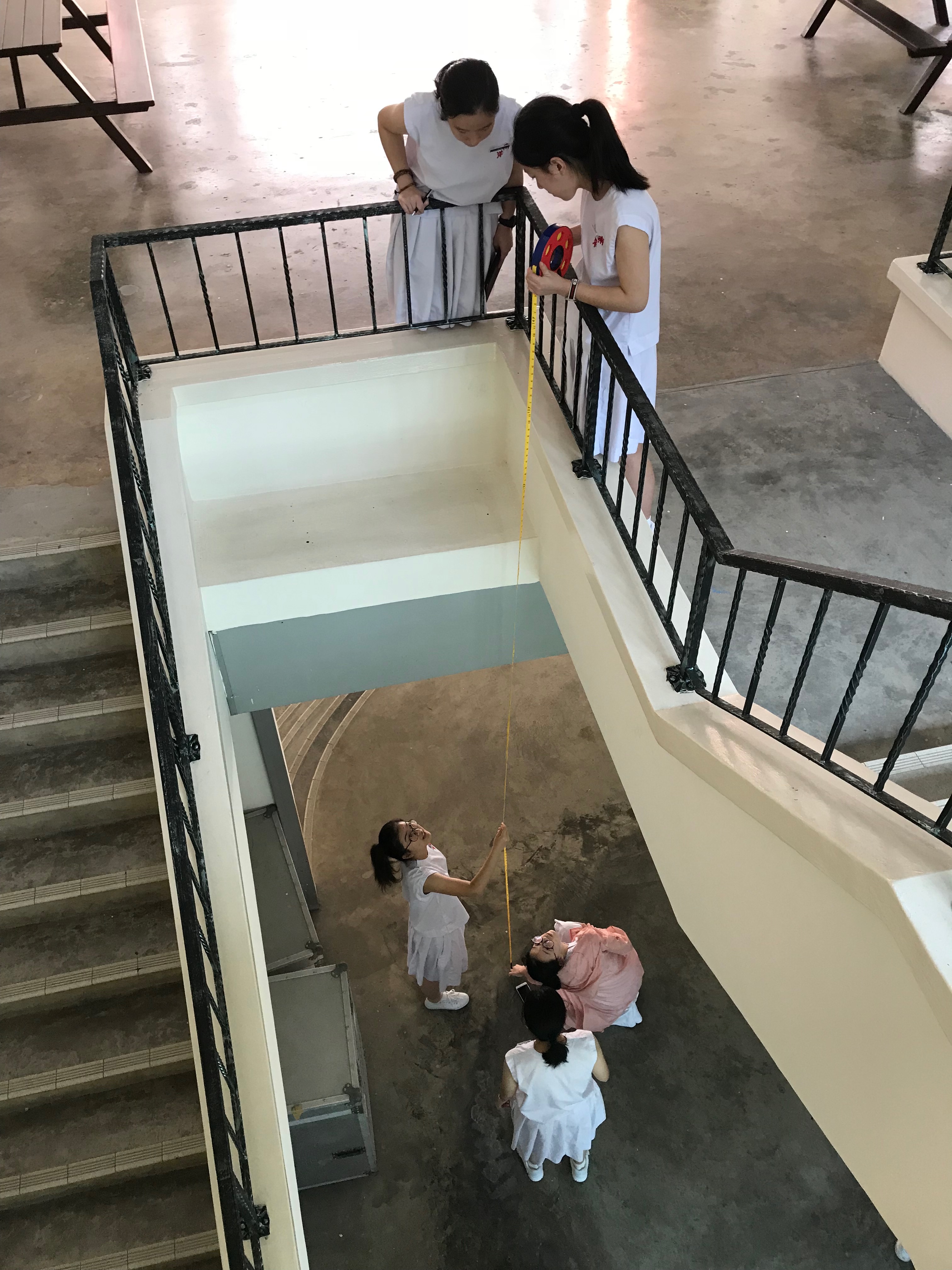
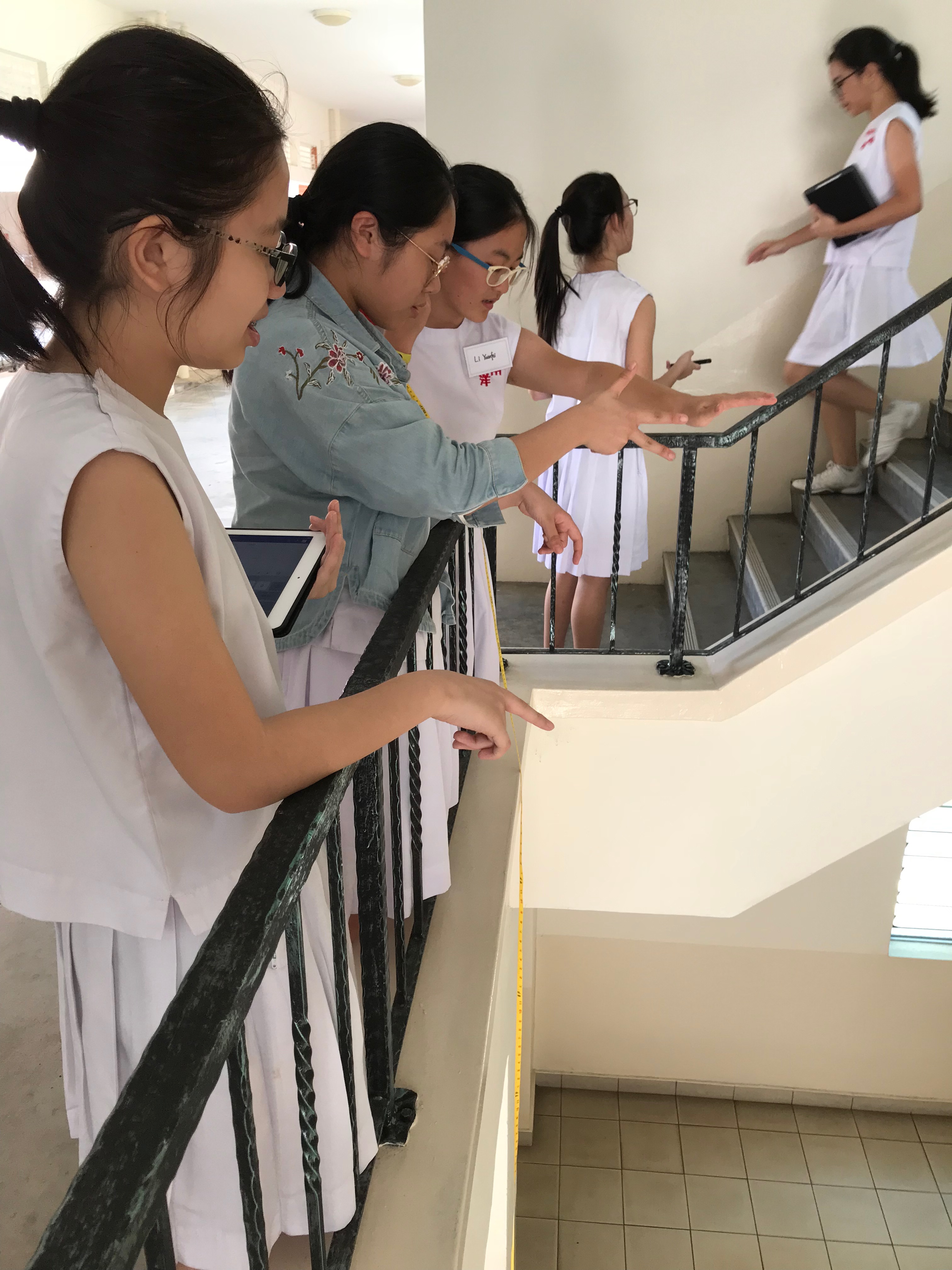
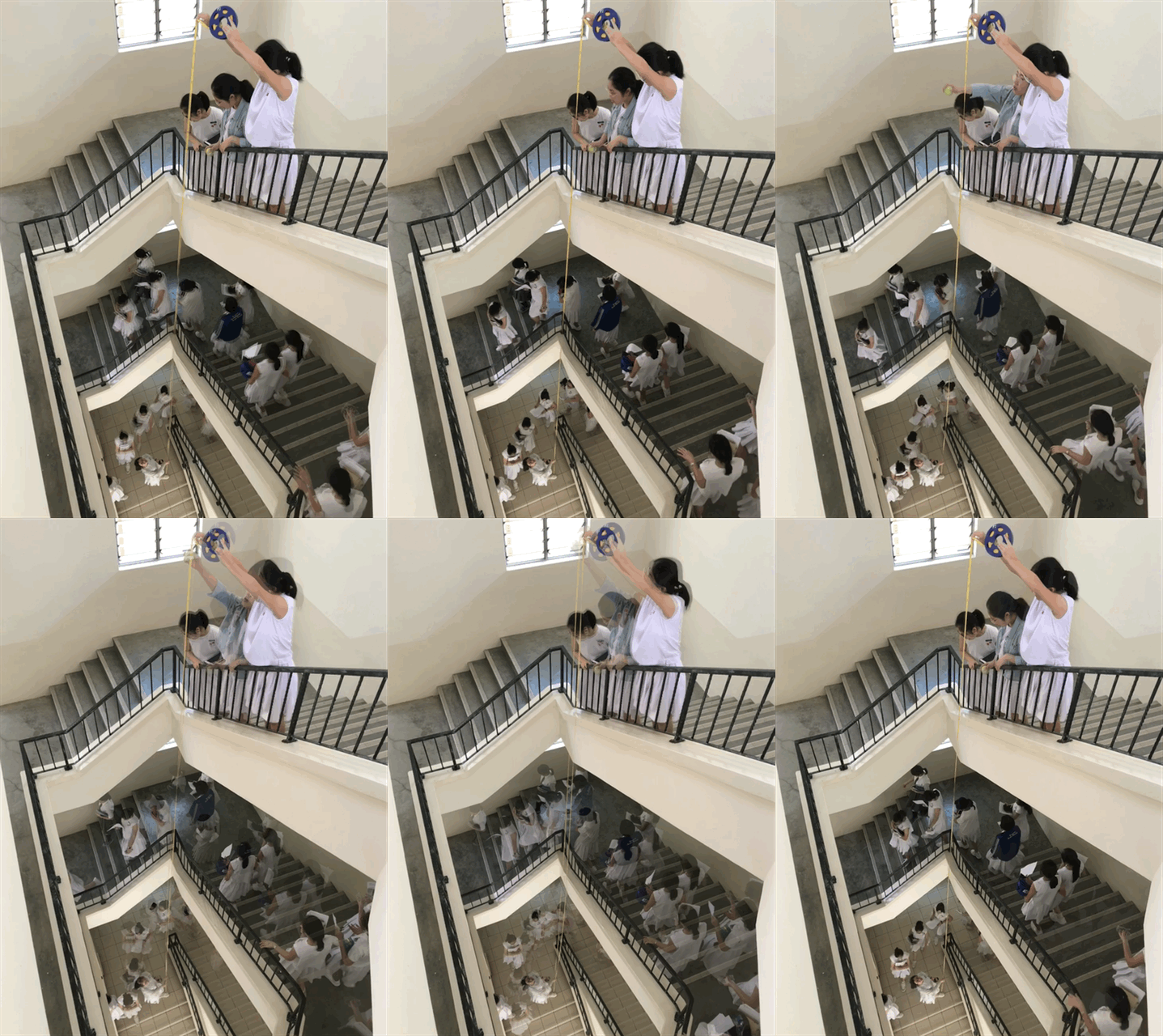
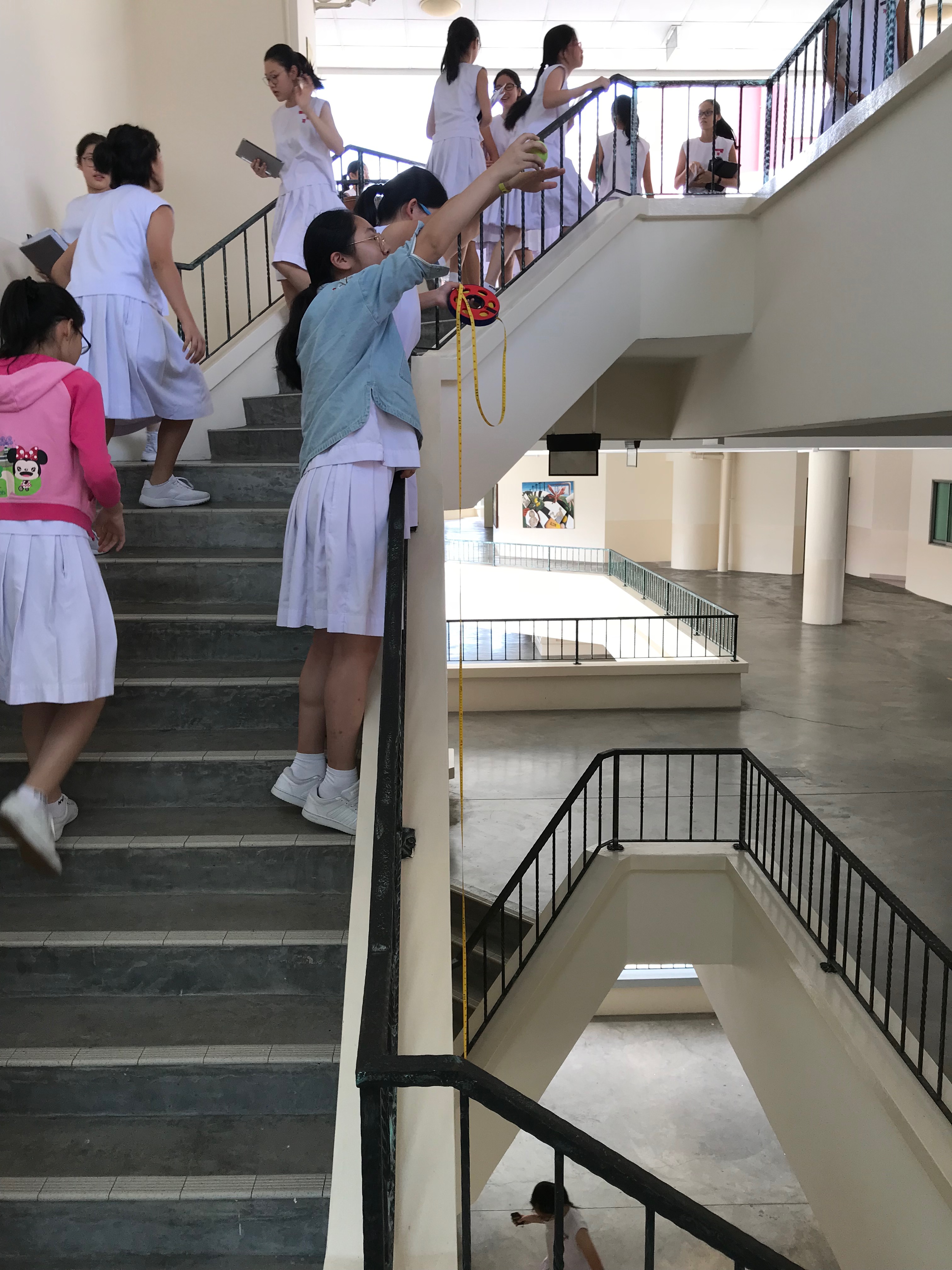
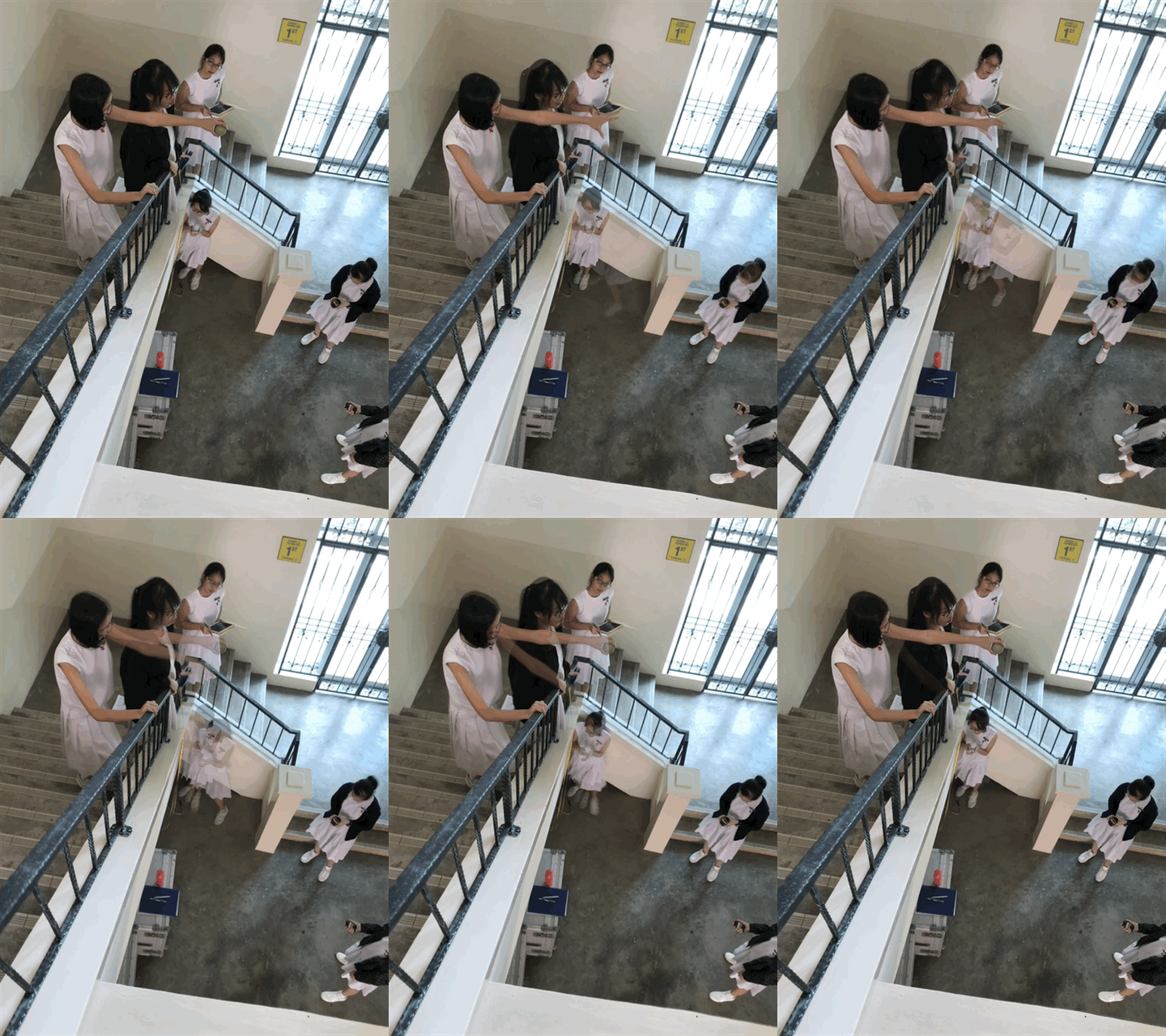
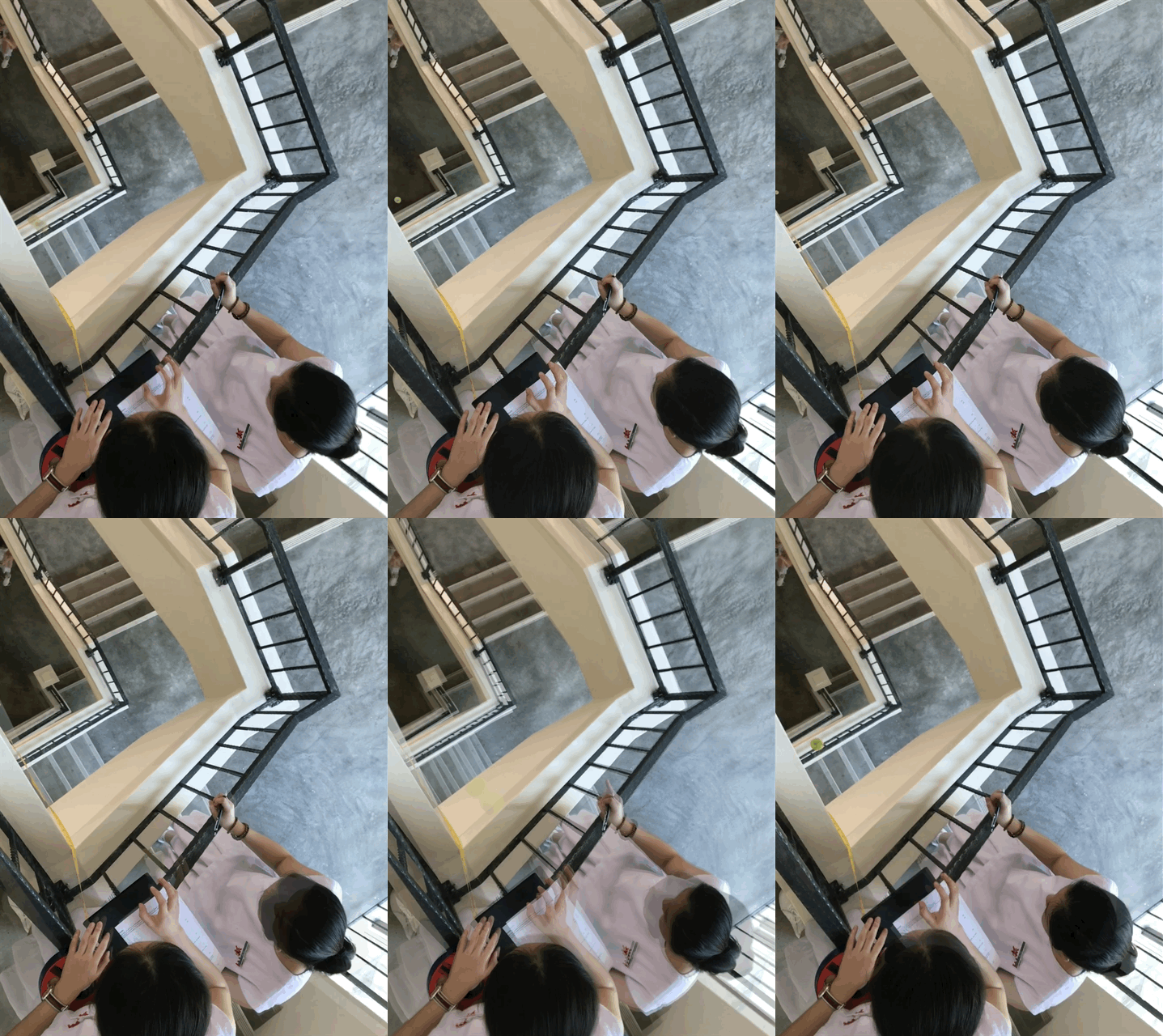
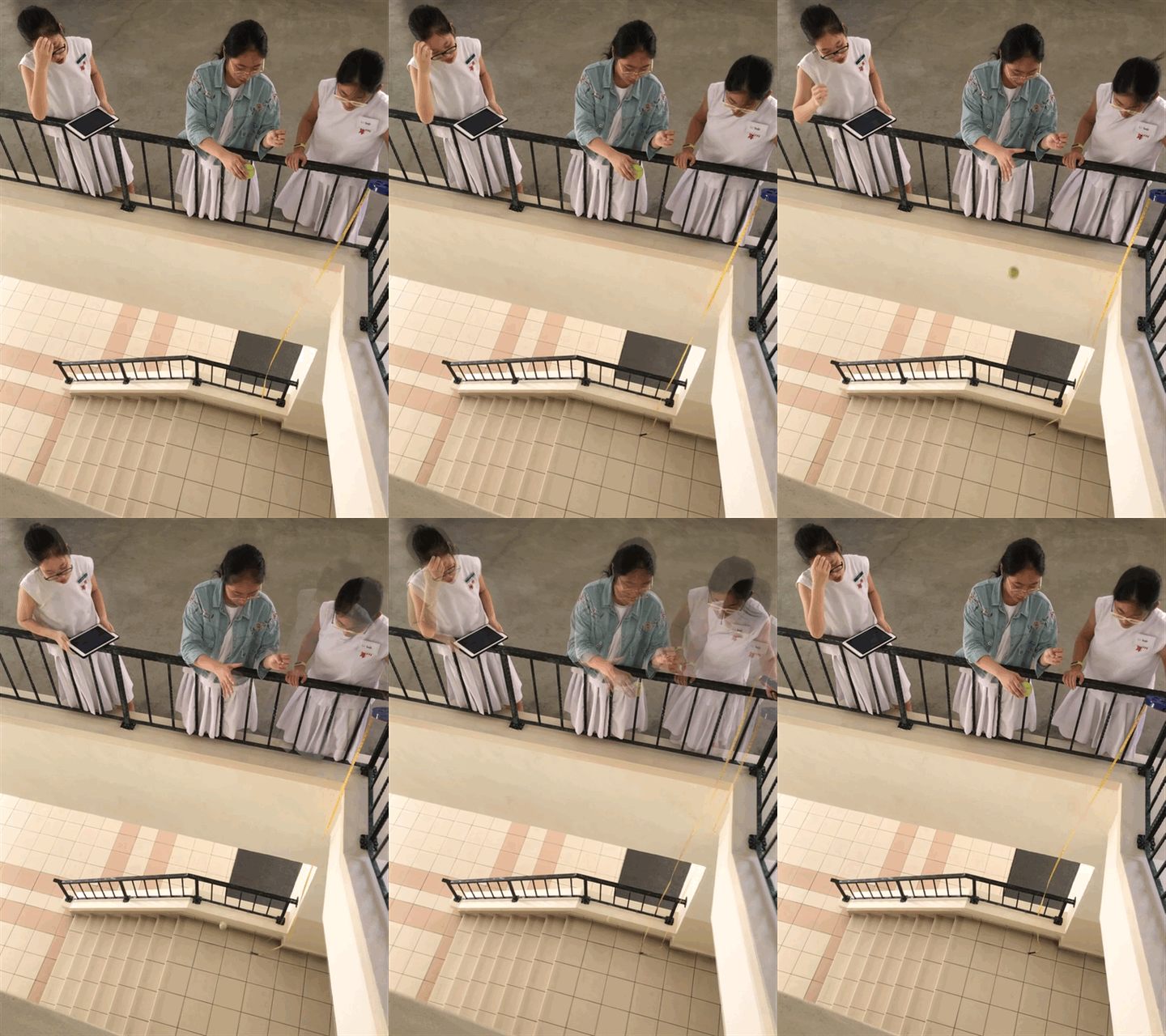
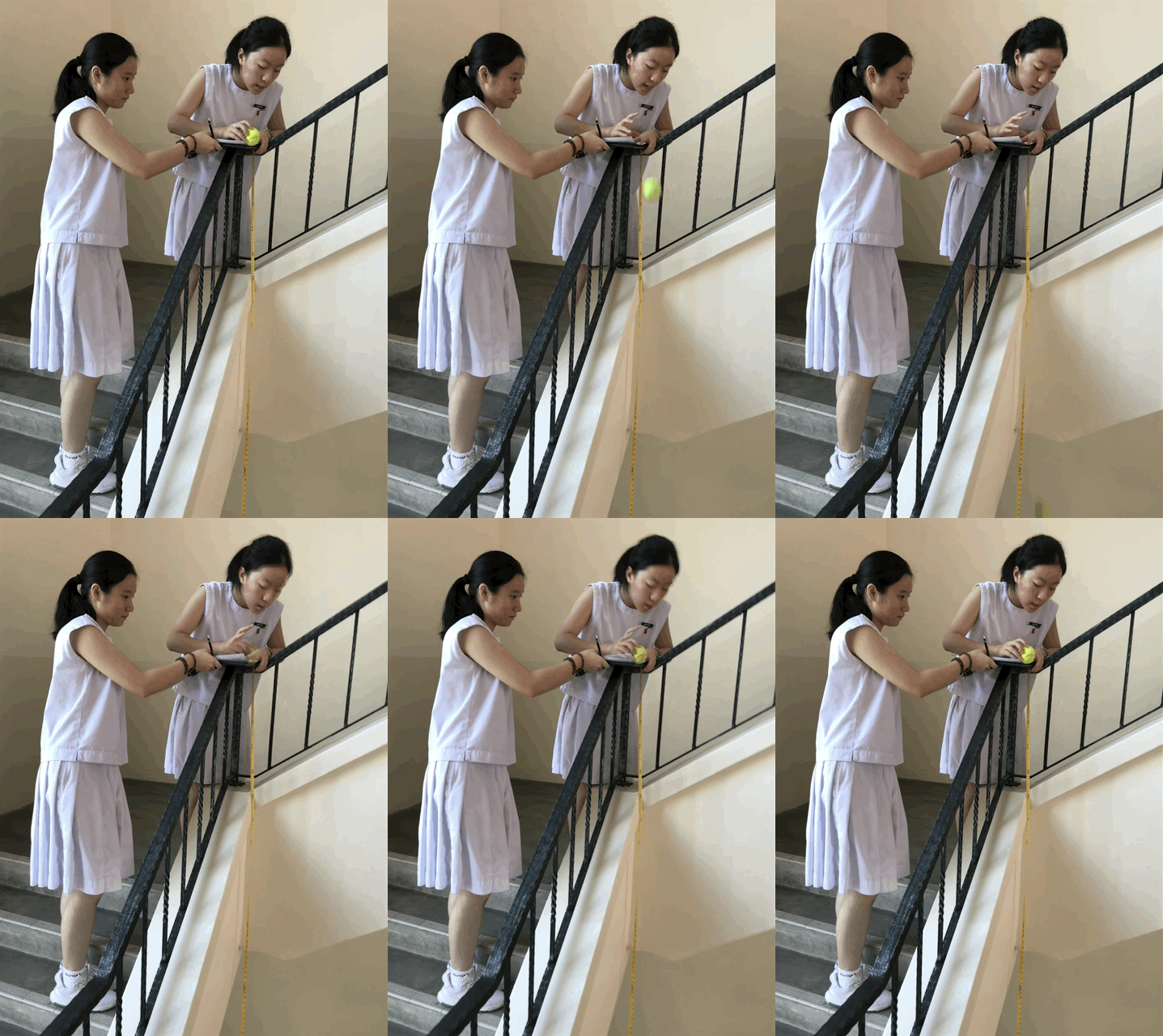
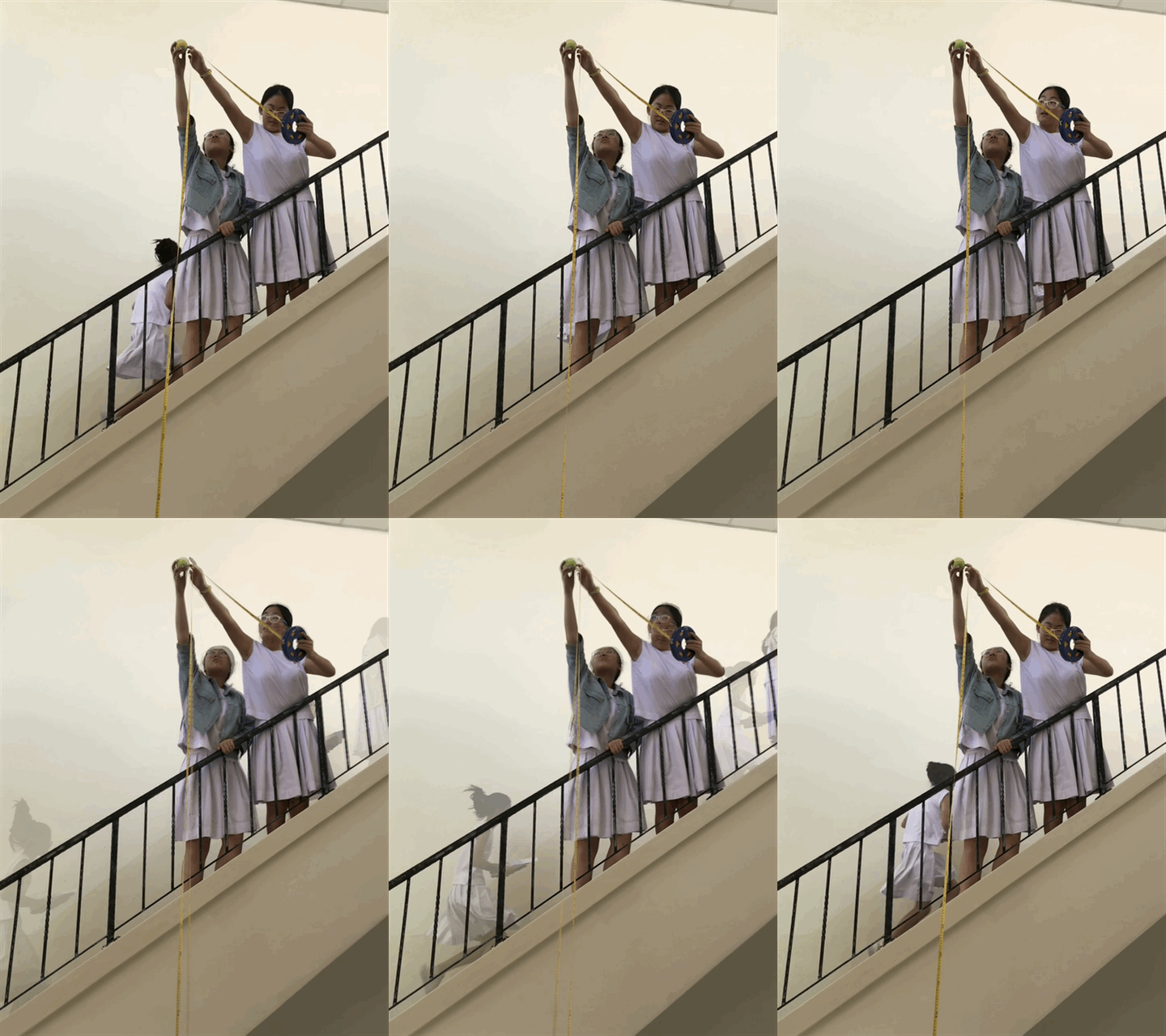
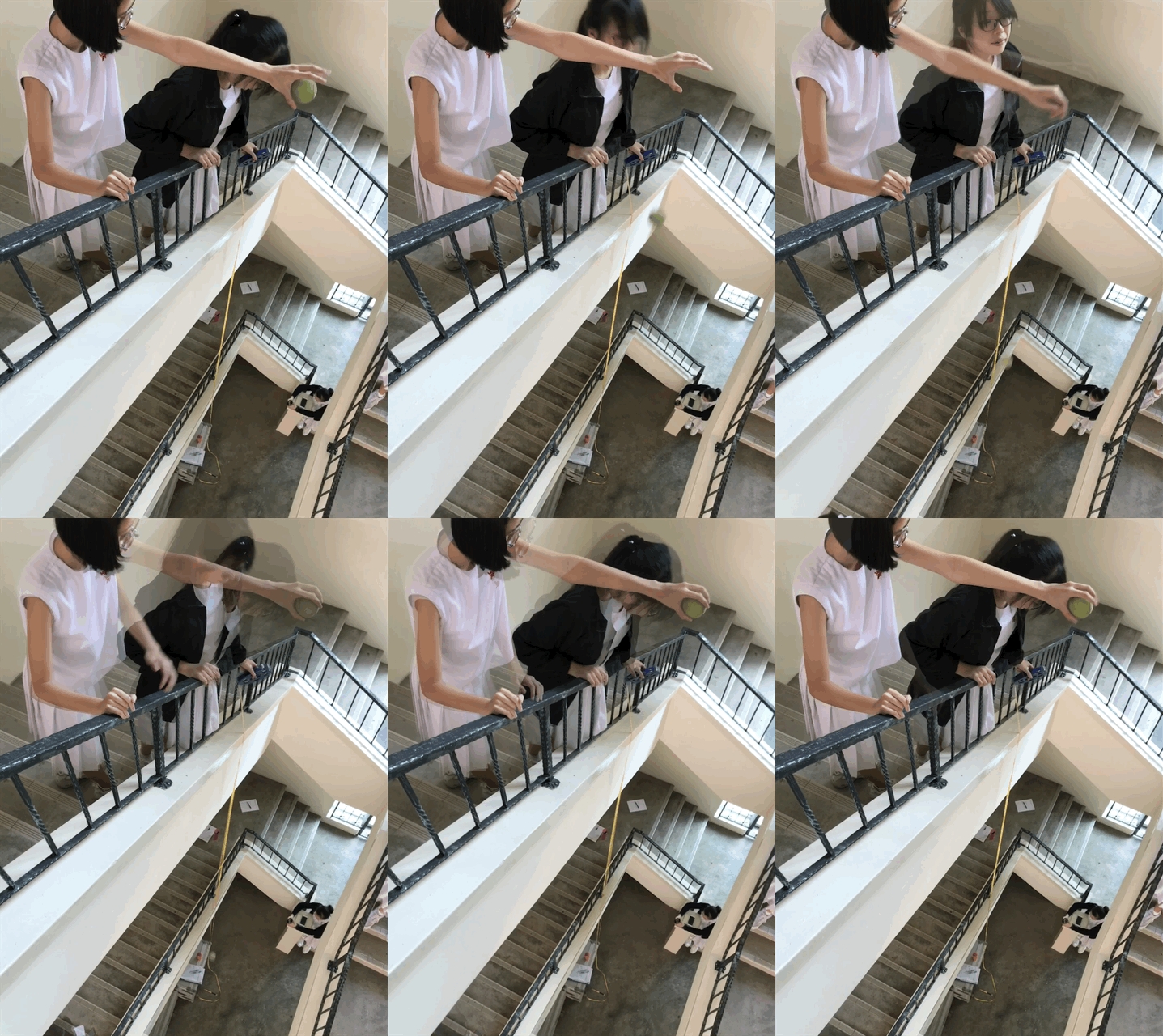
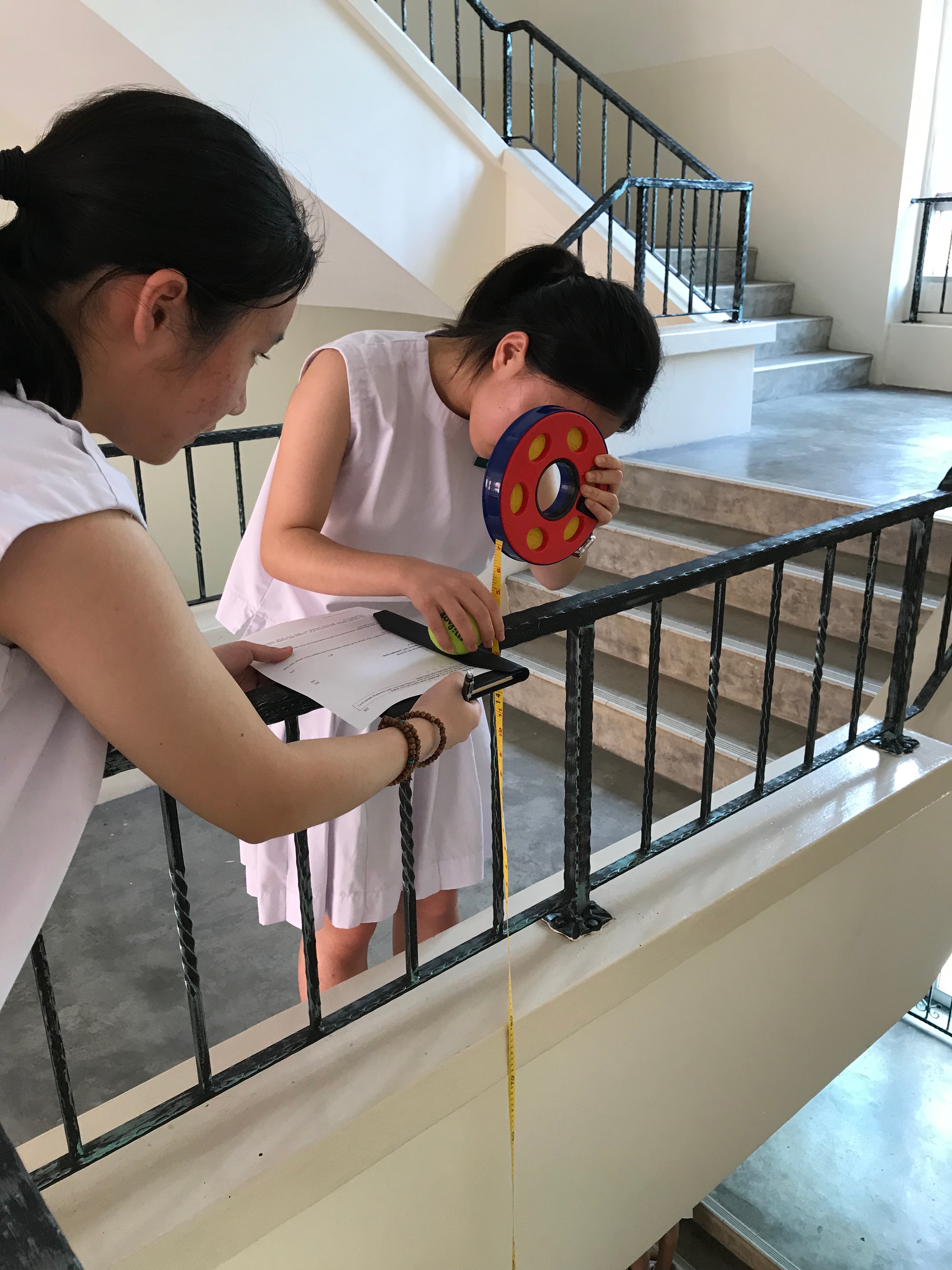
When drawing our graph ,we realize that our data are not so accurate .We think there are some reasons .Firstly,there is wind impeding the ball from falling freely by itself. Secondly ,human judgement does exist . We might not have pressed the stop watch at the exact point when the ball has hit ground.
The timing people: Because timing depends on personal judgement, we had two people to time at one time and we timed twice for a distance. Then, we averaged the four numbers and come up the with the time. It was very hard to time at first as the distance was very small and the time was too short. Then we are the distance larger and managed the measure the time. We pressed the stopwatch as soon as “three, two, one”ended. We pressed the stopwatch again as soon as it hit the ground.
To make sure the measurement of the height from which the ball was dropped is accurate and precise, we met the ruler with the wall to make it perpendicular and dropped the ball on the edge of an i-pad to ensure an 90 degree angle.
However, as the time keeper are downstairs to preserve the time the ball hit the ground, they couldn’t see clearly when the ball begins to drop. Thus the person drop the ball has to shout as she drop it. As a result there is difference in the time she shout out and drop the ball, there is also difference in time between the second she shouted out and the time keeper start the stopwatch.
To save time, we only measured each height once which means we have a larger random error.