(ADVANCED PHYSICS TOPIC)
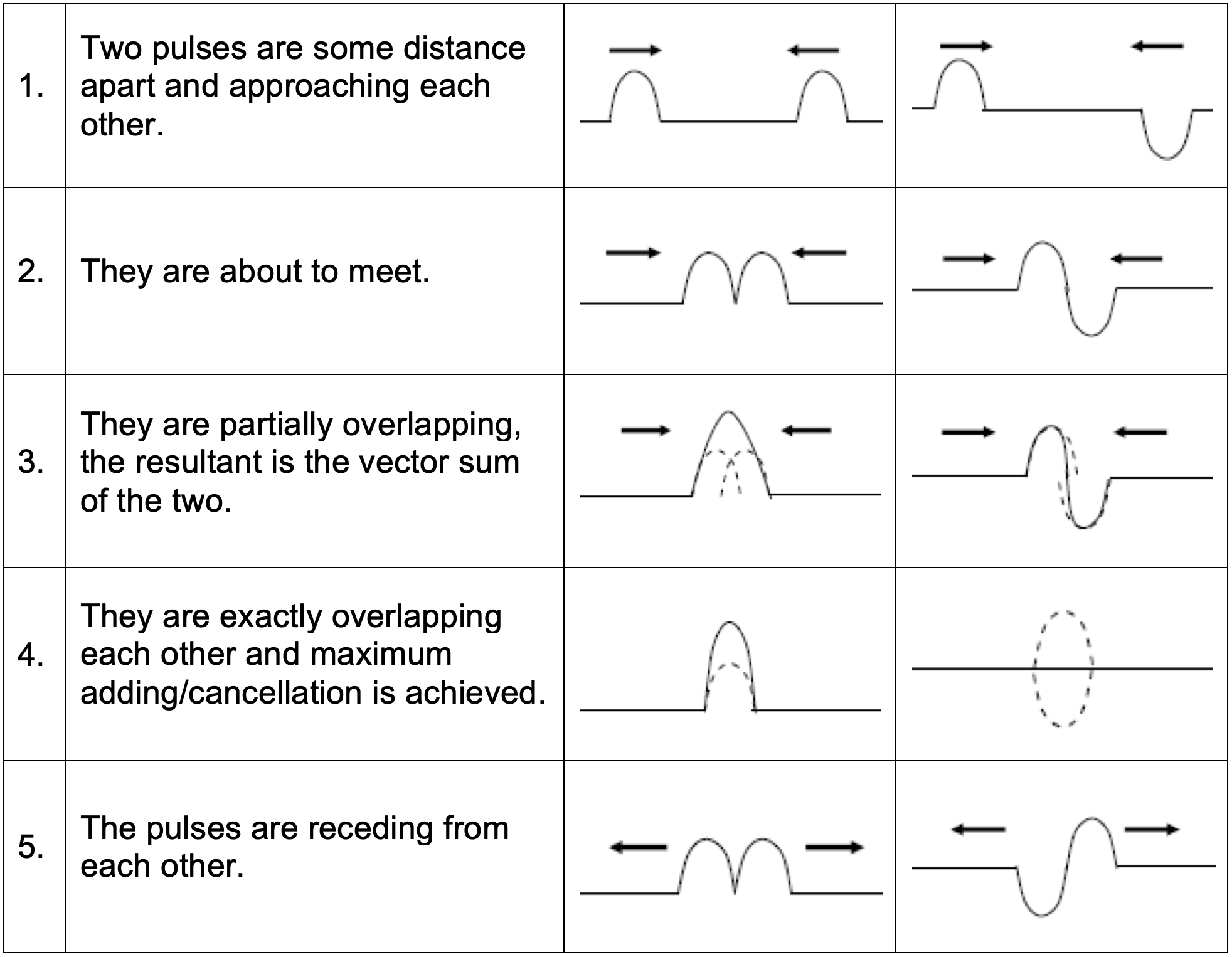
When two (or more) waves cross each other, they add up to give a resultant wave. This combination of waves follows the Principle of Superposition.
| Definition: Principle of Superposition |
|---|
| The Principle of Superposition states that when two or more waves of the same kind meet at a point, the displacement of the resultant wave is the vector sum of the displacements of the individual waves at that point. |
The following shows what happens when two pulses approach each other. In the left column, the pulses’ displacements are in the same direction. In the right column, the displacements are in opposite directions.
| Superposition of Pulses in a Ripple Tank |
| Example 1 |
|---|
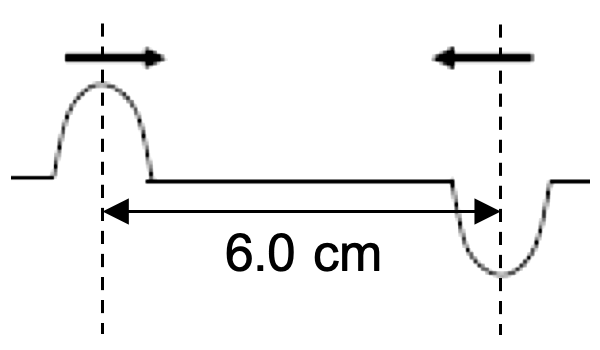
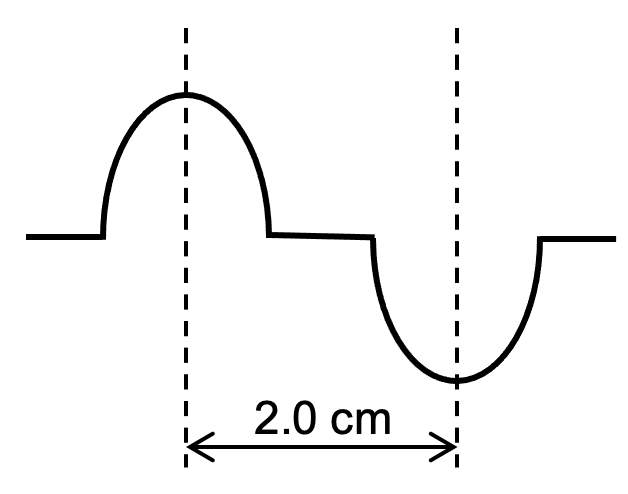
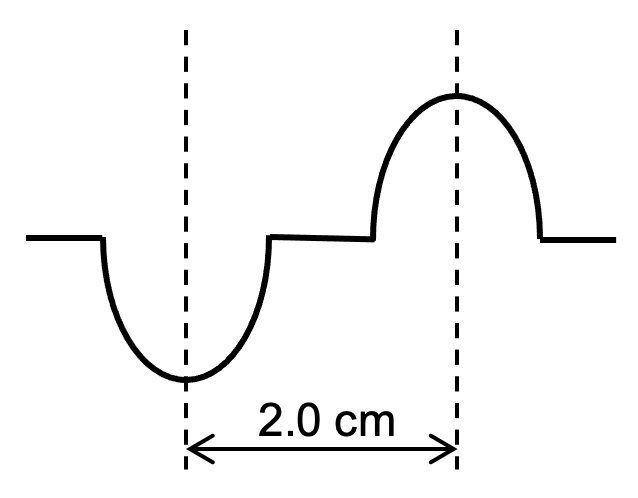
| Two identical wave pulses travel at a speed of 2.0 m s⁻¹ towards each other on a long cord.
If the pulses are 6.0 cm apart at t = 0 s, sketch the shape of the cord at t = 10, 15 and 20 ms. |

| Example 2 |
|---|
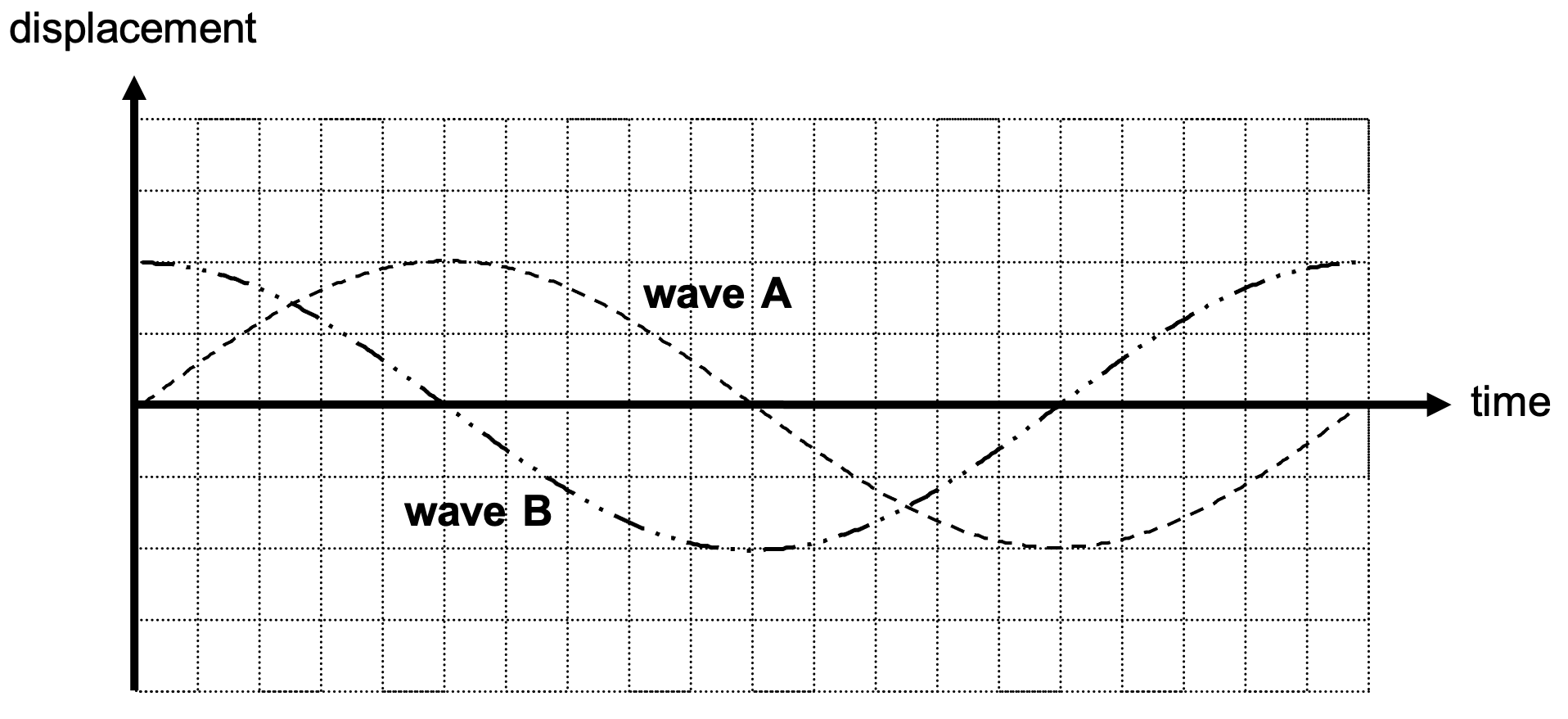
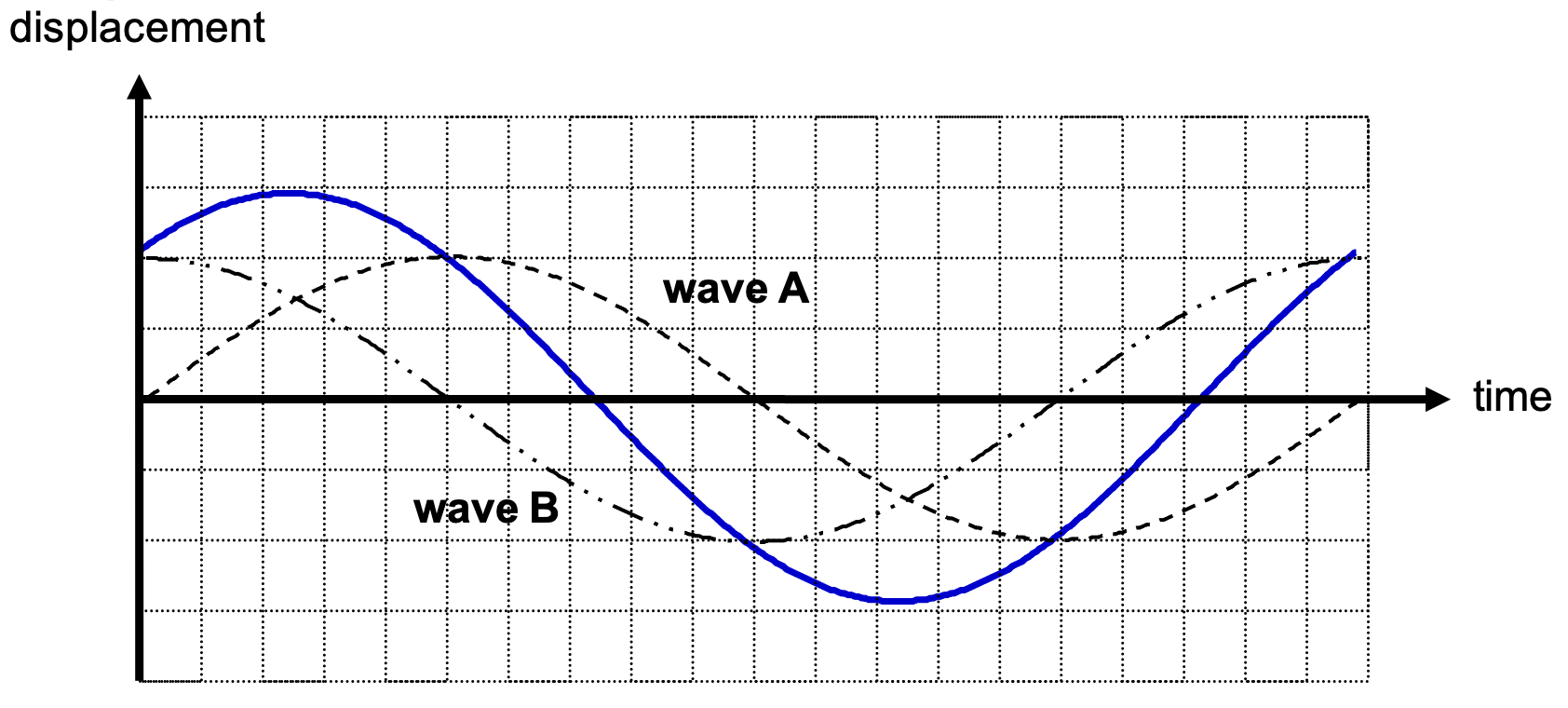
| Two waves, A and B meet at point P. The displacement-time graphs due to each individual wave at P are as shown.
Sketch the displacement-time graph of the resultant wave at P.
|
| << Back | Waves & Sound | Next >> |