Refraction of Plane Wavefronts
- Waver waves travelling from deep water into shallow water will slow down.
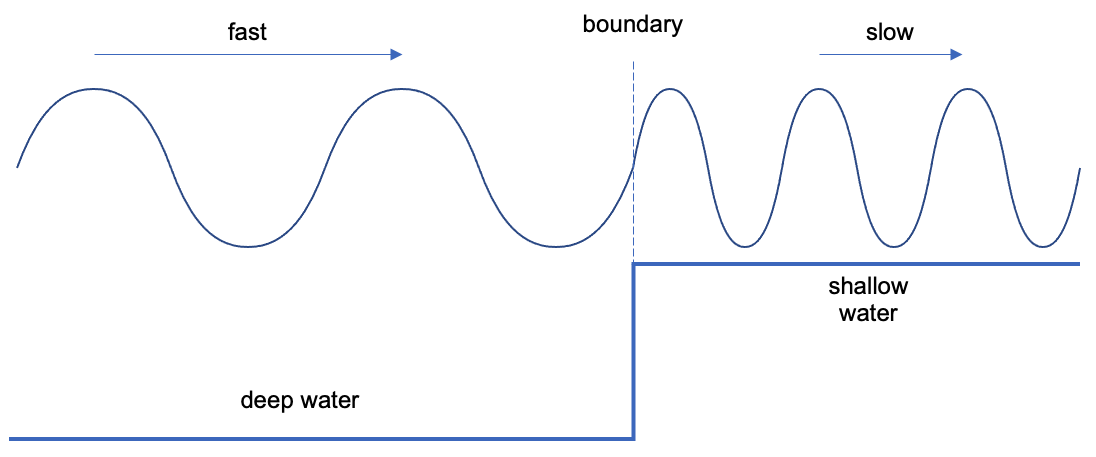 Waves shown slowing down in the shallow water resulting in a shorter wavelength.
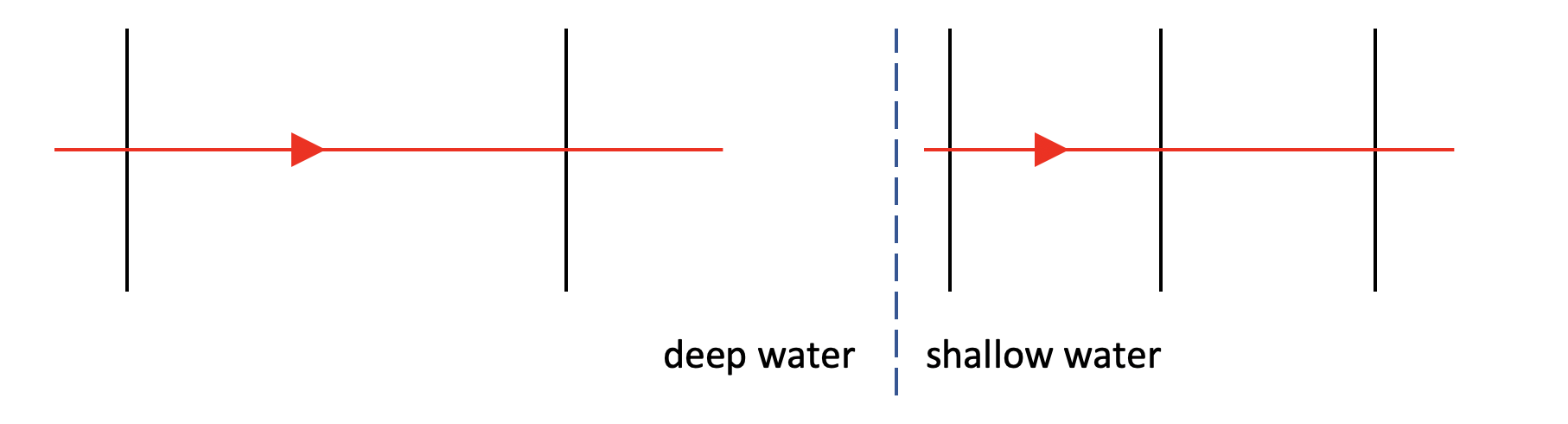 The same situation shown from above. Only the wavefronts would be seen here. Again it is easy to see the reduced wavelength.
- When light rays travel from one medium to another, they undergo refraction and obey the laws of refraction.
- When plane water waves (e.g. in a ripple tank) travel from one depth to another, they also undergo refraction and obey the laws of refraction. Again, the main difference is wavefronts are observed and drawn, which are perpendicular to the actual direction of the waves.
| Refraction of Waves in a Ripple Tank |
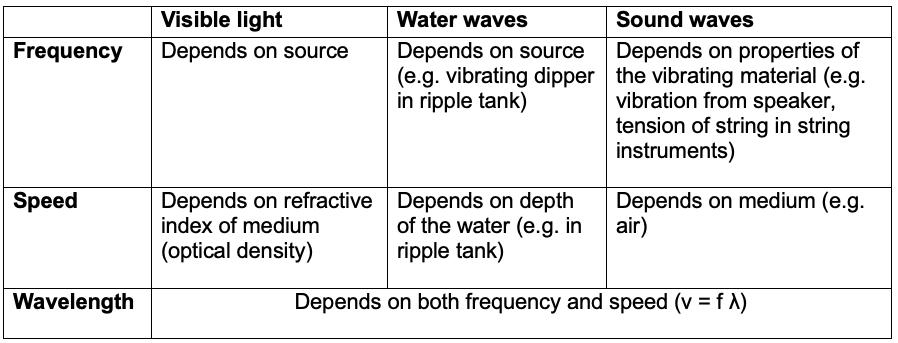
- Both visible light and water waves are transverse waves. They have similar behavior when they undergo refraction. The comparison is indicated in the following table:
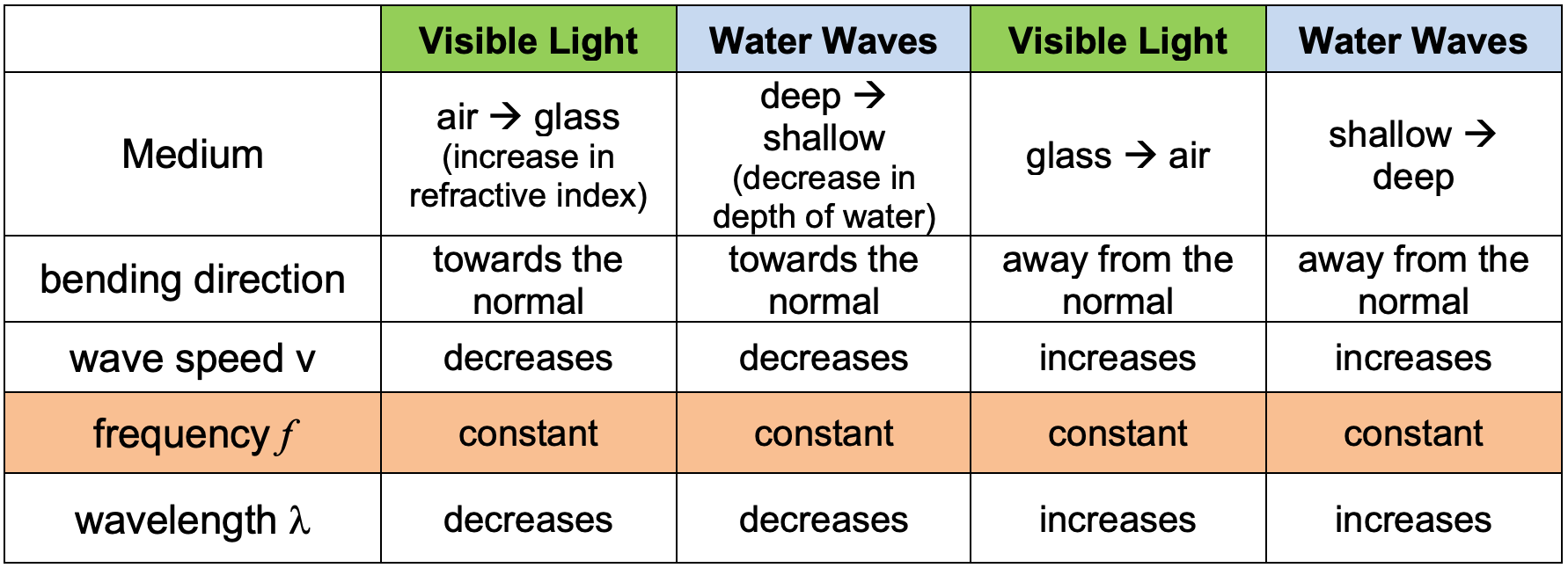
Remember frequency is the unchanging constant. The frequency of a wave is determined at the time the wave is created. It will be the same frequency as the vibrating object that produced the wave.
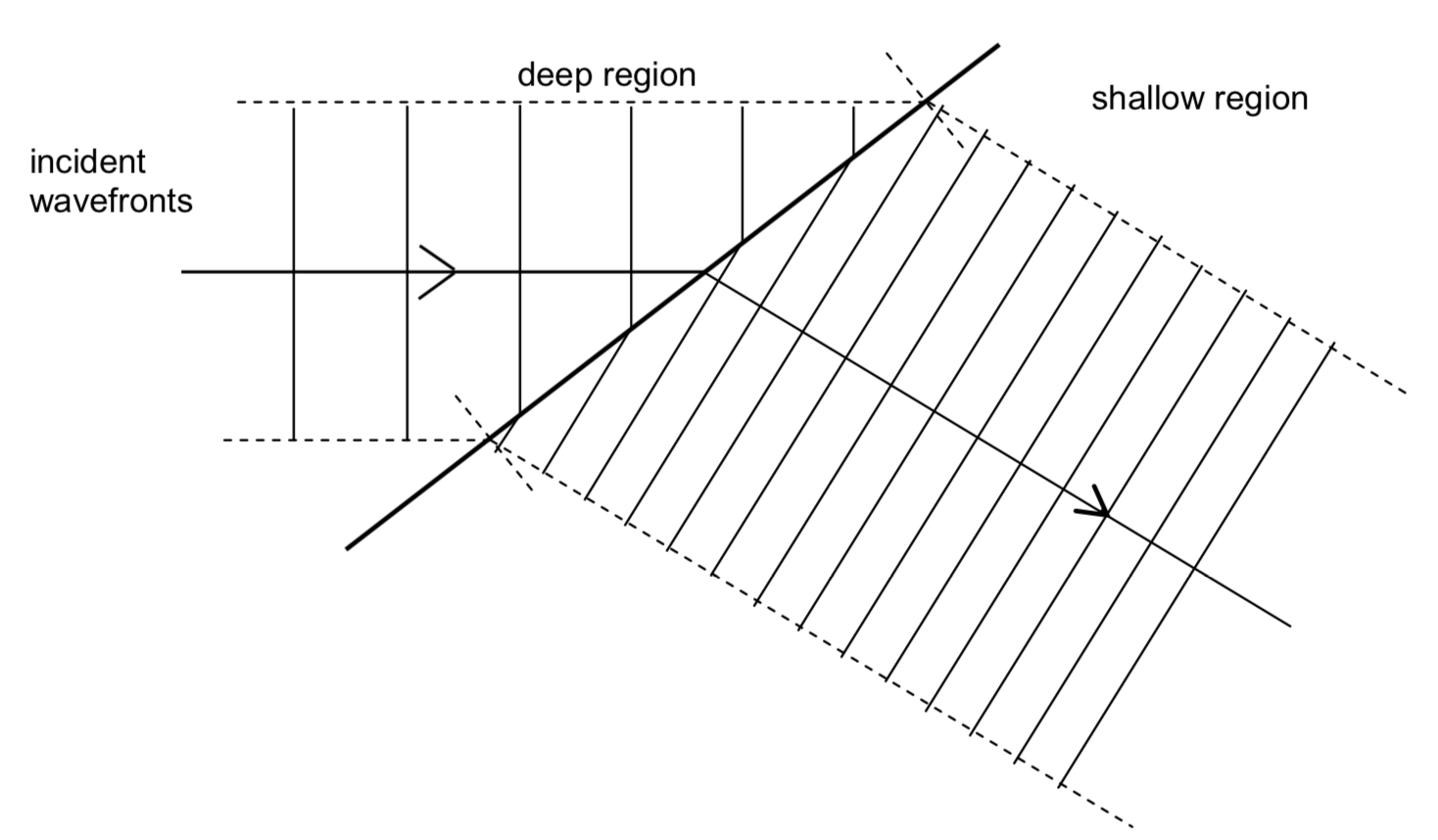
The incident and refracted angles are shown in the diagram below:
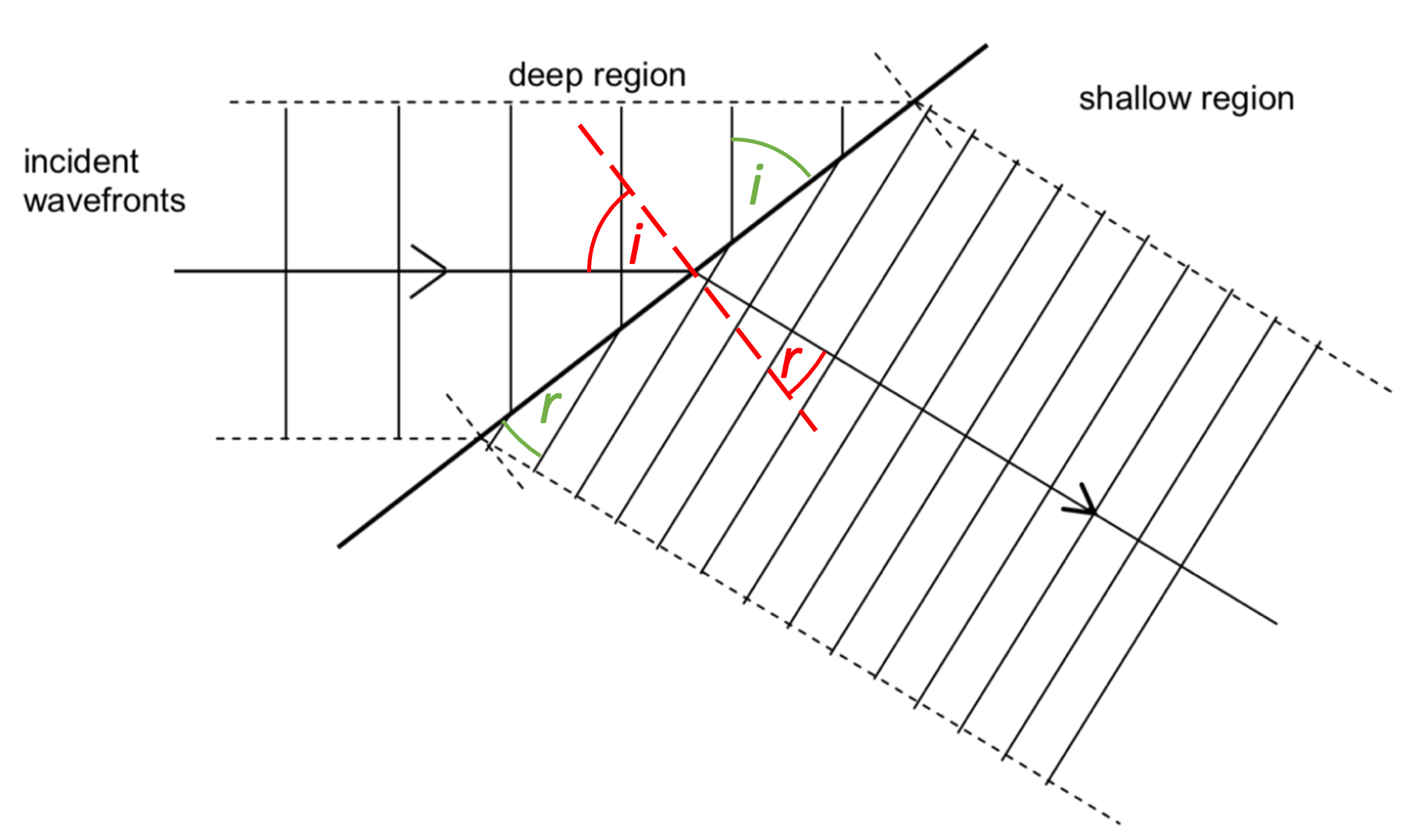 Note you can find the incident/refracted angle by measuring between the ray and the normal (as you would for a ray of light)(red), OR you can simply measure the angle between the wavefront and the boundary (green).
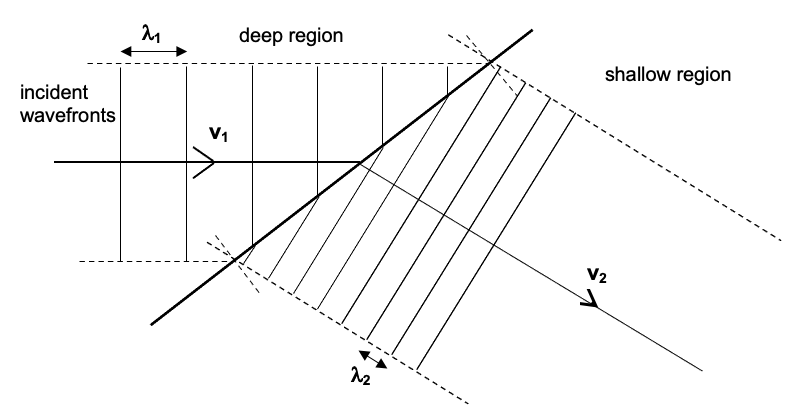
In first water depth (deep region): v1 = f × λ1
In second water depth (shallow region): v2 = f × λ2
Where v1 > v2 and λ1 >λ1 .
For the same frequency f,

| << Back | Waves & Sound | Next >> |