Plane Waves and Wavefronts
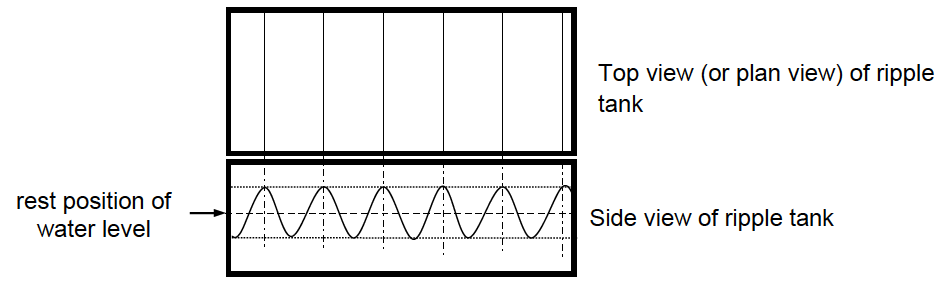
- The diagram below shows wavefronts of crests when viewed from the top of a ripple tank and the side view of the ripple tank showing the wave profiles.
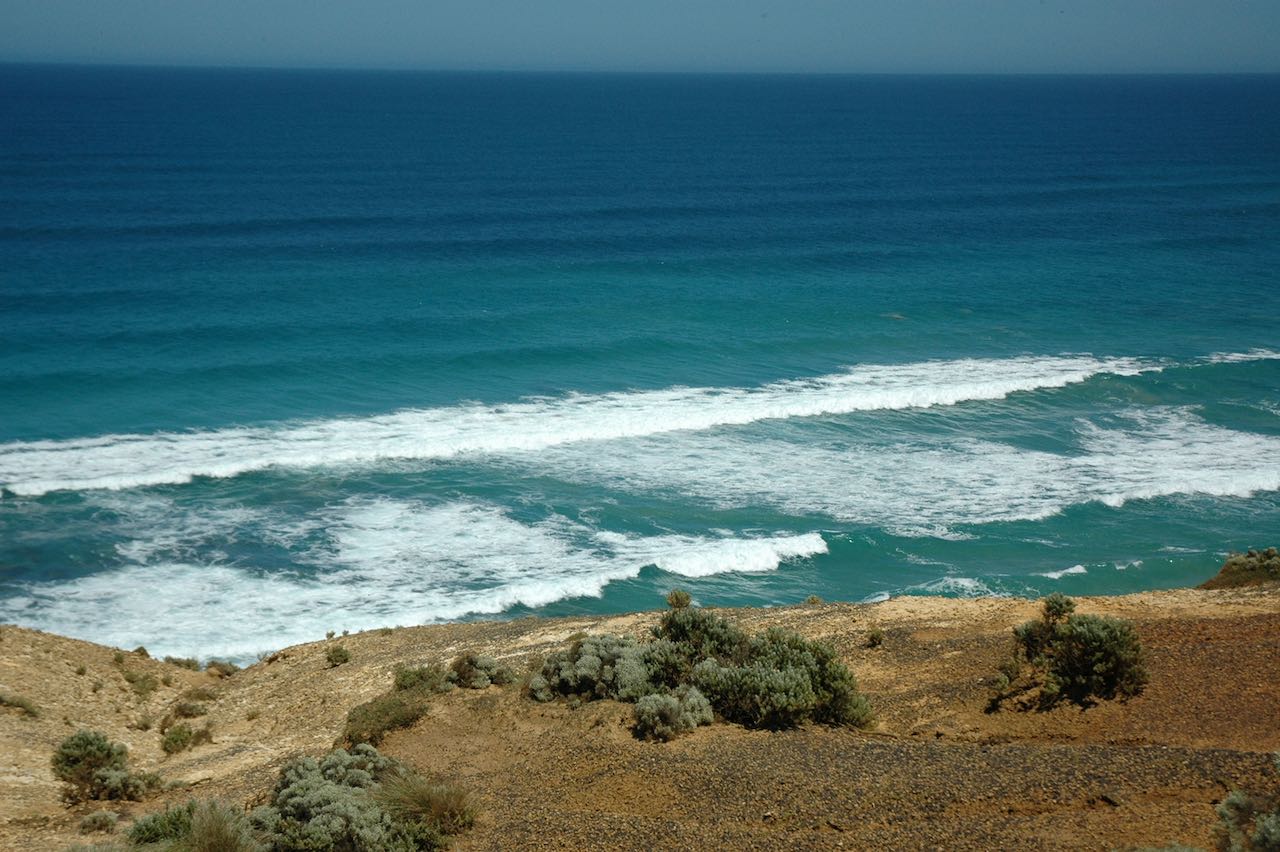 when viewing the sea from above we can clearly see the wavefronts
(lines parallel to the shore) of the waves
Reflection of Plane Wavefronts
- When light rays are incident on a plane mirror, they undergo reflection and obey the laws of reflection. The light rays show the directions of the light waves.
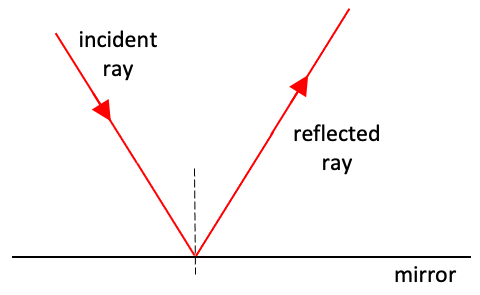 reflection of light rays in a mirror
- Similarly, when plane water waves (e.g. in a ripple tank) are incident on a straight (plane) barrier, they can undergo reflection and obey the laws of reflection. The main difference is wavefronts are observed and drawn, which are perpendicular to the actual direction of the waves.
|
Note the similarity between the above diagram showing the reflection of wavefronts and the reflection of light diagram. The line drawn perpendicular to the wavefronts (which shows the direction of the wavefronts) can be treated as a “ray”. |
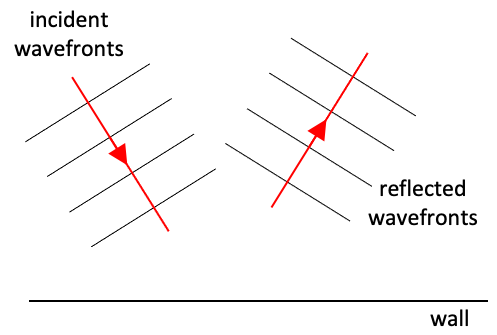
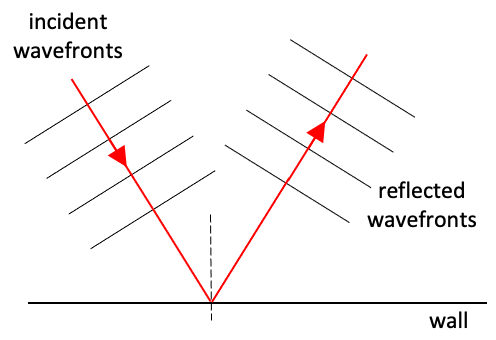
| Reflection of Straight Waves from Straight Barriers in a Ripple Tank |
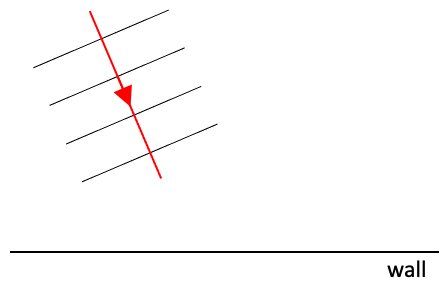
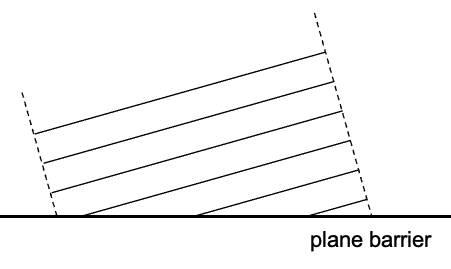
Given the following plane wavefronts incident on a plane barrier, show what the reflected wavefronts would appear like.
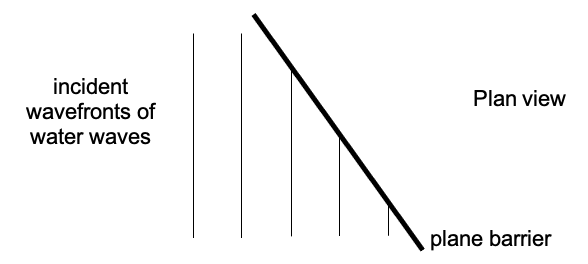
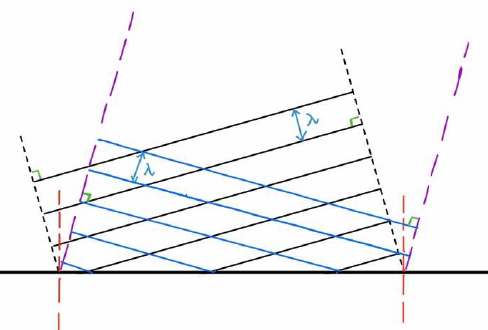
Steps to drawing the reflected wavefronts:
1. On the diagram draw 2 arrows as “boundaries” on the ends of the wavefronts to indicate the direction of these waves. These arrows behave like incident “light rays” and are perpendicular to the wavefronts.
2. Each arrow meets the barrier at a point of incidence. Draw the normal at each point of incidence.
3. Measure the angle of incidence and the angle of reflection so as to draw the arrows that show the direction of reflected waves.
4. Draw the actual wavefronts (perpendicular to the “reflected” arrows)
5. The perpendicular spacing between neighbouring wavefronts represent the wavelength of the waves. This remains unchanged for both the incident and reflected waves.
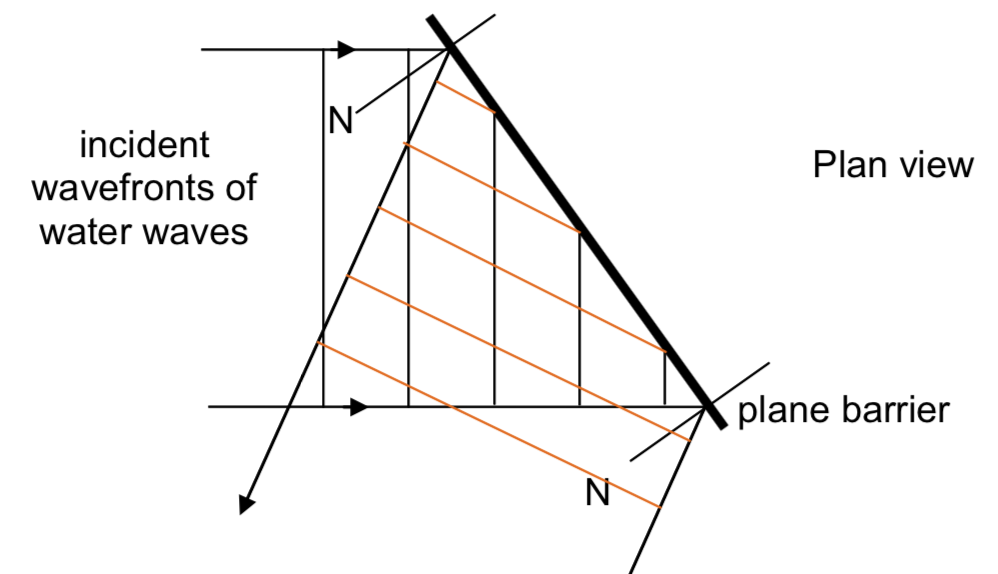
| Example |
|---|
| Complete the diagram below to show the reflected rays after the wave has hit the plane barrier.
|
| Reflection of Circular Waves from Various Barriers in a Ripple Tank |
| << Back | Waves & Sound | Next >> |