Stability is a measure of a body’s ability to return to its original position after being tilted slightly.
Objects on Solid Surfaces
An object will topple over if it is rotated too far.
| Question 1 |
|---|
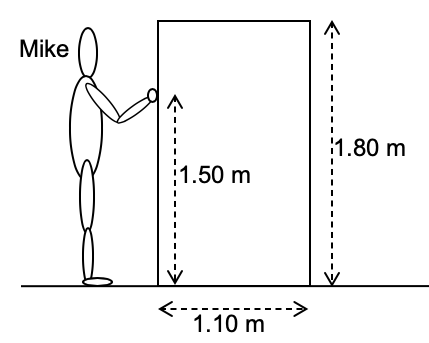
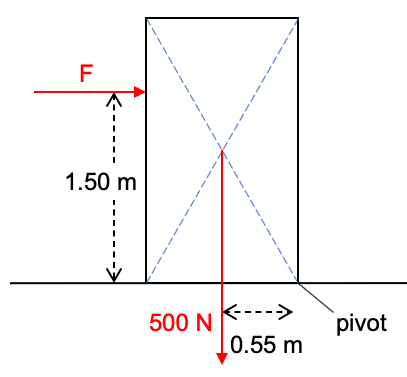
| Mike is pushing horizontally onto the surface of the block. Given that the block has uniform density and weighs 500 N, calculate the minimum initial force that Mike must exert in the position shown in order to tilt the blocks.
|
| Example 2A |
|---|
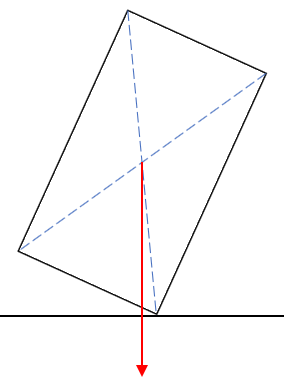
| If Mike lets go of the box from the following position, what will happen?
|
| Example 2B |
|---|
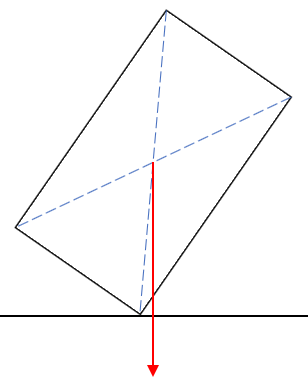
| If Mike lets go of the box from the following position, what will happen?
|
| Example 2C |
|---|
| If Mike lets go of the box from the following position, what will happen?
|
| Maximum Angle of Tilt |
|---|
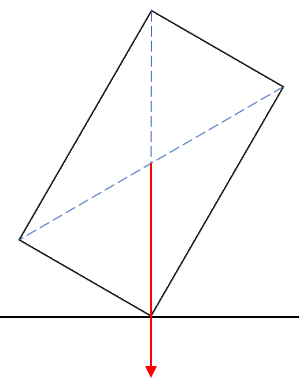
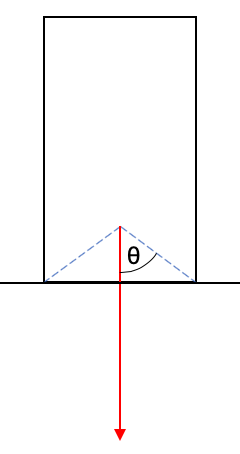
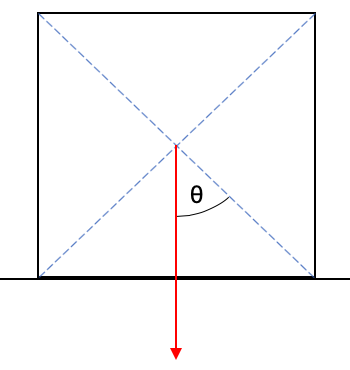
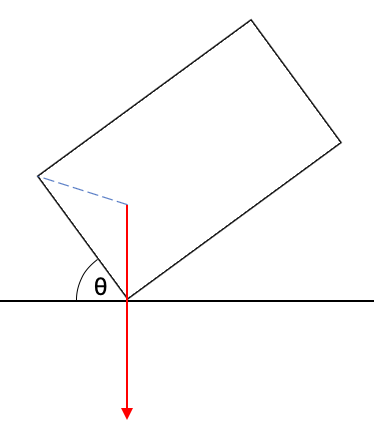
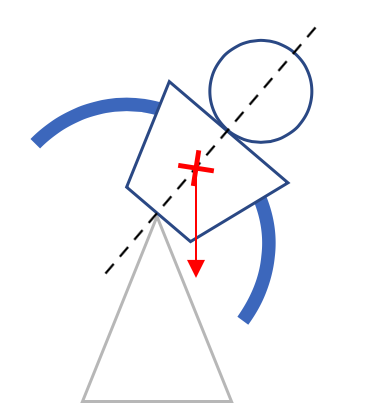
| The position in which the box is in unstable equilibrium is the maximum angle that the box can be tilted before toppling over.
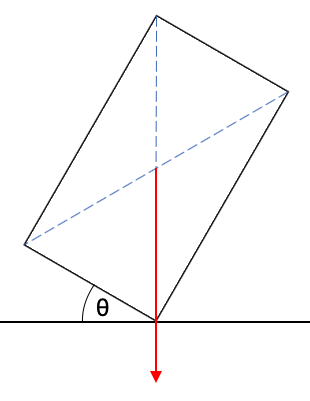
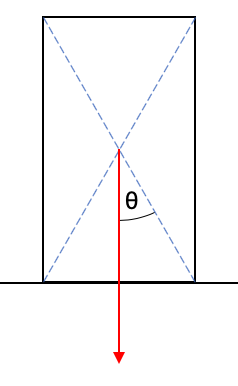
It can be easily shown that this angle is the same as that made between the line of action of the weight and the diagonal to the pivot as shown below.
|
| Question |
|---|
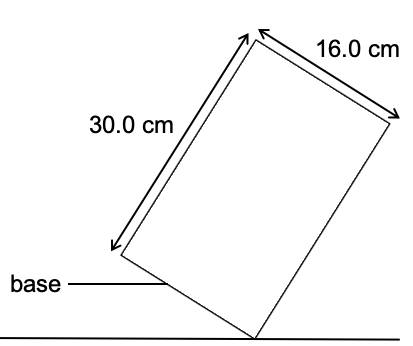
| What is the maximum angle of tilt the uniform cuboid can undergo before toppling over?
|
| Angle of Tilt and Weight |
|---|
| Note that the weight doesn’t come into finding the maximum angle of tilt.
An empty water bottle and a completely full water bottle will both topple over when rotated by exactly the same angle. However, of course it will still require less force to push the empty water bottle over to the tipping point as it has less weight and so will produce less turning moments. |
| Increasing Stability |
|---|
| An object can be made more stable by:
1. lowering its centre of gravity
2. Increasing the area of its base
You can see in both of the above examples that the angle of maximum tilt has increased. e.g for the lowering of CoG the object will now be able to tilt this far without toppling over onto its side:
|
| Question |
|---|
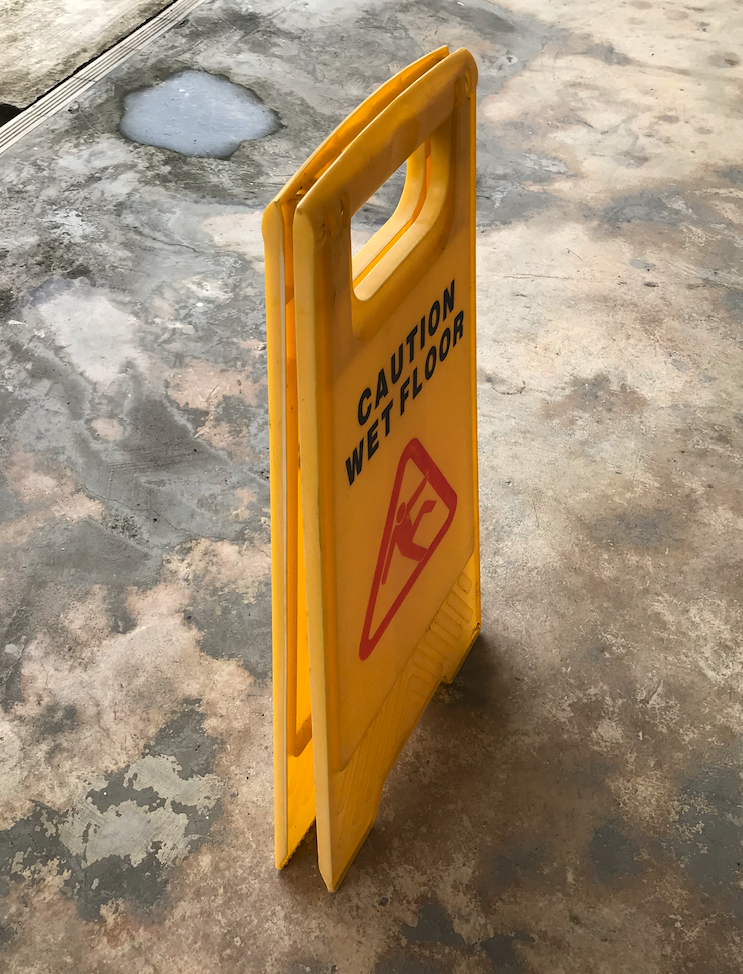
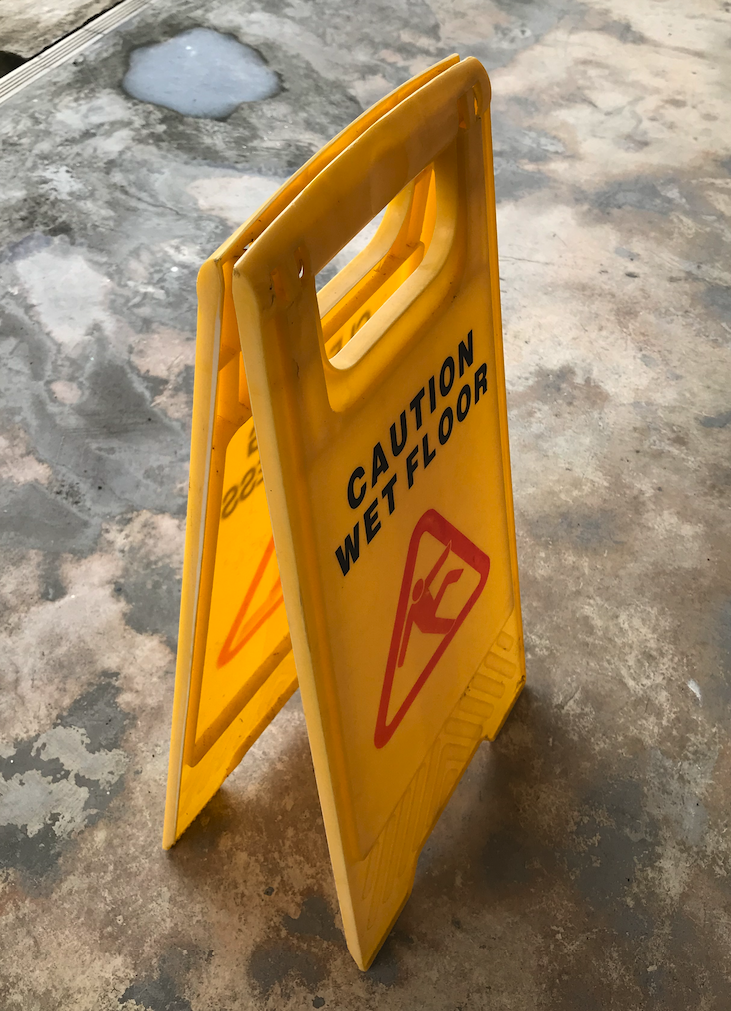
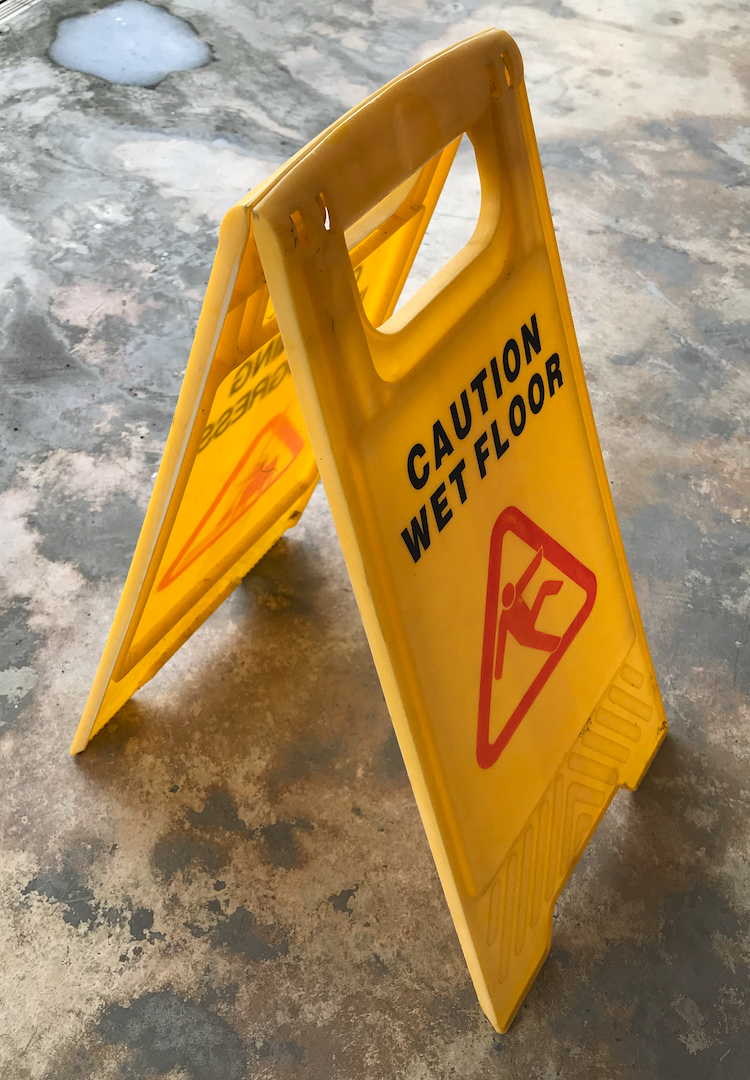
| Which method of setting up this sign would be best? Why?
The final diagram is the best way as the base area is largest making the sign the most stable against toppling over – e.g if blown by wind. |
Suspended Objects
In the above examples we have been considering objects resting on a flat surface. There is also the case of objects suspended.
Consider the following heart-shape cut out of card. We will consider this to be uniform (density) and rigid.
 It’s centre of gravity has been marked with a cross and a small hole cut out of it to allow it to be suspended.
| Making Holes |
|---|
| We assume that the small hole has only removed an insignificant amount of the card and so the position of the centre of gravity hasn’t been altered.
In practice, the hole would be just large enough to allow the card to rotate freely with negligible friction. |
If we suspend the card from a pin the object’s own weight will cause it to swing.
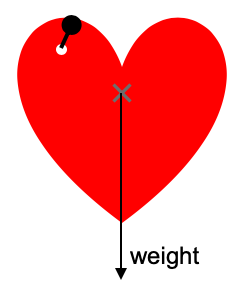 The turning moment about the pin can be calculated if we know the weight and measure the shortest distance (perpendicular) from the pivot (pin) to the line of action of the weight.
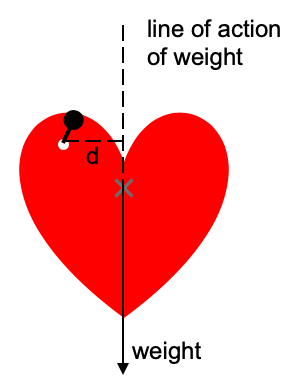
moment = force x distance
moment = weight x d
Of course these moments will be clockwise and so the heart will begin to rotate clockwise about the pin.
Where will the shape stop?
The above card may oscillate back and forth for a while but will always stop swinging in the following position:
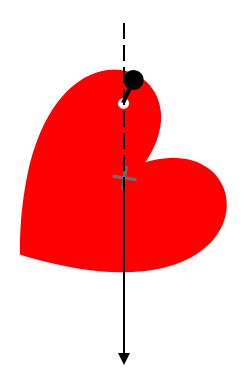
i.e with the centre of gravity directly below the pivot.
As weight acts vertically (straight down), the line of action of the weight passes through the pivot. Thus there is no resultant moment produced at this position.
This object is now in a stable equilibrium. If tilted slightly from this position it will always return to this position.
There is only one position that the object can be released from that will not return end up in the above position. That’s when the centre of gravity is directly above the pivot.
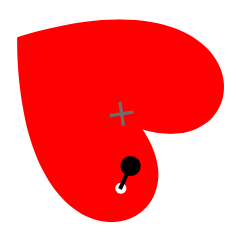 Because the centre of gravity is directly above the pivot, the line of action of the weight will pass directly through the pivot:
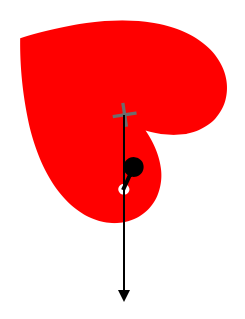 Thus, again there will be no resultant moment in this position.
This object is now in an unstable equilibrium. If tilted slightly from this position it will always move away from this position.
| Stacked Boxes Question |
|---|
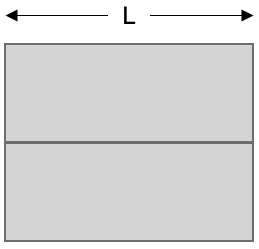
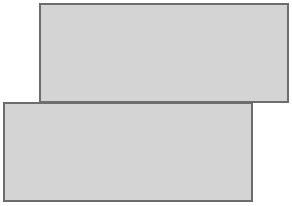
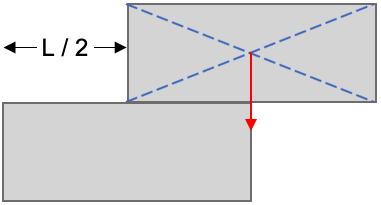
| Two identical blocks of length L are stacked on top of each other.
A force starts to push the top block to the right.
|
| << Back | Turning Effects of a Force |
| Links |
|---|
| Stability – OPENSTAXCOLLEGE online text |
| Video – Concentration & Balance |
| Great PDF notes covering the whole chapter |
| Carnival Scams – Rope Bridge |