Temperature measures the degree of ‘hotness’ or ‘coldness’ of a body.
Common units of temperature are degree celsius (°C) or kelvin (K)
SI base unit: kelvin (K)
Conversion: T = t + 273
Where
T is the temperature in kelvin
t is the temperature in degrees celsius
Interval of 1 K = 1 °C
Caution: Units
Kelvin scale does not use the degree symbol.
it is “300 kelvin“, NOT “300 degrees kelvin”.
Temperature is a measure of the average kinetic energy of the molecules in the object.
Thermal Energy
Thermal energy is the energy that is spontaneously transferred from one system of higher temperature to one of lower temperature.
SI unit: joule (J)
In a thermodynamic sense, “heat” is never regarded as being stored within a system – it exists only as energy in transit from one system to another or between a system and its surroundings.
We’ll use the term “thermal energy” as the noun, instead of “heat”. We’ll use “heat” as a verb to describe the process of heating.
ENRICHMENT – Removed from syllabus after 2024
Measurement of Temperature
Thermometricproperties are physical properties which vary with temperature and these can be used to define temperature scales.
Examples include:
volume of liquid column, e.g. in a liquid-in-glass thermometer
resistance of a metal wire, and
electromotive force (e.m.f.) – produced between two junctions formed with wires of two different metals, e.g. in a thermocouple
To make a thermometer we need to:
Select a thermometric property (a good one will change linearly with temperature) e.g. volume of a liquid.
Select two fixed points (temperatures that can be easily and reliably reproduced) e.g. ice and steam points.
Divide the range into appropriate divisions. e.g. 100 divisions between 0 °C and 100 °C.
Liquid-in-glass Thermometer
The simplest of all thermometers
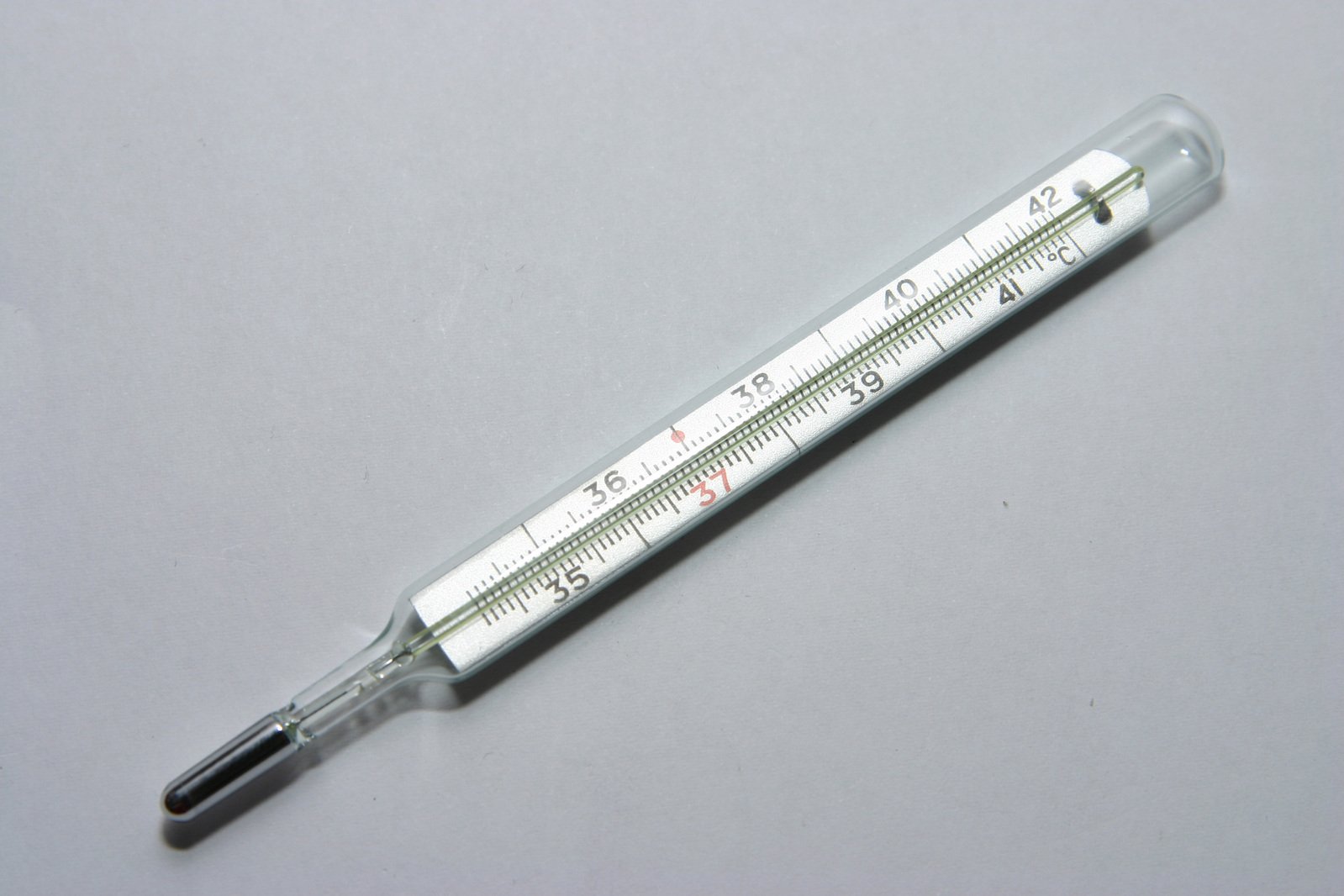
This is a specialised liquid-in-glass thermometer – a clinical thermometer.
What are the features that give it high sensitivity and a small range?
Calibration of a liquid-in-glass thermometer:
Select liquid which has volume which changes continuously and linearly with temperature, e.g. alcohol or mercury
Choose 2 fixed points: the ice point (0 °C) and steam point (100 °C) of water. These temperatures are always the same under given conditions, so they may be readily reproduced.
Divide the temperature range between the 2 fixed points into 100 equal divisions. This will allow us to read the temperature easily and accurately.
Mathematically:
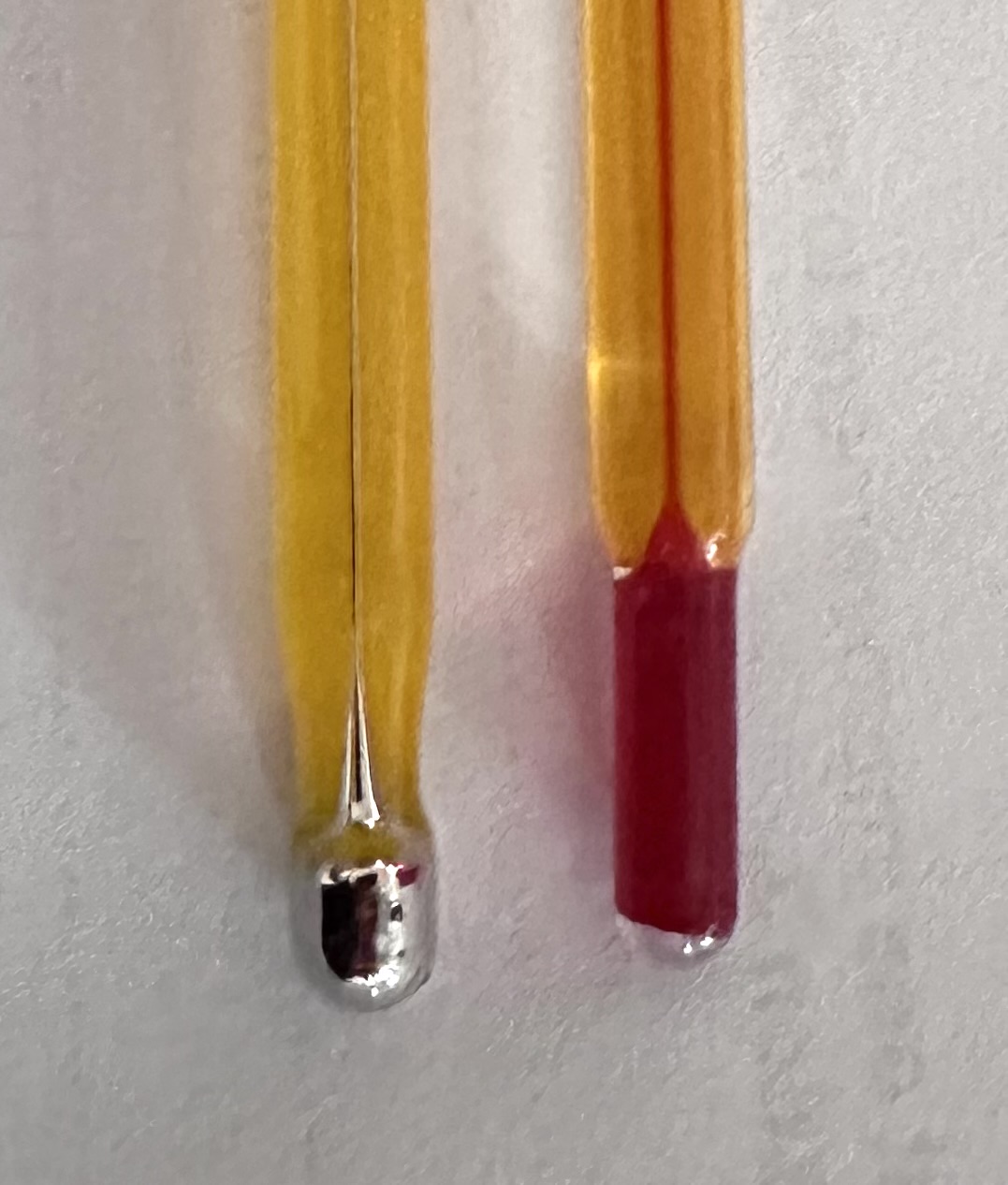
Two liquid-in-glass thermometers.
The left one is using mercury and the right one is using coloured alcohol.
Range:
How far from the highest temperature to the lowest temperature. Often determined by physical properties e.g. a mercury thermometer can only measure down to −39 °C (the freezing point of liquid mercury) and an alcohol thermometer can only measure up to 78 °C (the boiling point of alcohol).
Sensitivity: How sensitive the thermometer is to small changes in temperature. e.g. a laboratory thermometer only measures to 0.5 °C, but a clinical thermometer may read to 0.1 °C or better.
Responsiveness: How quickly the thermometer will adjust to give the reading.
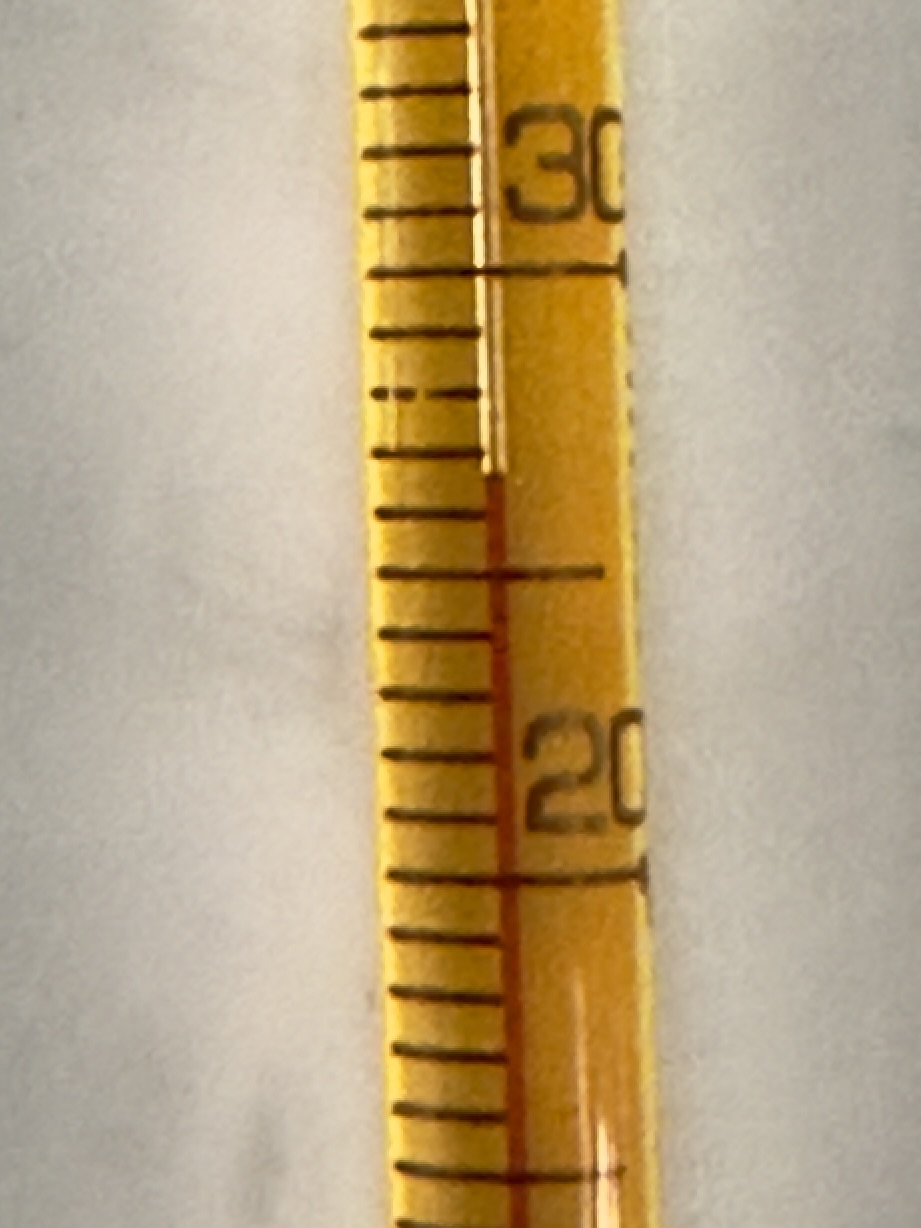
Reminder that thermometers should be read to half of the smallest division.
The reading on this thermometer should be recorded as 26.5 ºC.
Thermocouple Thermometer
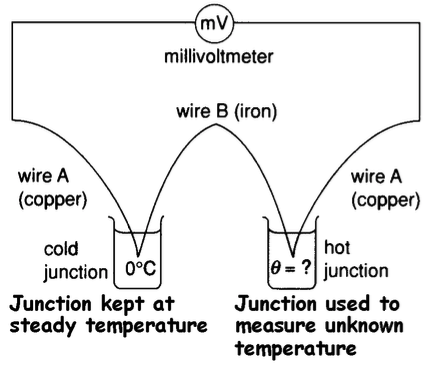
A thermocouple consists of a pair of junctions between different metals. If kept at different temperatures, a small emf will result. This can be measured and calibrated to indicate temperature of the ‘probe’ junction.
Below are the advantages of using a thermocouple to measure an unknown temperature:
it can measure a very large temperature range of -200 °C to 1500 °C by choosing suitable types of metal wires,
it is very responsive to rapidly changing temperatures (it has a low heat capacity due to its small mass and the metal wires are good conductors of heat)
it can be used to measure temperatures at a point (as the wire junctions are very small).
Disadvantages is that the sensitivity is low.
IR Thermometer
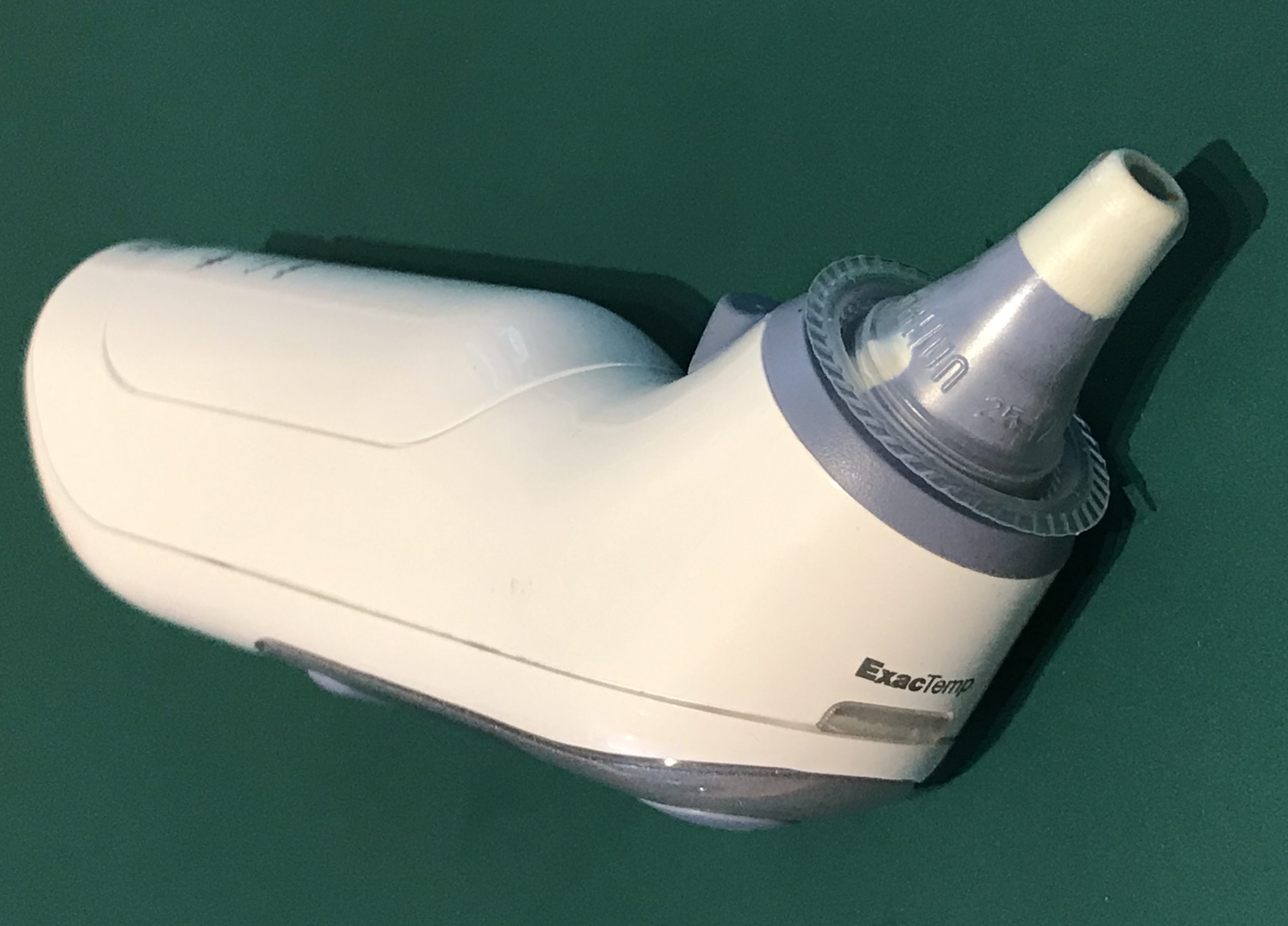
Detects the Infra-red radiation given off by all ‘warm’ objects. Objects at different temperatures will emit a different spectral range of IR waves.
Only informs of the temperature of the surface of an object.
Oral Thermometer
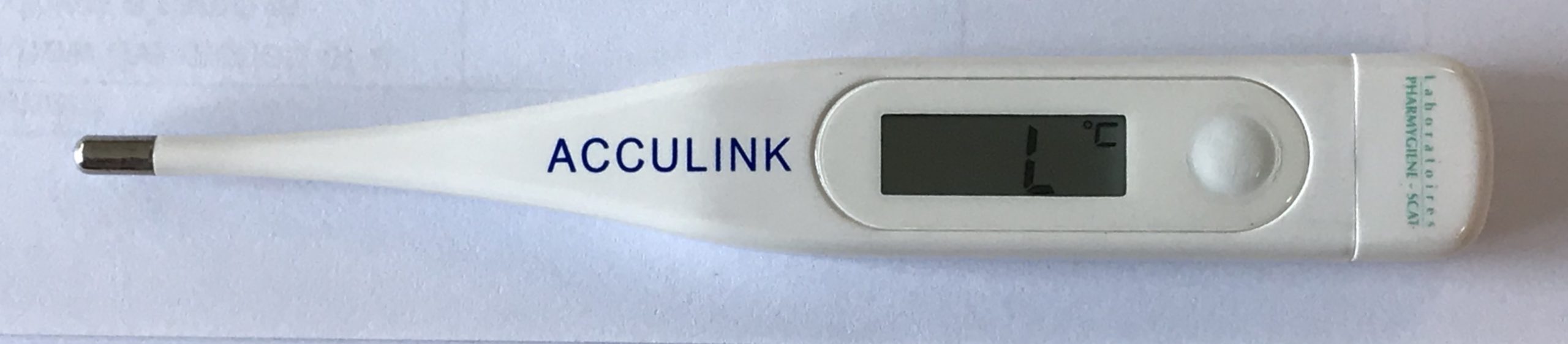
The resistivity of a piece of wire or thermistor will be altered by the temperature it is placed at.
Example
Length of a mercury thread in an ungraduated thermometer is found to be 20 mm and 100 mm at 0 °C and 100 °C respectively.
What is the temperature corresponding to a 40 mm length of mercury thread?