An electric field is the region in which an electric charge experiences an electric force.
Electric fields exist around all charges in 3-dimensions. Usually we draw them in 2-dimensions (i.e. on a sheet of paper) and use lines to show their shape.
An electric field line is the path in which a light positive charge would move if free to move.
Characteristics of electric field lines:
| 1. | Field lines are directed from positive to negative charges. |
| 2. | Field lines never intersect each other. |
| 3. | Field lines enter or leave the surfaces of conductors at right angles. |
| 4. | Field lines do not exist inside a charged conductor. |
| 5. | The spacing of the field lines is an indication of relative strength of the electric field. |
| 6. | The two common types of electric fields are radial field and uniform field. |
| 7. | A uniform field is indicated by parallel and equally-spaced straight lines. |
Guidelines for drawing electric field patterns
- Identify sign of charged objects
- Draw electric field lines
- Insert arrows on lines (out from positive charge, into negative charge)
- Check for any symmetry expected in the electric field pattern
- Ensure field lines are drawn according to their characteristics
- Draw sufficient number of field lines to show a clear representation of the electric field pattern. If more lines are added to this, the pattern should remain similar.
Some Common Electric Fields:
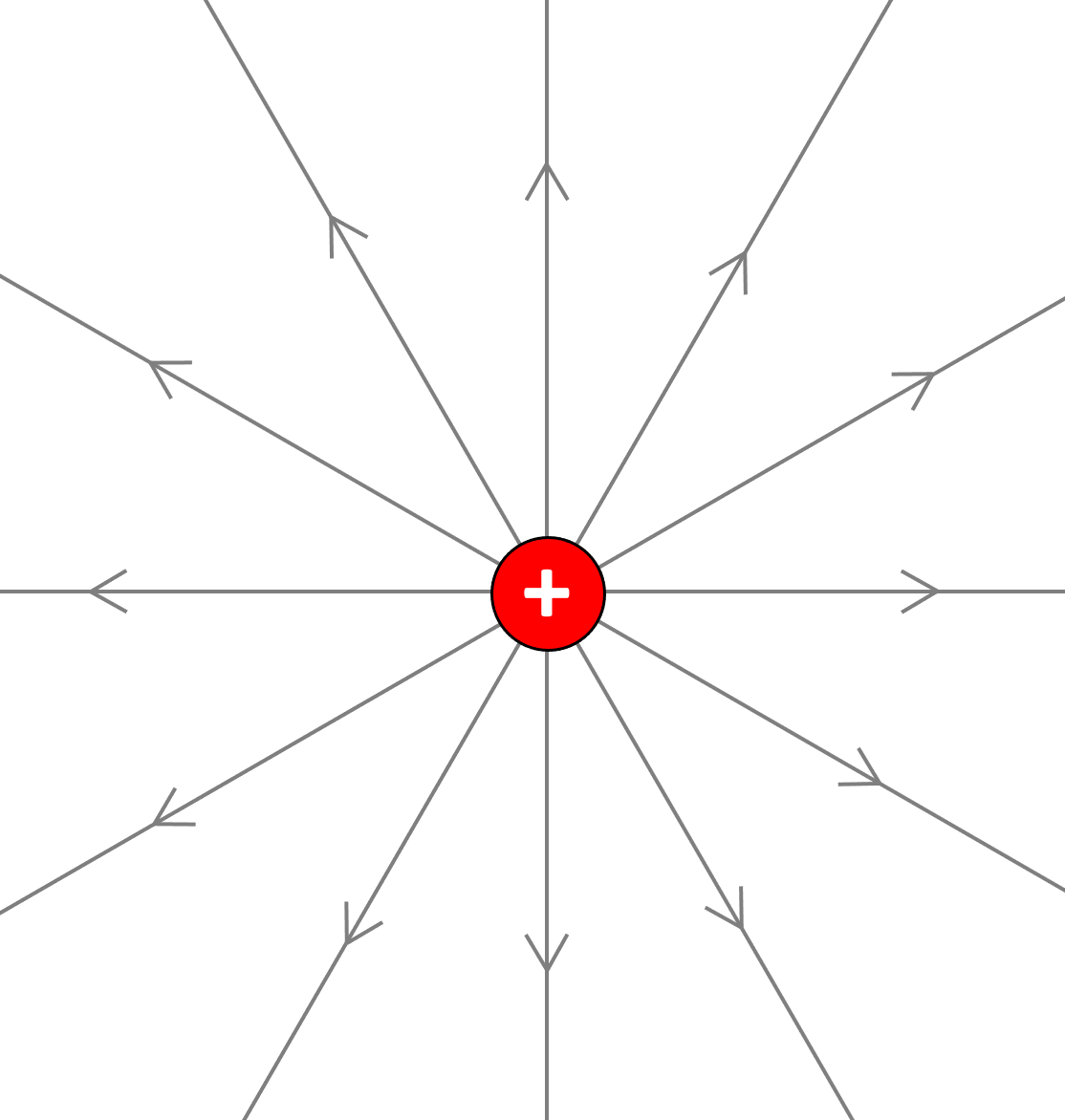 electric field around a small positive charge (radial field)
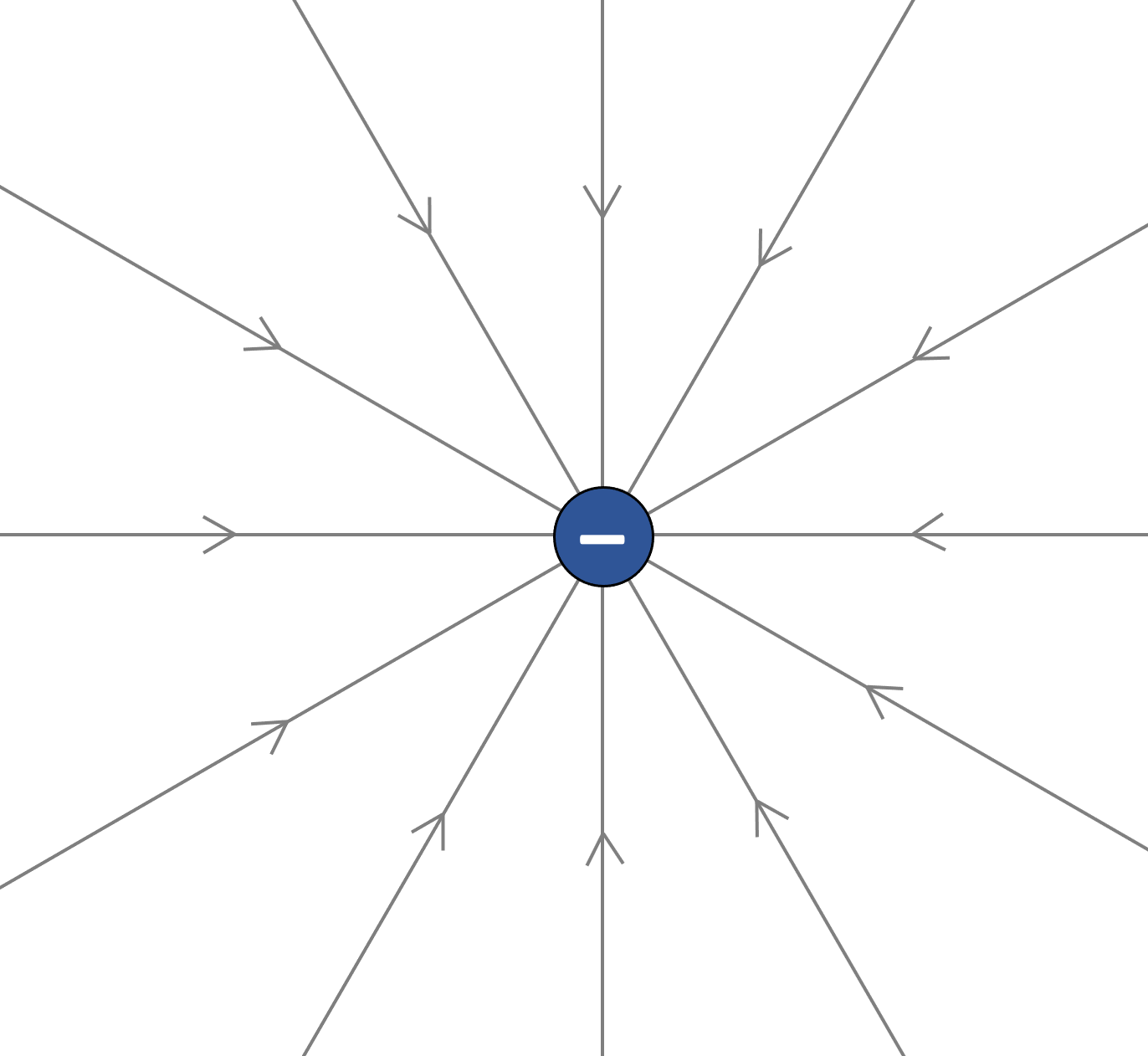 electric field around a small negative charge (radial field)
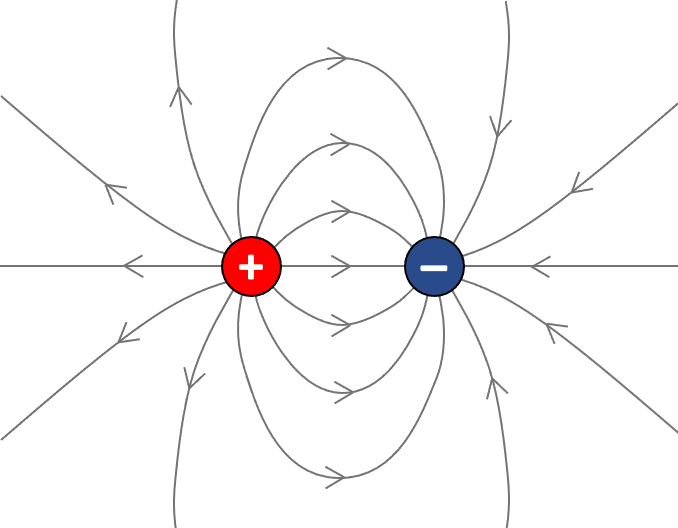
electric field around two opposite charges
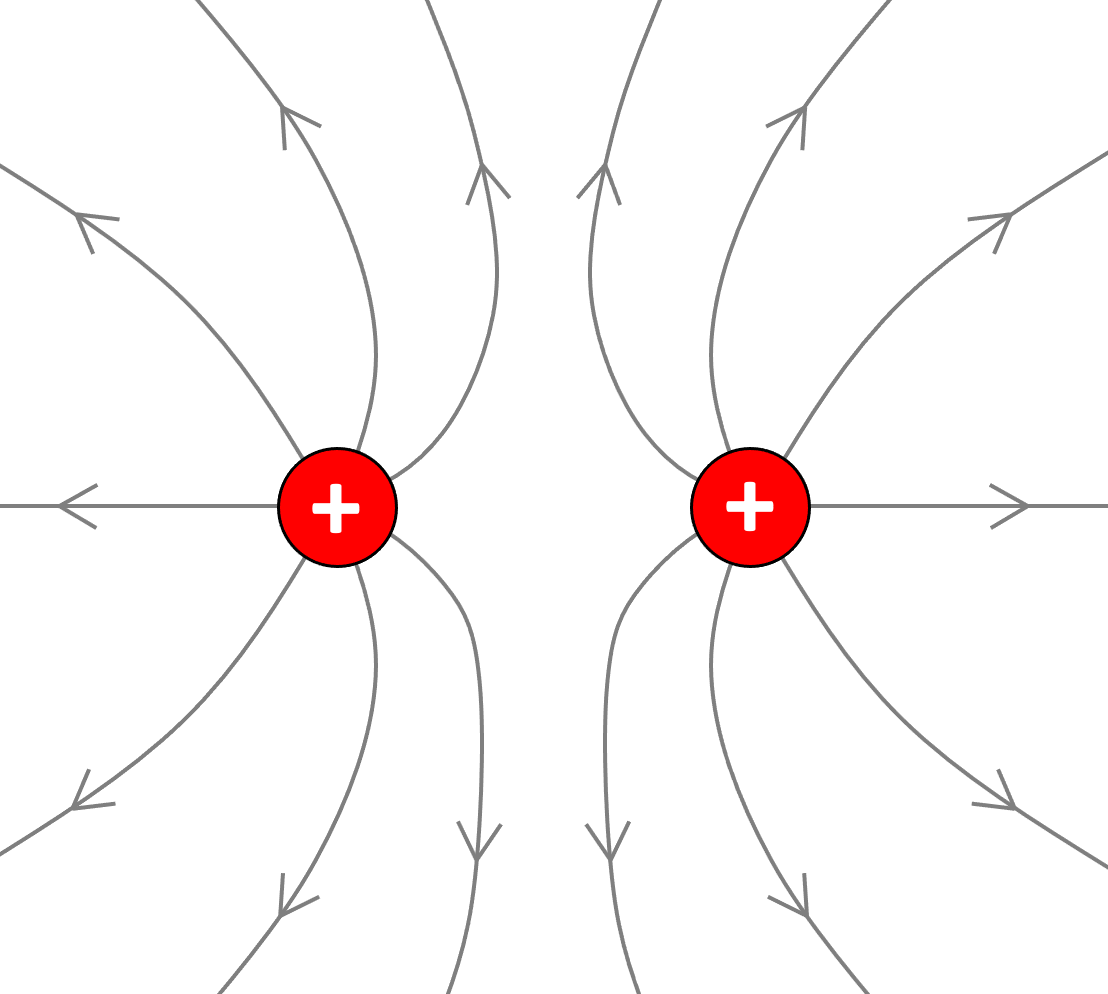 electric field around two similar charges
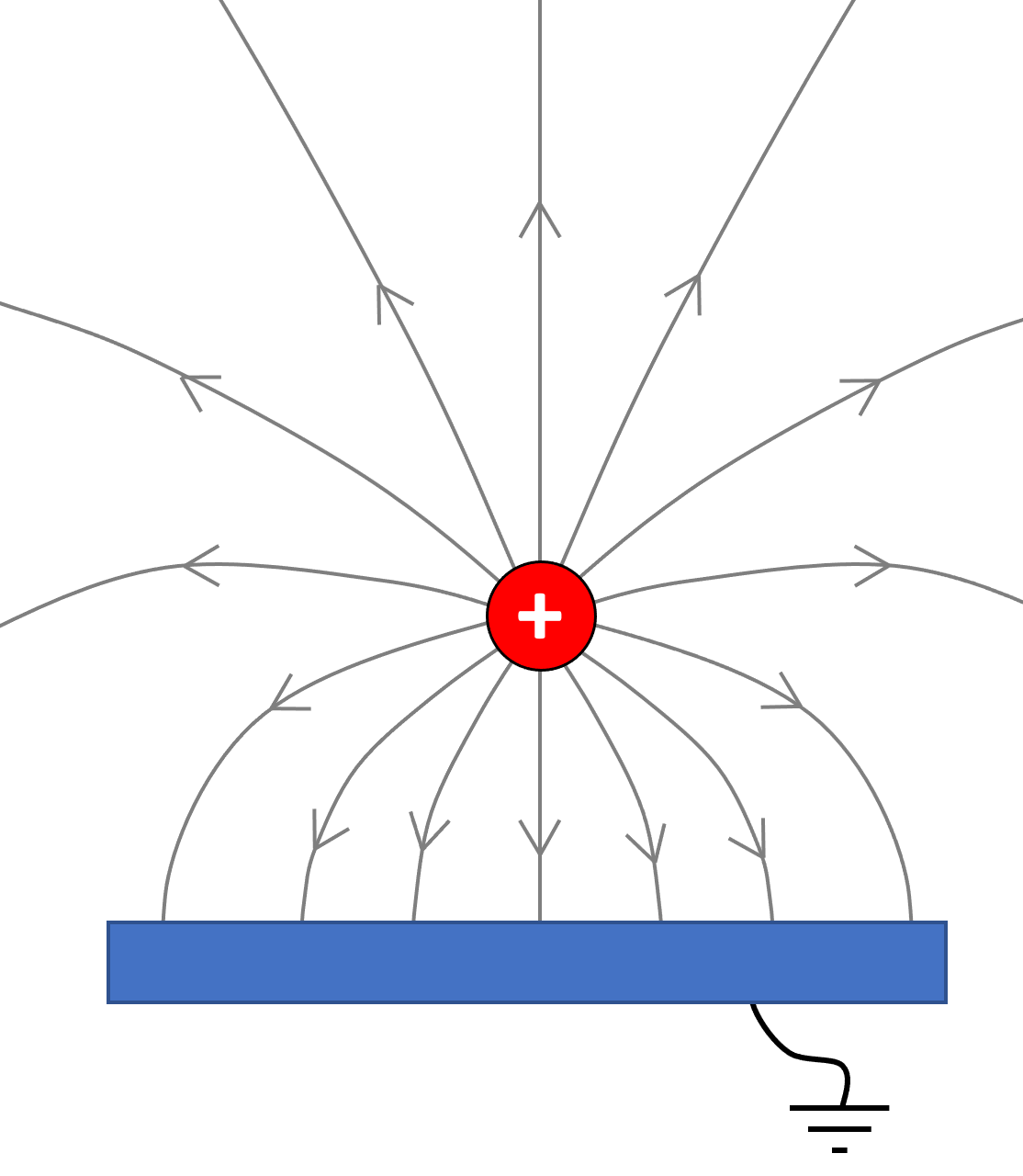 single charge next to an earthed metal plate
(being near the +ve charge the plate is induced to become negative)
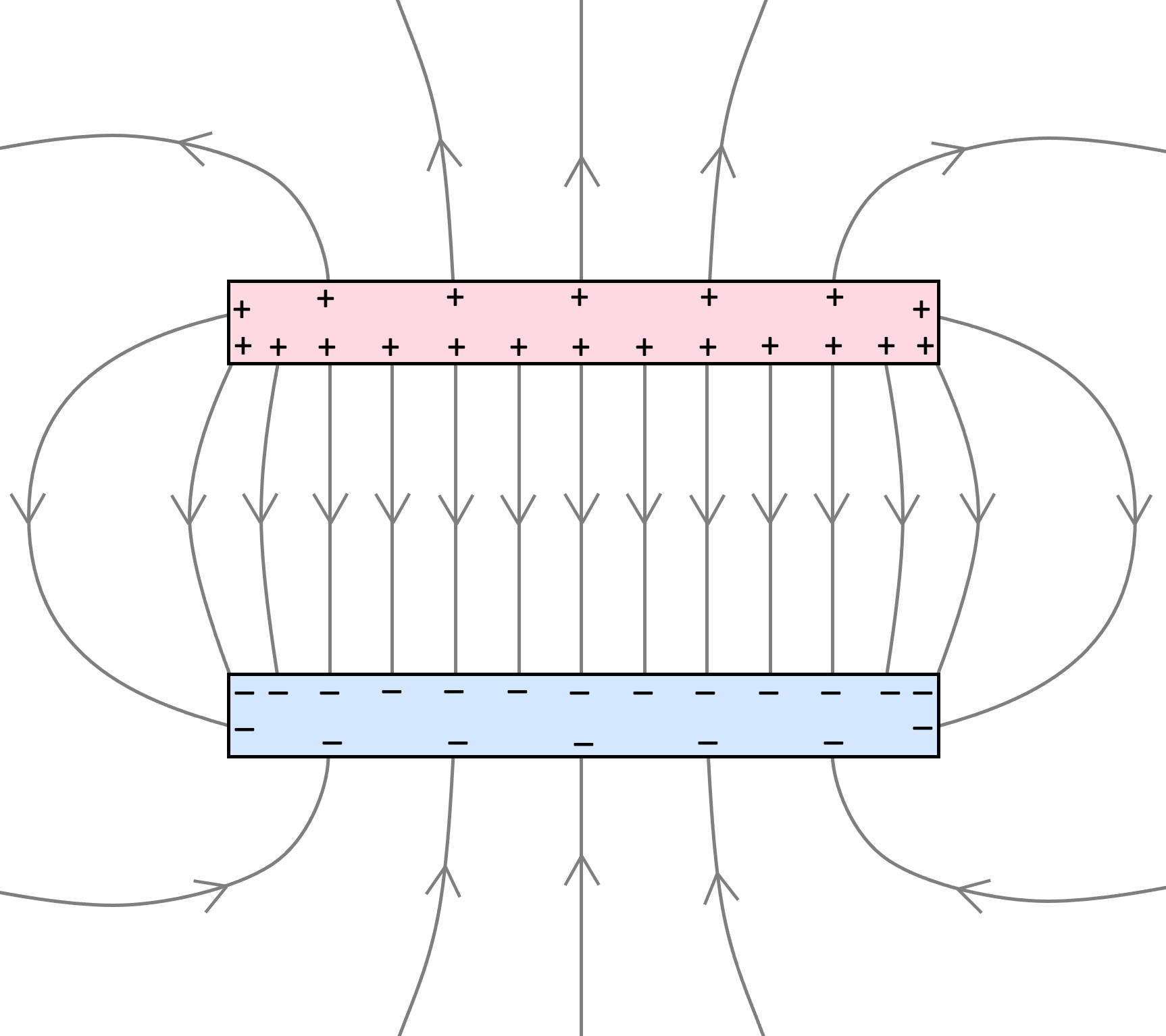
parallel field in the region between two parallel plates
Forces on a Charge
The electrostatic force experienced by a charge placed in an electric field will depend on:
- nature of the charges (to determine the direction)
- field strength to determine the magnitude
| Example 1 |
|---|
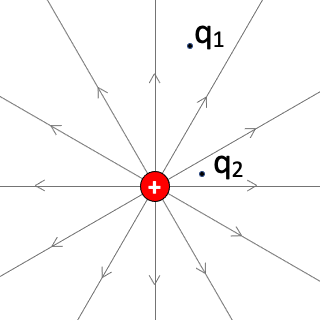
| Two small, identical charges, q1 and q2, are placed near a positively charged sphere as shown:
Which charge will experience the larger force? |
| Example 2 | ||||
|---|---|---|---|---|
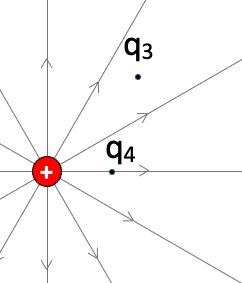
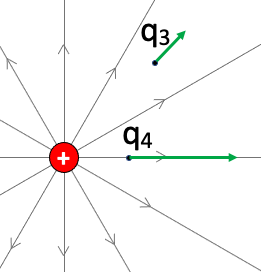
| Two small, identical positive charges, q3 and q4, are placed near a positively charged sphere as shown:
Draw force arrows to indicate the direction and magnitude of the forces acting on q3 and q4.
|
| Example 3 |
|---|
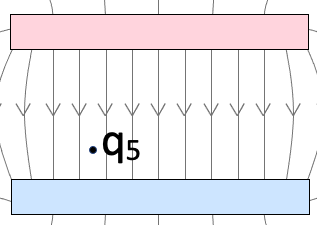
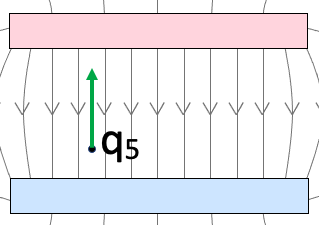
| A small, negative test charge, q5, is placed between parallel charged plates as shown:
Indicate the direction of the force on particle q5. |
| Example 4 |
|---|
Two small, negative charges, q6 and q7, are placed between parallel charged plates as shown: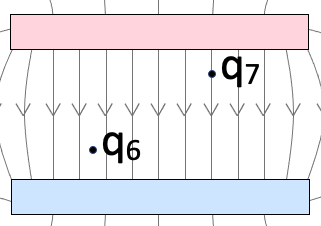
What can you say about the relative magnitude of the forces acting on the q6 and q7? |
| << Back | Electrostatics | Next >> |