[Advanced Physics Topic]
Electric Fields
An electric field is the region in which an electric charge experiences an electric force.
| Definition: Electric Field Strength |
|---|
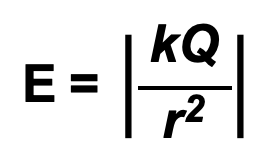
| The electric field strength, E, at a point in the field is the electric force F experienced per unit positive test charge, q, placed at that point.
|

The unit of electric field is newtons per coulomb (N C⁻¹), or volts per metre (V m⁻¹).
Electric field is a vector having a direction. The direction being the direction in which a light, stationary, positive charge would move.
| Example |
|---|
|
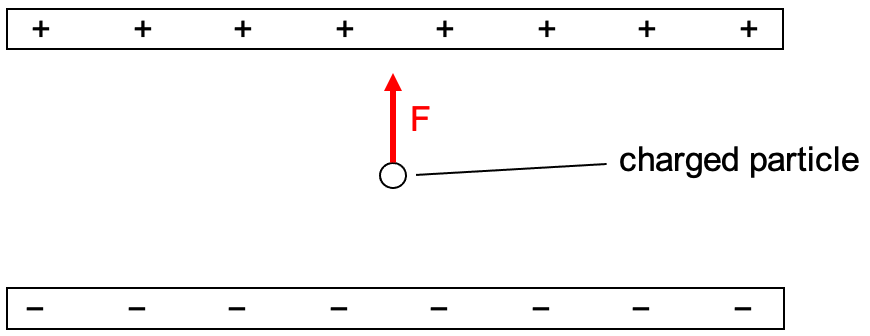
A light charged particle of charge −1.0 mC is placed in a uniform electric field of 5.0 N C−1.
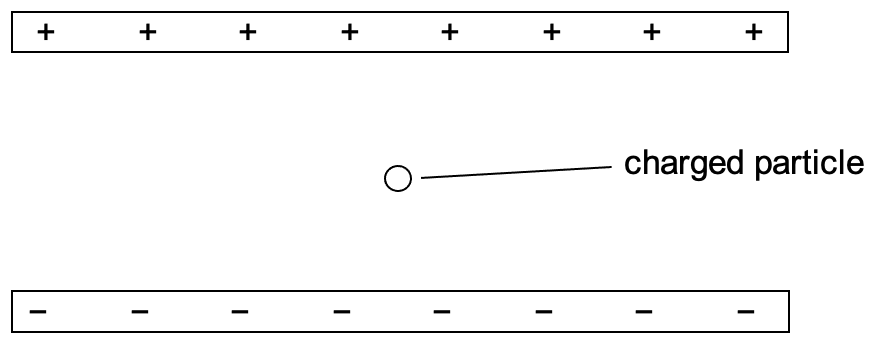 (a) Label the direction of the electric force on the particle. (b) Determine the magnitude of the electric force experienced by the particle. |
Coulomb’s Law

| Coulomb’s Law |
|---|
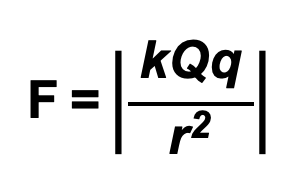
| Coulomb’s Law states that the magnitude of the electric force acting between two point charges is directly proportional to the product of the charges, and inversely proportional to the square of their distance apart. The direction of the force is along the line joining the two charges.
where: F: electric force |
| Example |
|---|
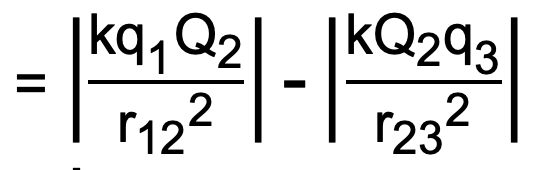
| The figure below shows three charges aligned along a straight line in vacuum.
Calculate the resultant force experienced by q2 given that: q1 = +4.0 μC, |


Electric Fields from Point-Charges

| Example |
|---|
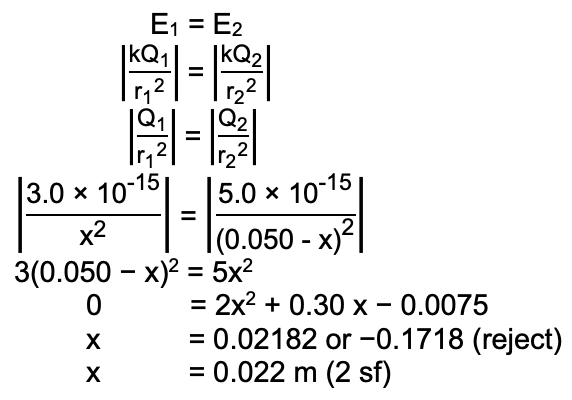
| A positively charged particle Q₁ has charge of 3.0 × 10⁻¹⁵ C. Another positively charged particle Q₂ has charge of 5.0 × 10⁻¹⁵ C. The two charged particles are placed 5.0 cm apart.
Determine the distance of a point N, measured from Q₁, where the resultant electric field strength due to both charges is zero. |
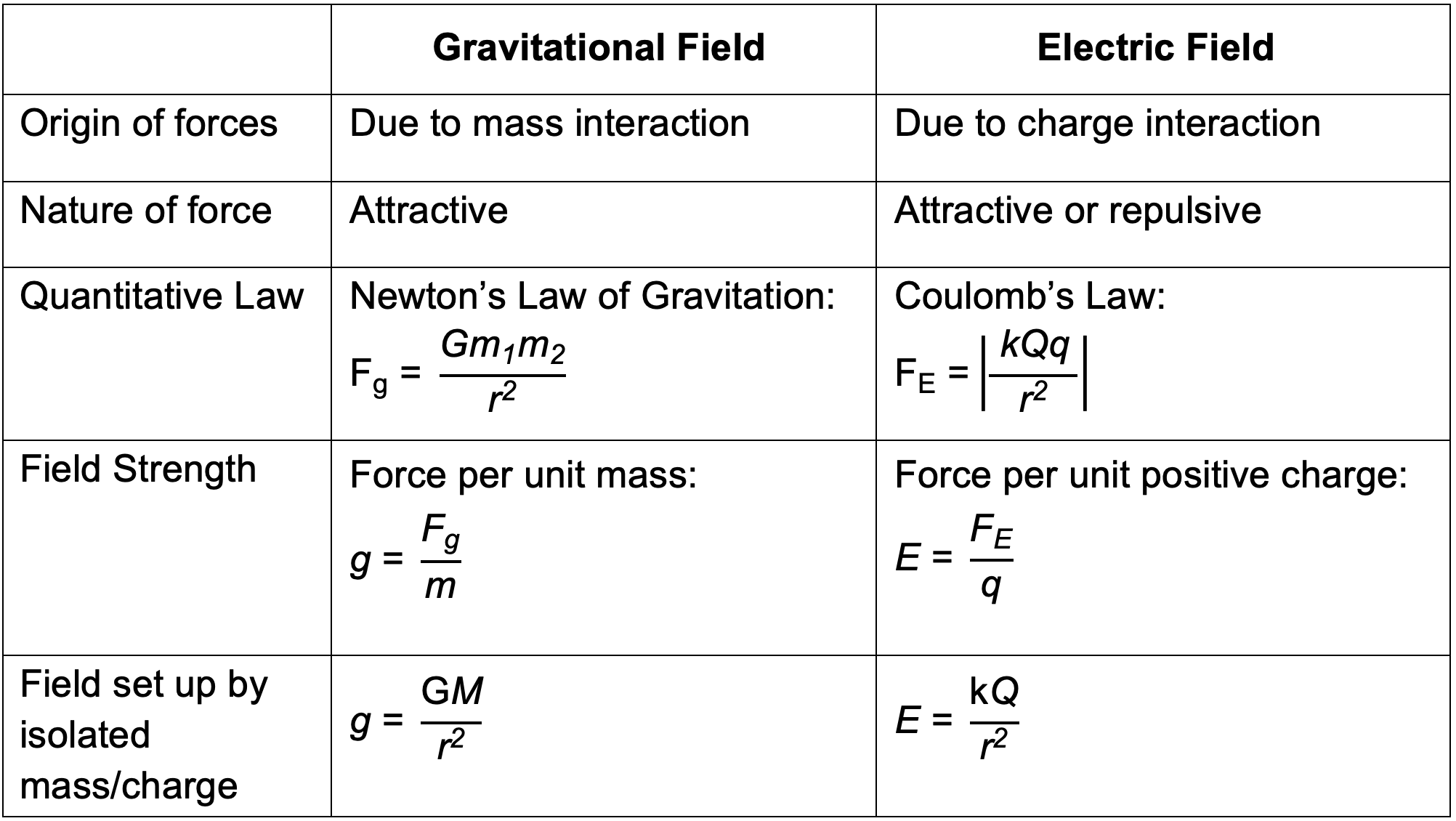
Comparison of Electric Fields with Gravitation Fields