Up till now, we have mostly been dealing with point objects (i.e. the object is a single point). In this section, we will look at large objects (consisting of many point objects).
Locate a Large (Extended) Image in a Mirror
The method simply requires us to consider the extended object to be made up of 2 or more points.
If we wish to locate the mirror image of this arrow
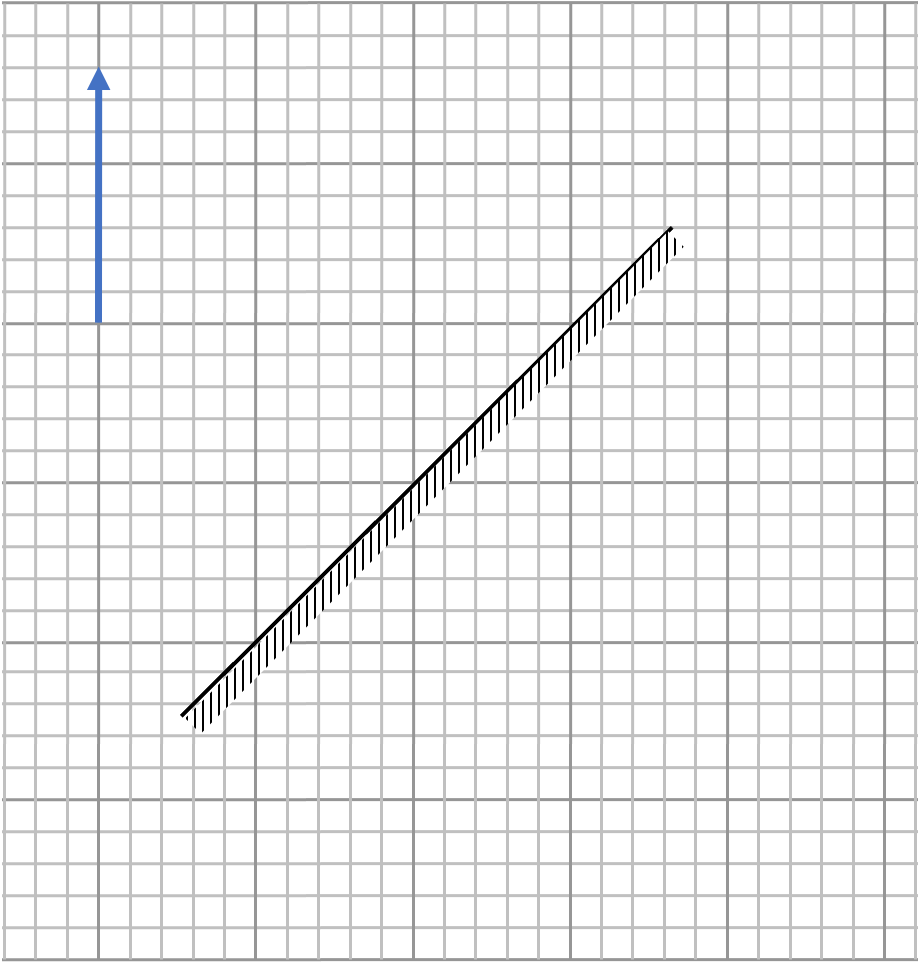
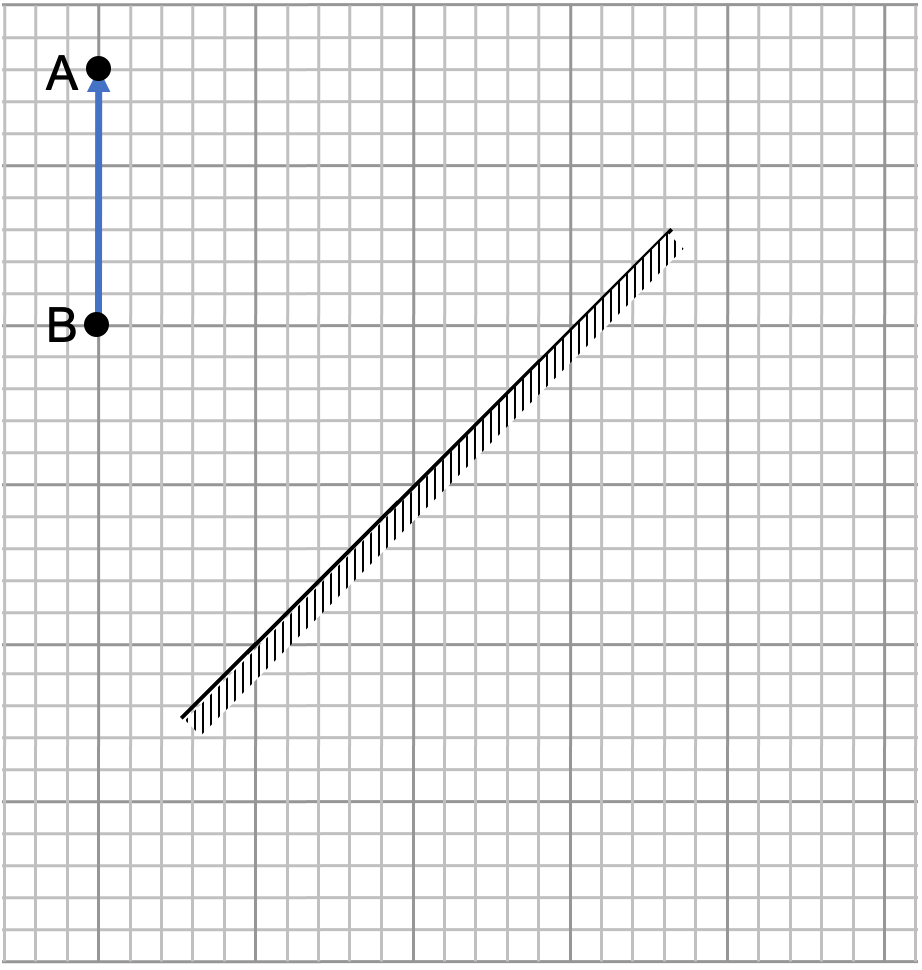
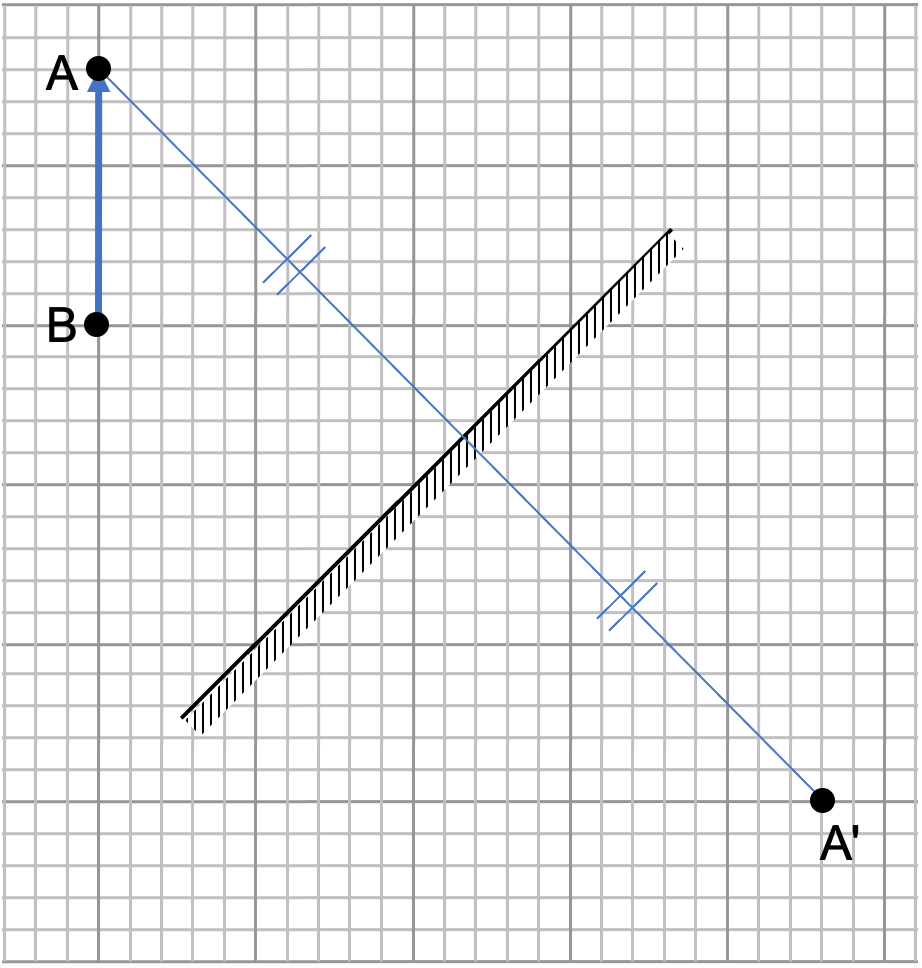
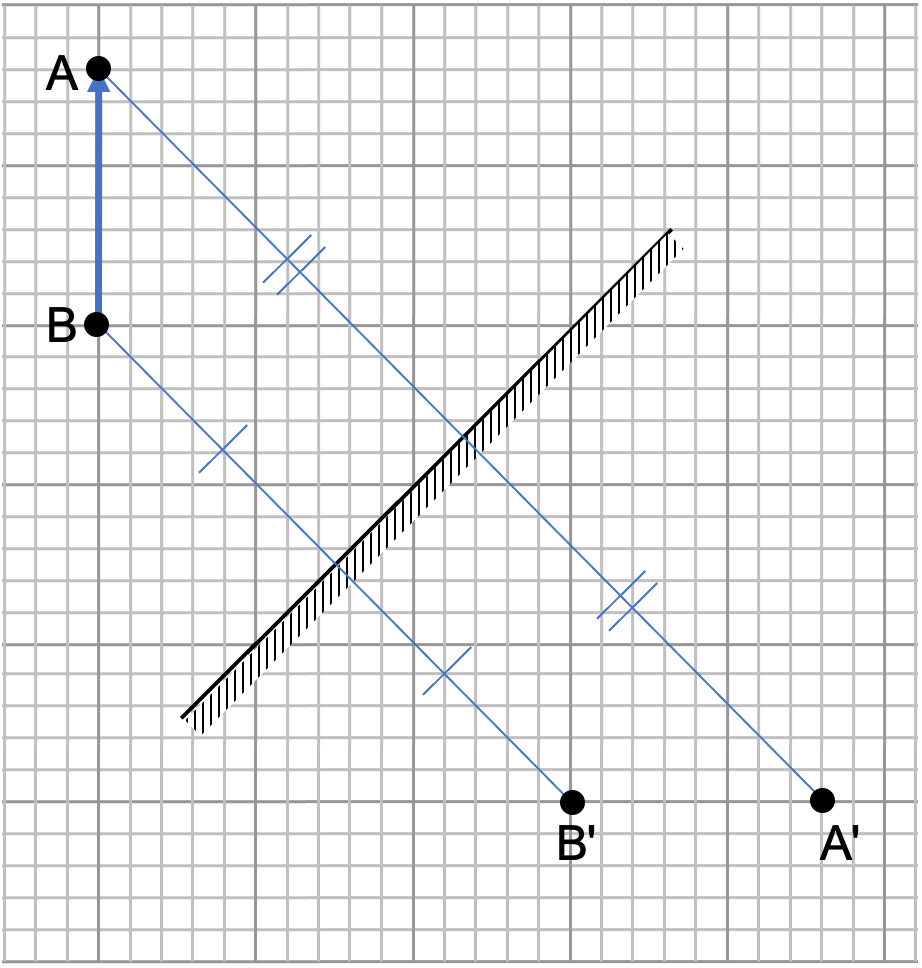
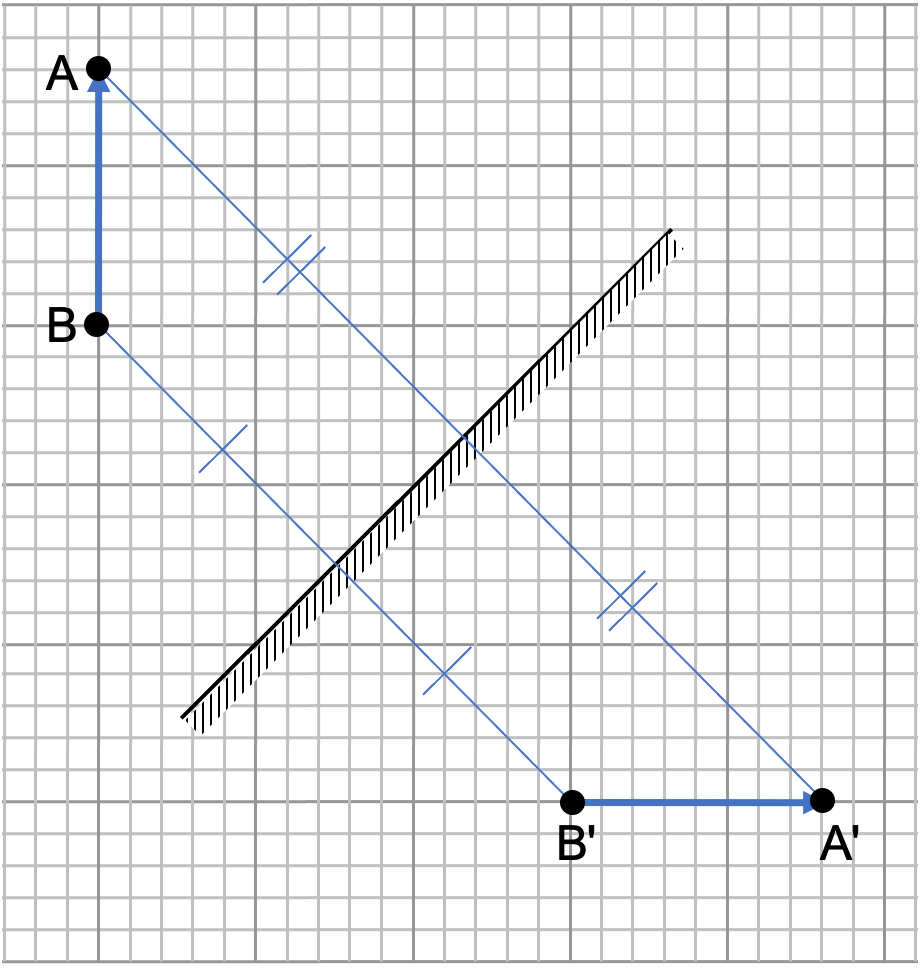
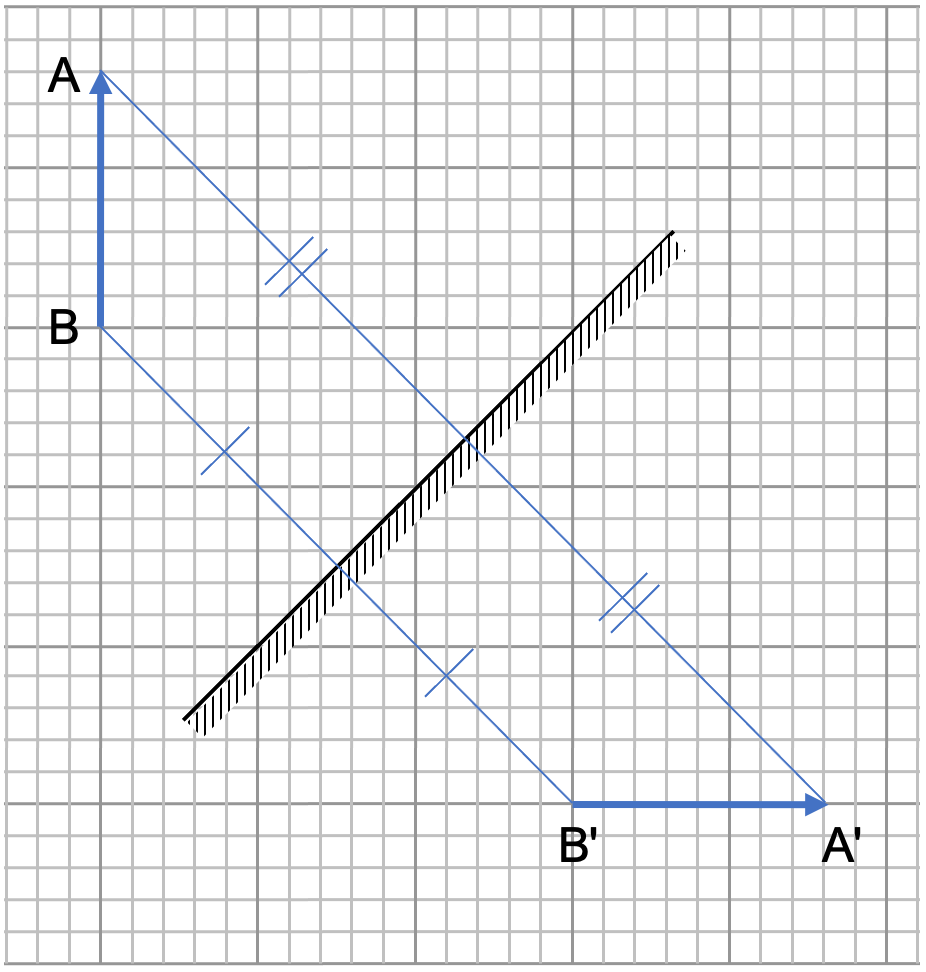
Ray Diagrams Showing an Extended Object
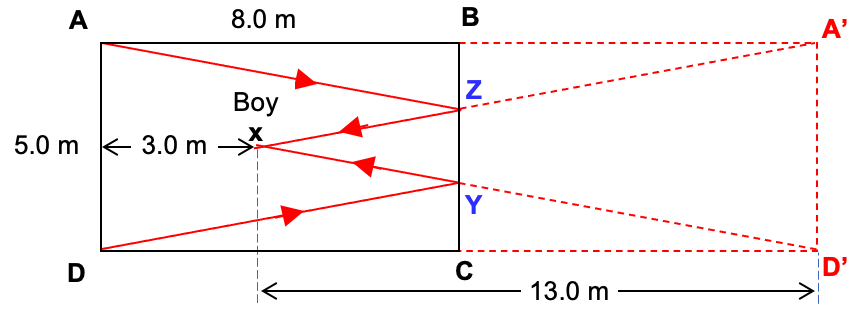
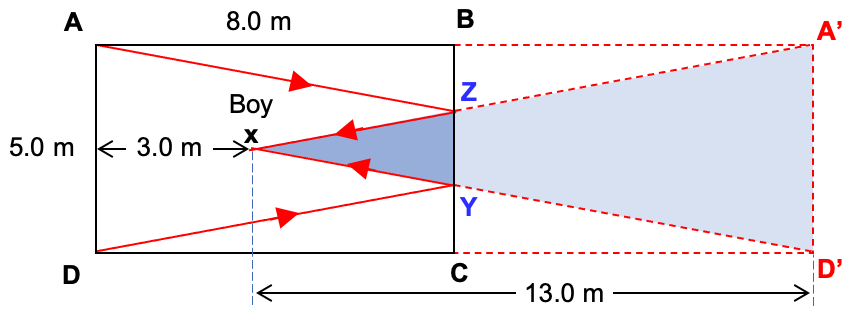
To see a large object in a mirror, the mirror must be large enough such that light rays from the furthest edges of the object can reflect off the mirror to get to the eye.
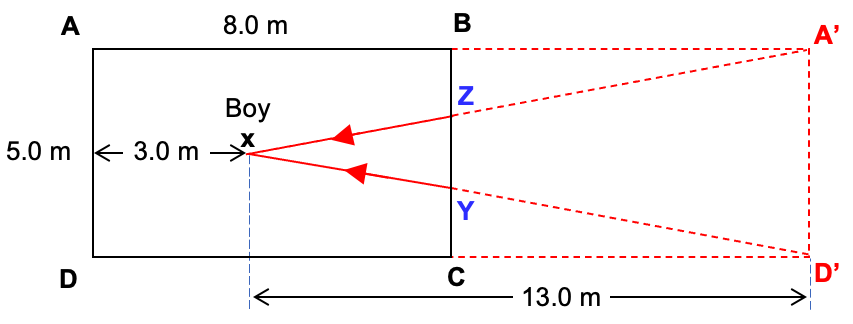
Hence, there will also be two light rays. However, instead of two light rays starting at the middle of the object, and ending at two different points on the eye, this situation has light rays starting at different points on the object (usually from two extreme ends of the object, e.g. top and bottom), but ending at the same point on the eye.
| Example Size of Mirror Using Similar Triangle Method |
|---|
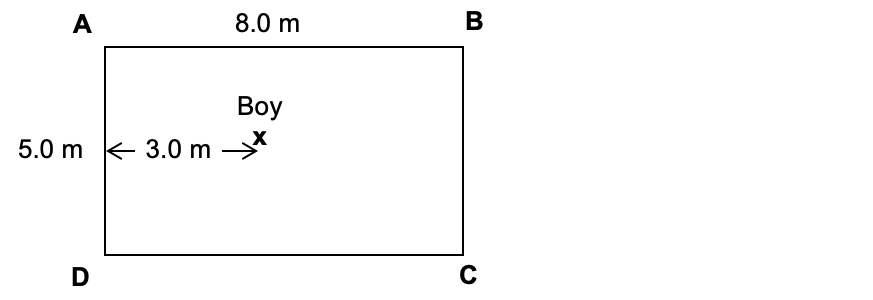
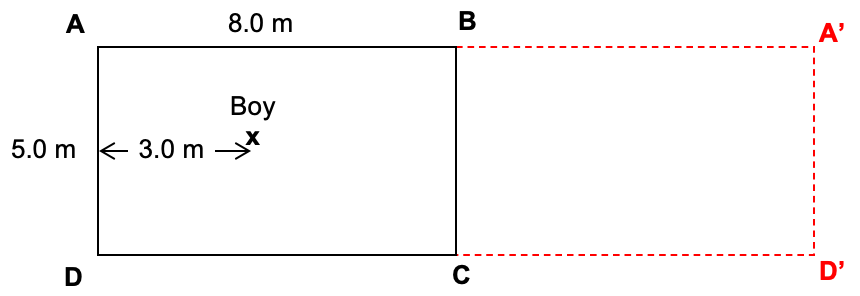
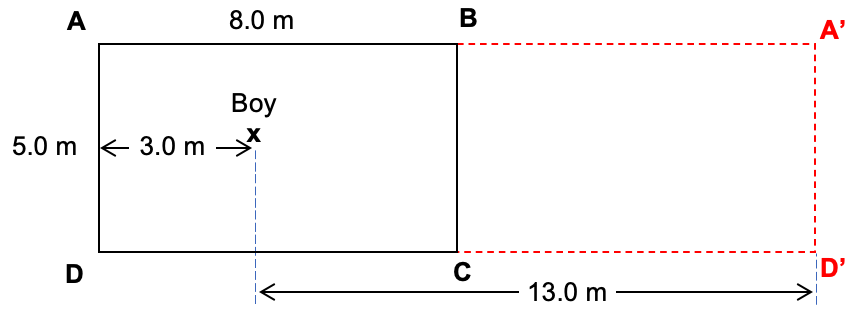
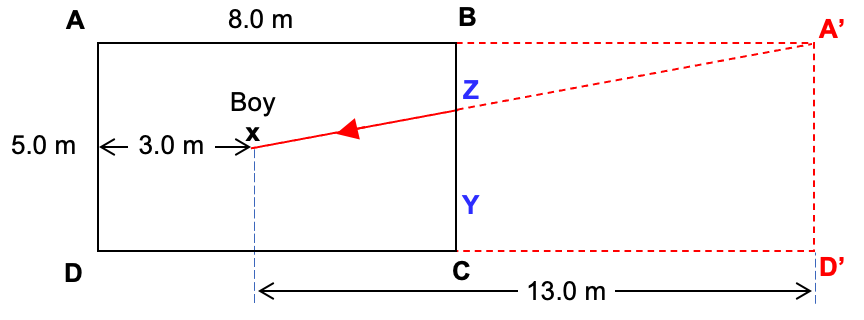
| A boy stands 3.0 m away from wall AD facing the wall BC in a room that is 8.0 m by 5.0 m. Determine the minimum length of the mirror required to be mounted on wall BC so that the boy can see the full length of the image of the wall AD in the mirror.
|
| << Back | Reflection | Next >> |