Circuit breakers are a special type of switch that are usually found in the consumer unit is often referred to as a “fuse box”.
The consumer unit contains the Main Switch which allows the user to switch off all the electricity supply to the house.
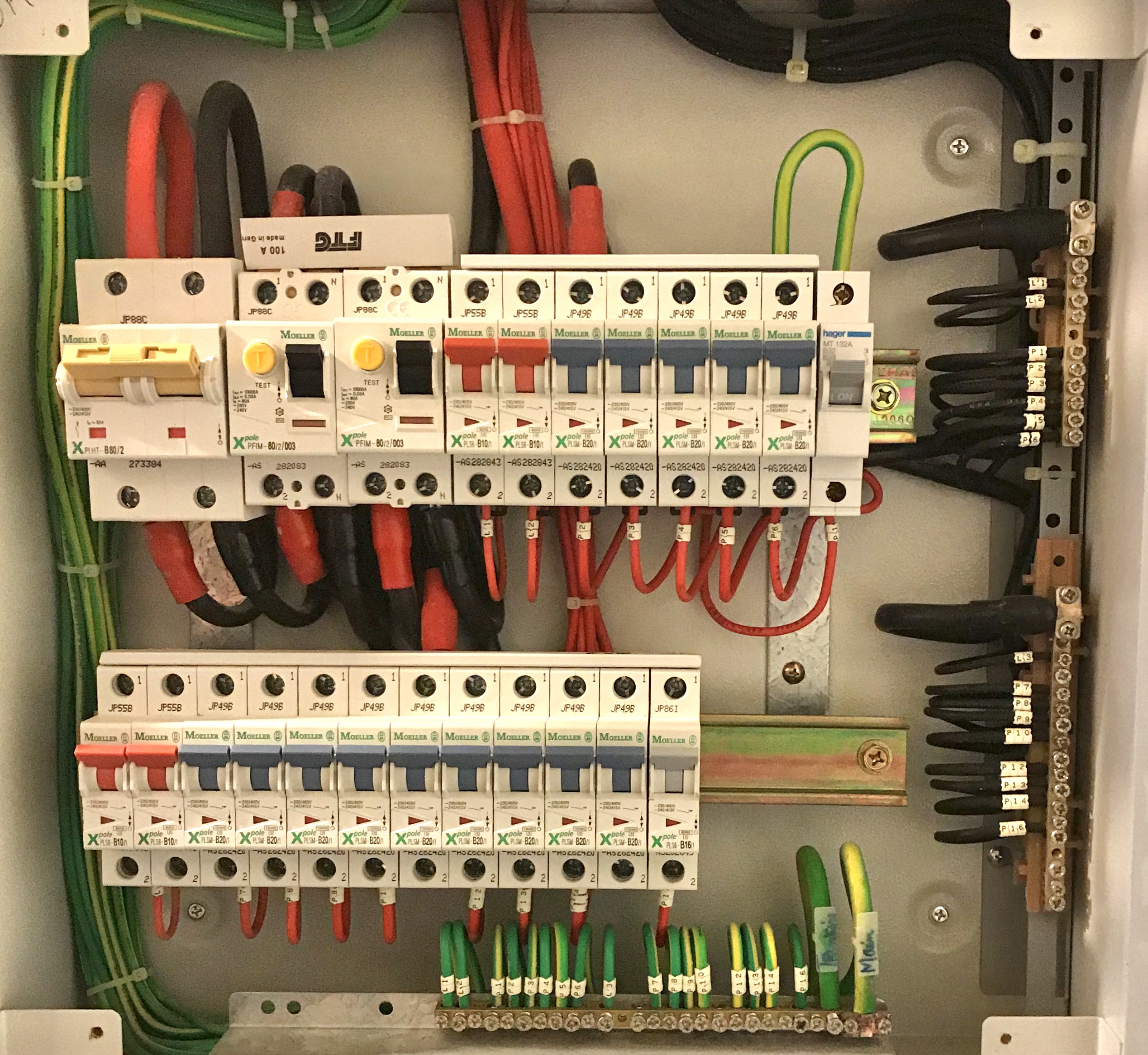 inside a Consumer Unit (with the cover removed)
MCBs
It also houses a series of smaller switches called Miniature Circuit Breakers (MCB). The currents in separate circuits in the house flow through separate MCBs.
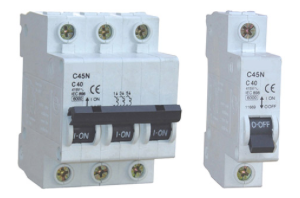
When it detects high currents due to short circuits or overloads, the MCB will switch off.
RCCBs
The Residual Current Circuit Breaker (RCCB) formally known as the Earth Leakage Circuit Breaker (ELCB) is another type of switch found in the consumer unit.
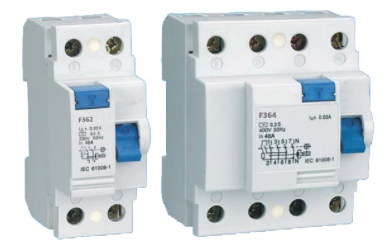
When a circuit is operating normally, the current along the live wire must be equal to the current flowing along the neutral wire.
Current flowing along the live and the neutral wires are compared by the RCCB and the RCCB trips when it detects an imbalance in the currents along the wires.
RCCBs do not trip when a current is very high, as long as there is no imbalance. Hence it does not work to protect circuits against overloading or short circuits.
Any imbalance means that some of the current has taken another path i.e. a leakage has occurred. E.g. when a person touches a live wire, some current will flow through the person instead of the live wire or some of the current flows through the earth wire, which should not have any current when a circuit is working normally.
| << Back | Practical Electricity | Next >> |