To measure even smaller lengths, a micrometer is used as it has an even higher precision i.e. 0.001 cm (0.01 mm) or better. However, its range is usually only 2 cm or 3 cm.
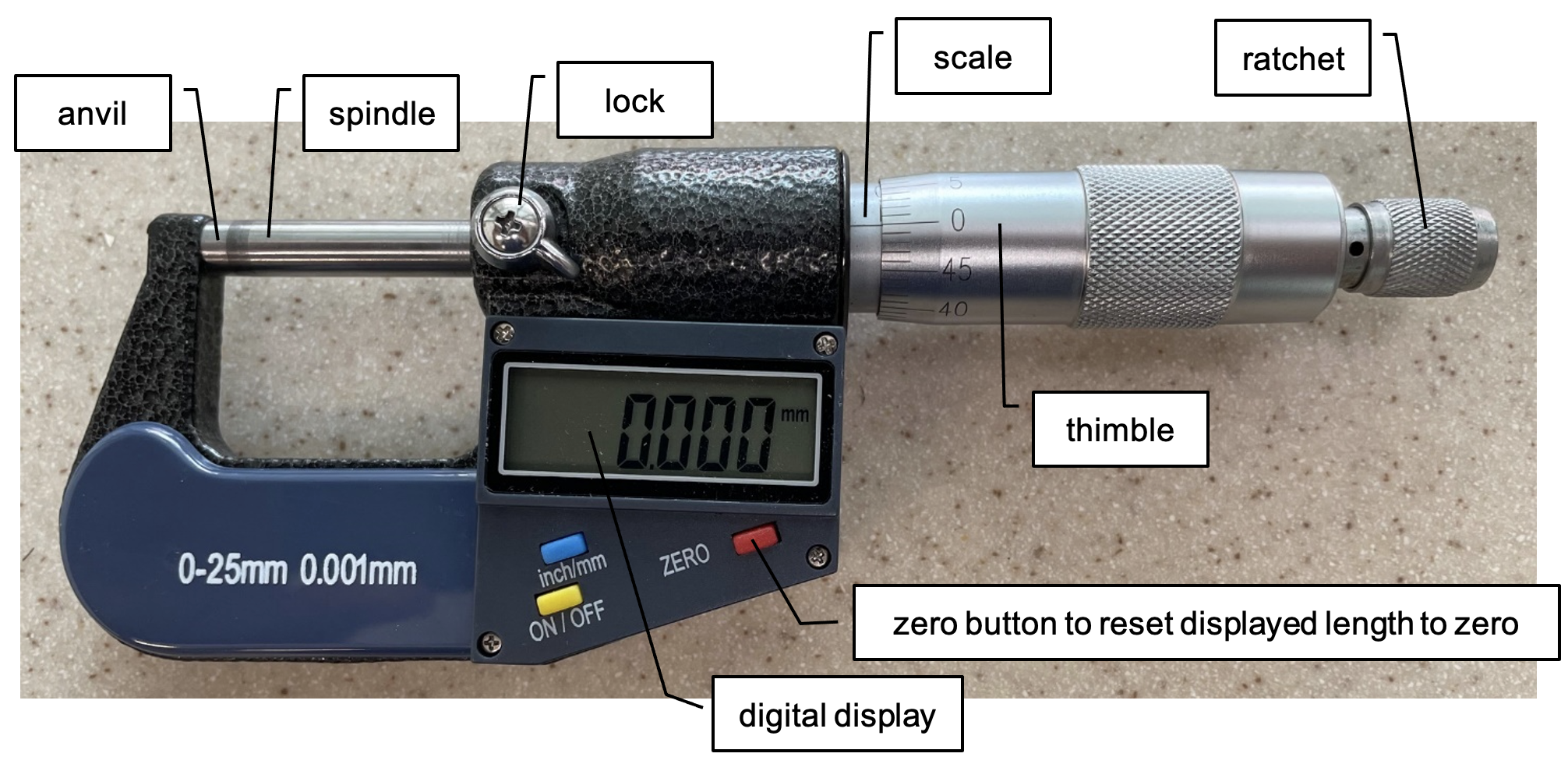
Precision: 0.01 mm or 0.001 cm
(record to 1 less d.p. than the digital display, to account for other significant source of error, e.g. over tightening jaws, thermal expansion with change in temperature)
Measuring range: 0.00 cm to 2.500 cm
| OLD NOTES (You don’t need to know how to read a Non-digital micrometer) | ||||||
|---|---|---|---|---|---|---|
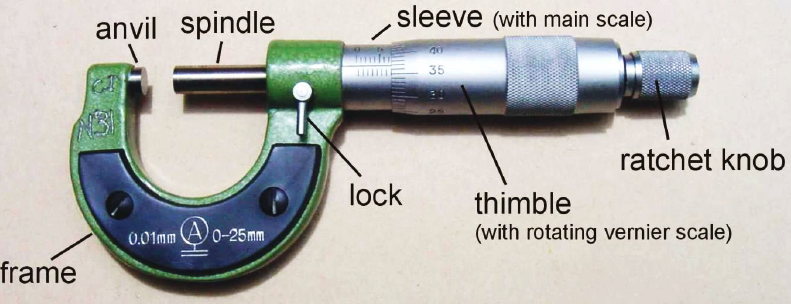
| Reading a micrometer screw gauge (msg) is a matter of reading from the main scale and the rotating vernier scale and combining the two.
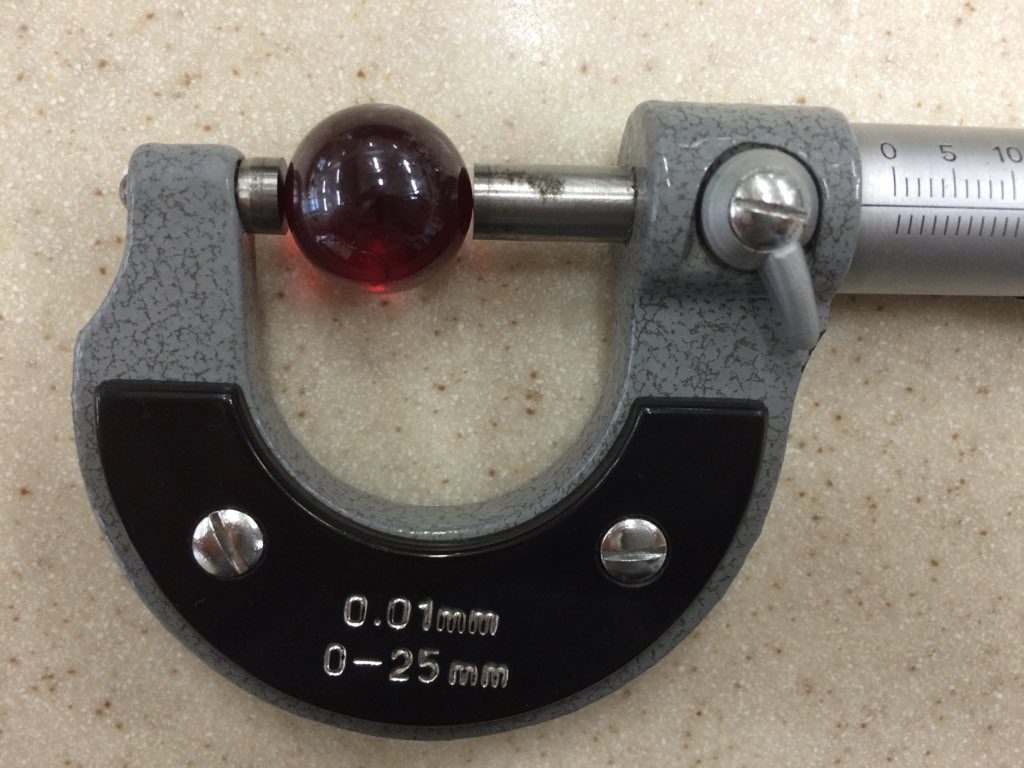
The shows the micrometer being correctly used to measure the diameter of a marble.
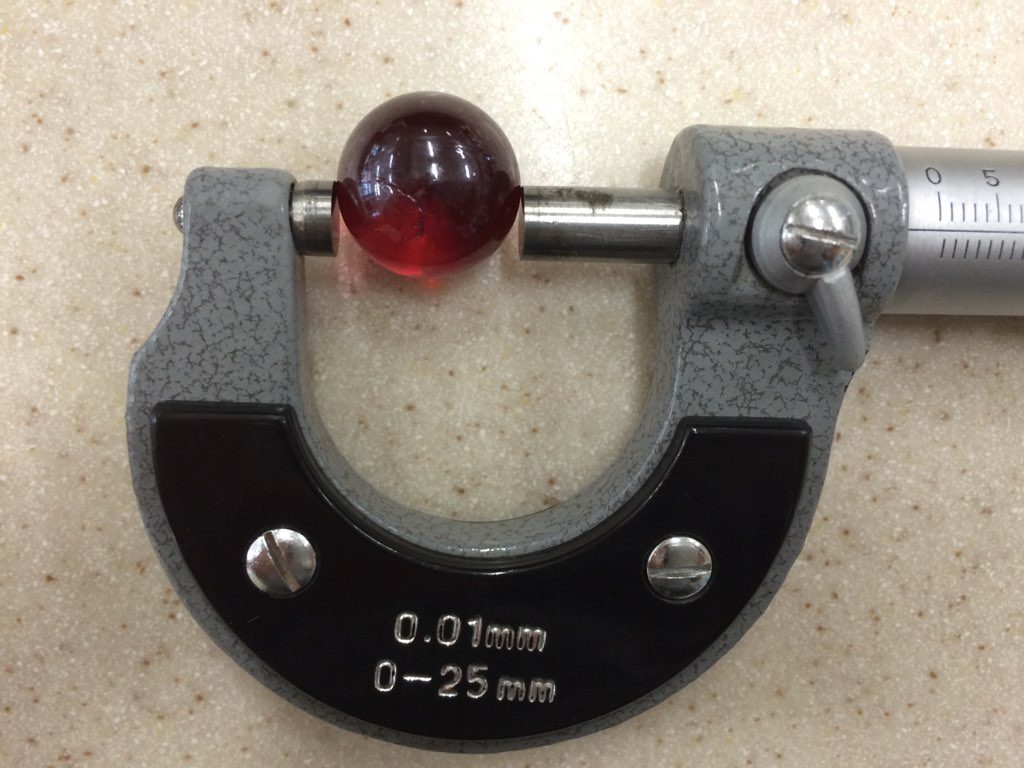
This shows the micrometer being wrongly used. We can not be sure this measurement is actually across the diameter.
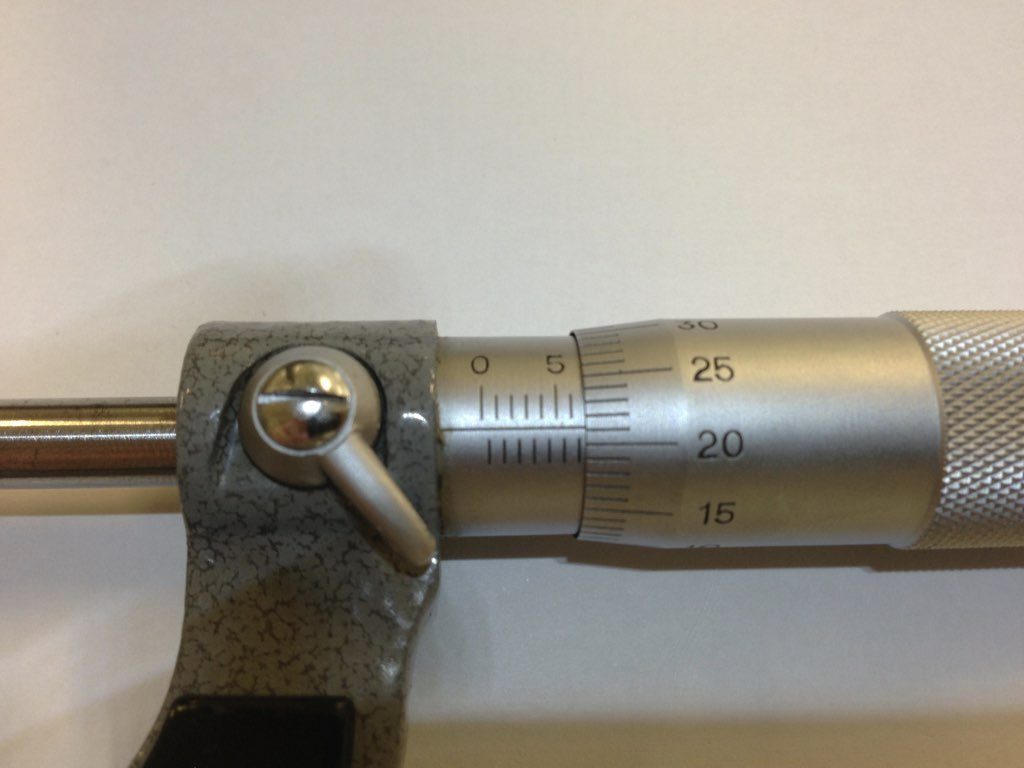
The reading on the above MSG is 6.5 mm + 0.21 mm = 6.76 mm
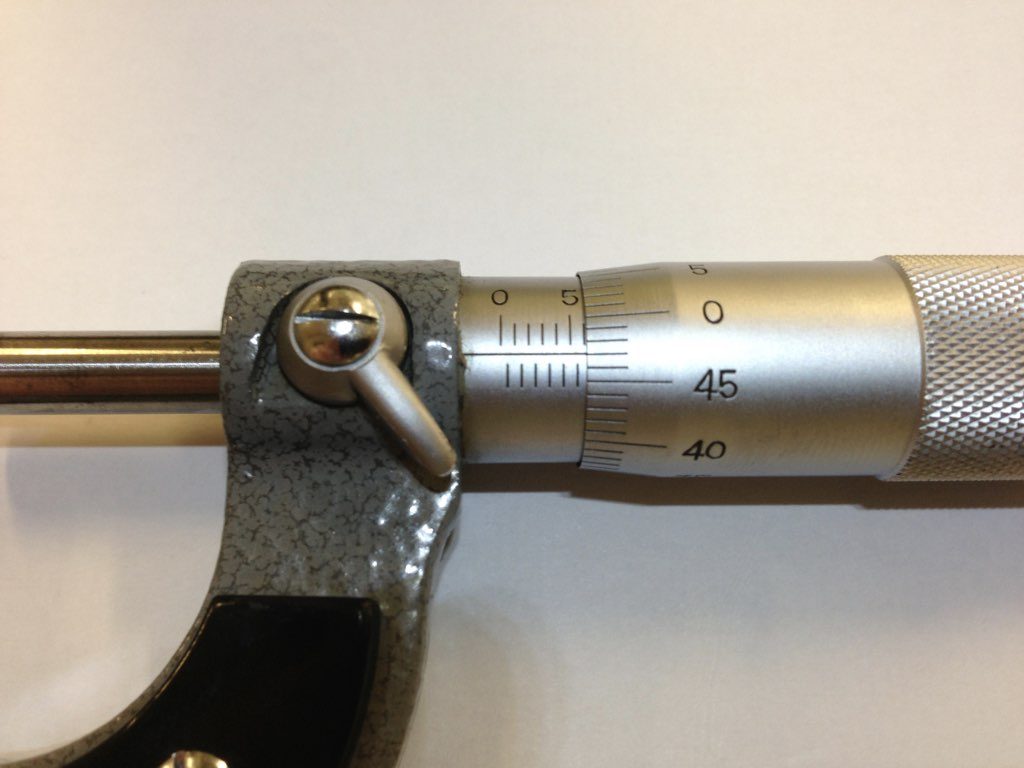
The reading on the above MSG is 5.5 mm + 0.47 mm = 5.97 mm Note: the mainscale reading is not 6.0 mm, because that would give a final reading of 6.47 mm (~6.5 mm), which os obviously wrong.
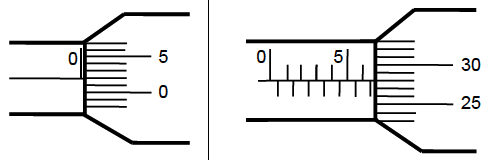
With no zero error (zero reading of 0.00 mm) no corrections to subsequent readings is needed.
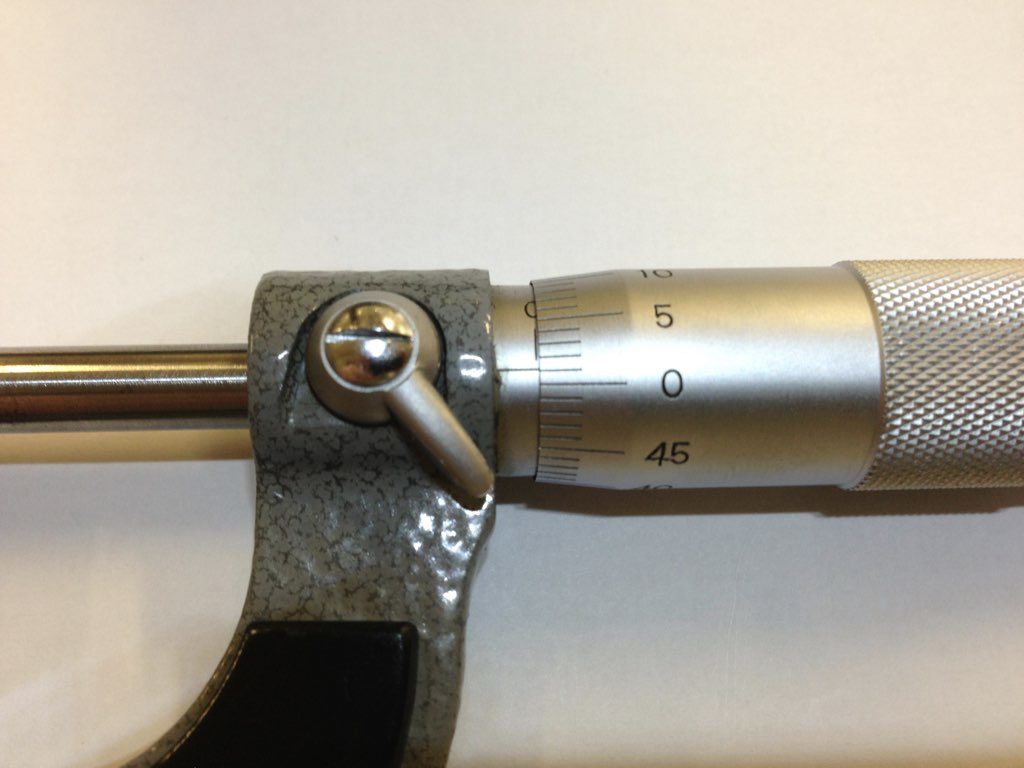
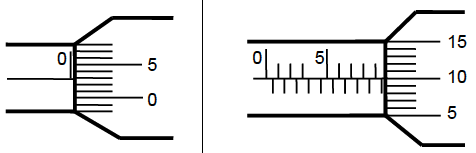
With a positive zero error (zero reading of +0.01 mm) all subsequent readings will need to be corrected. Corrected (True) Reading = Taken Reading – Zero Reading i.e. Corrected Reading = Taken Reading – 0.01 mm in this case.
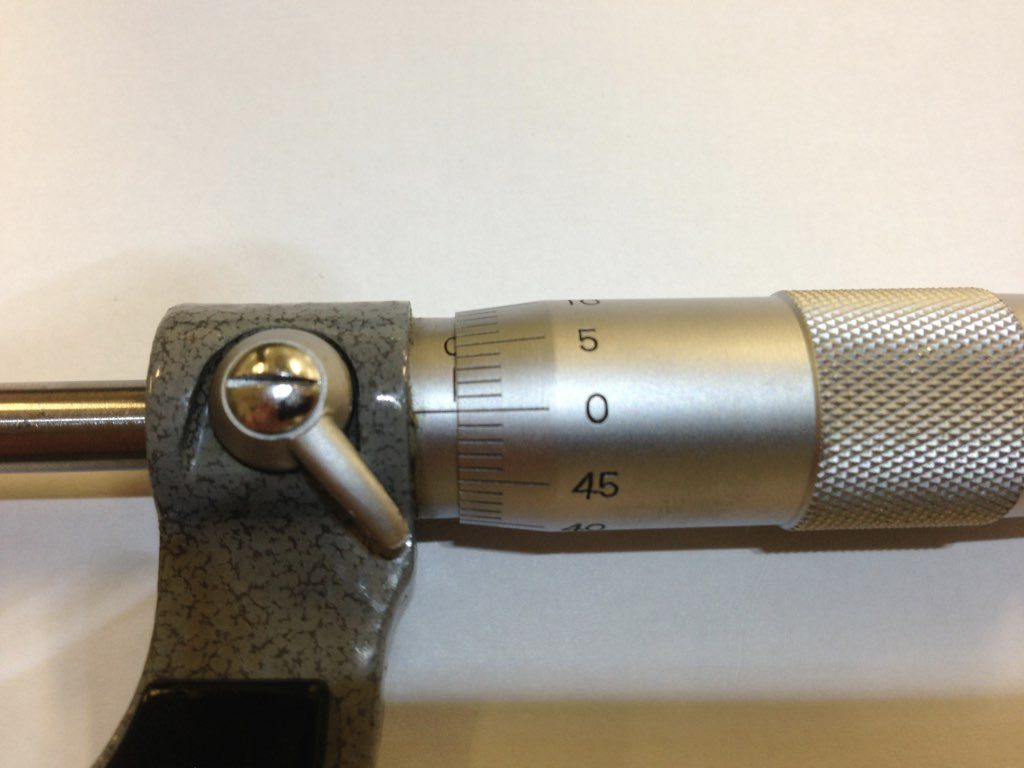
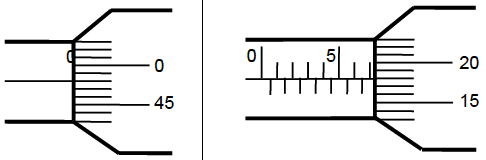
With a negative zero error (zero reading of -0.02 mm) all subsequent readings will need to be corrected. Corrected (True) Reading = Taken Reading – Zero Reading i.e. Corrected Reading = Taken Reading – (-0.02 mm) in this case.
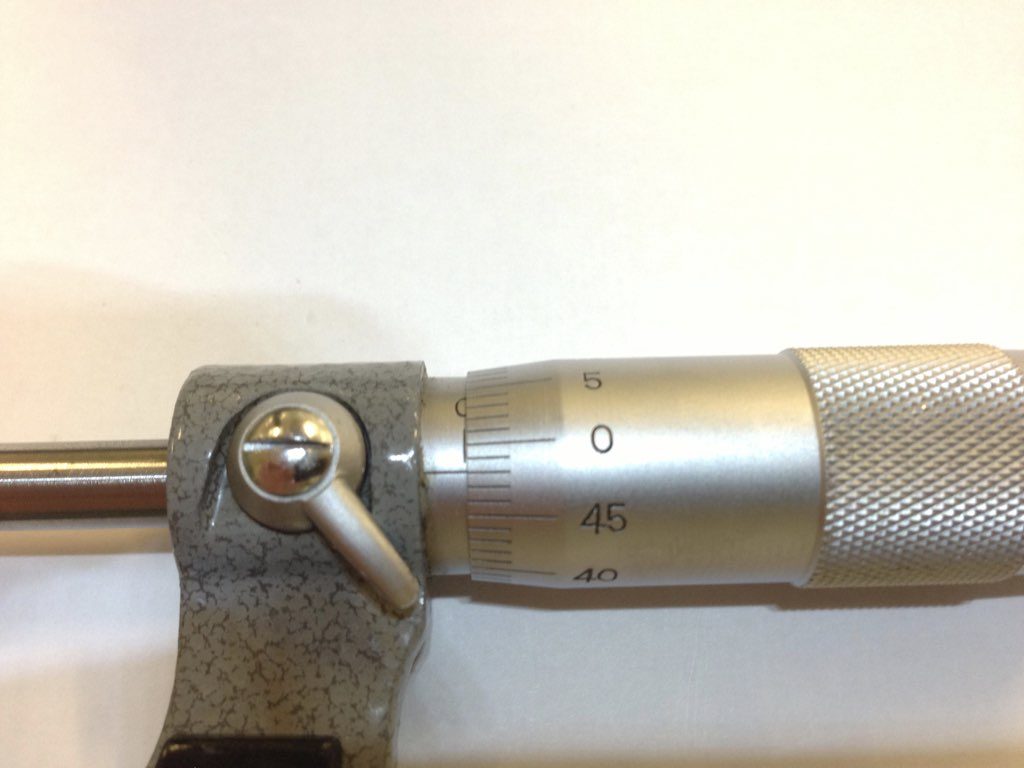
We cannot see the zero marking line on the main scale so there must be a negative zero error. Again the vernier scale needs to be read backwards when reading a negative zero error. ie. count down from the 0 line. |
| << Back | Measurement | Next >> |