The physical quantity of length is measured in SI units of metres (m). At different scales millimetres (mm), centimetres (cm), kilometres (km), etc may be more convenient to use.
| metre vs. meter |
|---|
| meter is the US spelling, we should be using metre.
The word meter denotes a measuring instrument – eg voltmeter, ammeter, etc. |
The instrument you use will mostly depend on the length you are measuring.
| Instrument | Precision | Range |
| measuring tape | 1 mm | more than 100 cm |
| metre rule | 1 mm | up to 100 cm |
| digital callipers | 0.1 mm | up to 15 cm |
| digital micrometer screw gauge | 0.01 mm | up to 3 cm |
Zero Error
Rulers and some other instruments can all experience zero errors. This happens when the reading that should be zero is not measured at zero. This can easily be corrected for.
In general to correct for a Zero Error apply the following:
Corrected Reading = Reading – (Zero Reading)
Consider the example of measuring the length of a crayon:
No Zero Error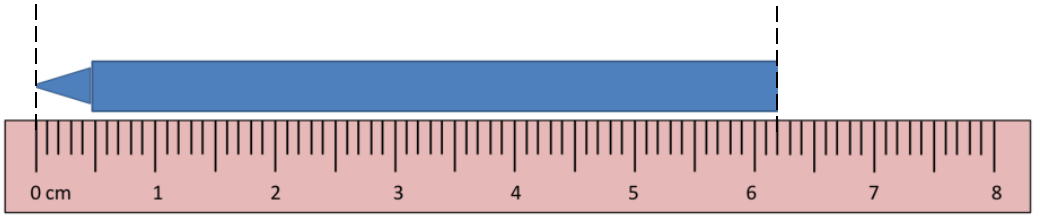
reading at start of crayon: 0.0 cm
reading at end of crayon: 6.2 cm
length of crayon = 6.0 – 0.0 = 6.2 cm
Positive Zero Error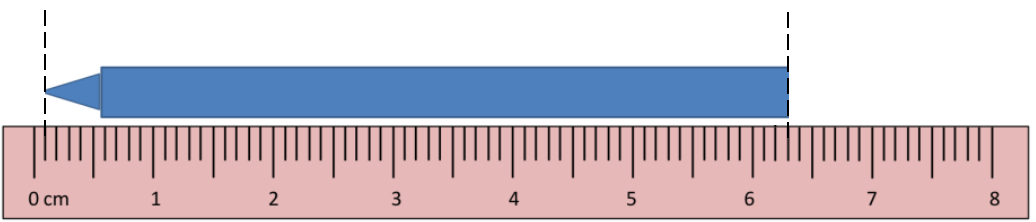
reading at start of crayon: +0.1 cm
reading at end of crayon: 6.3 cm
length of crayon = 6.3 – (0.1) = 6.2 cm
Negative Zero Error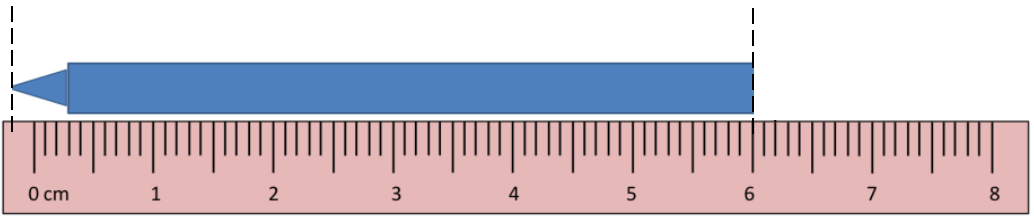
reading at start of crayon: –0.2 cm
reading at end of crayon: 6.0 cm
length of crayon = 6.0 – (–0.2) = 6.2 cm
| << Back | Measurement | Next >> |