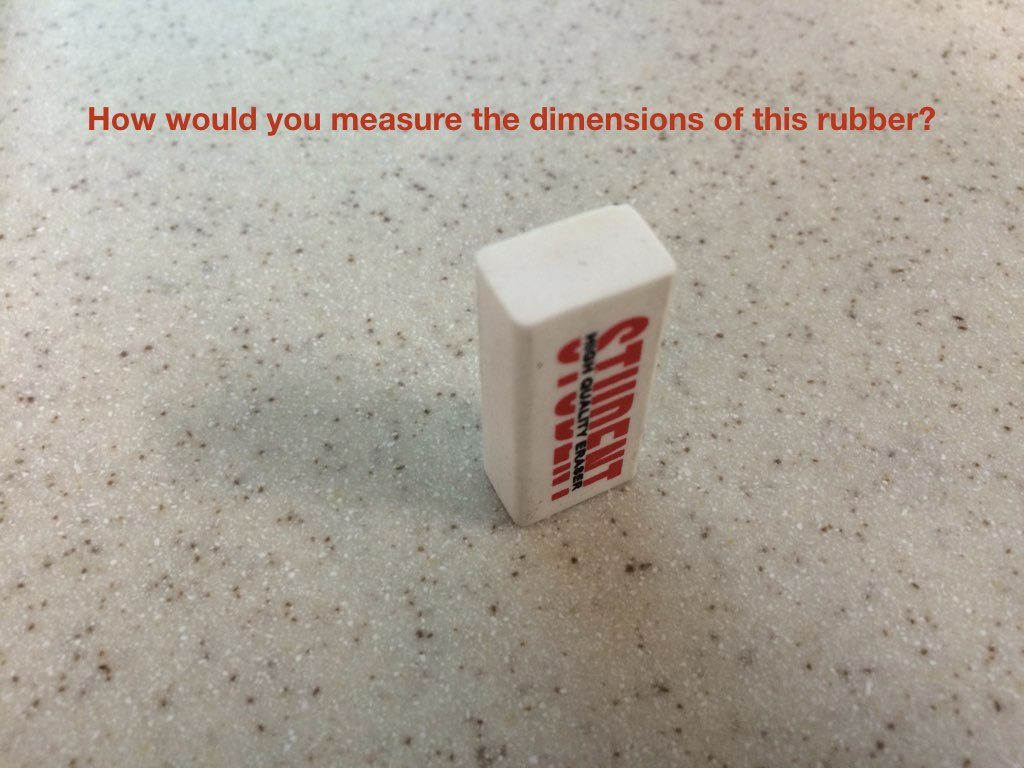
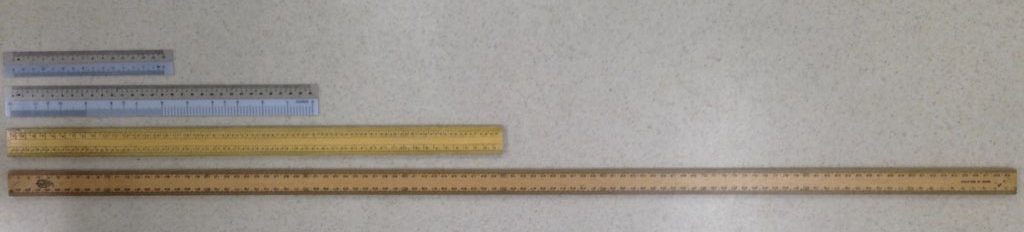
Rulers come in a variety of lengths. You will be expected to have your own 30 cm transparent ruler.
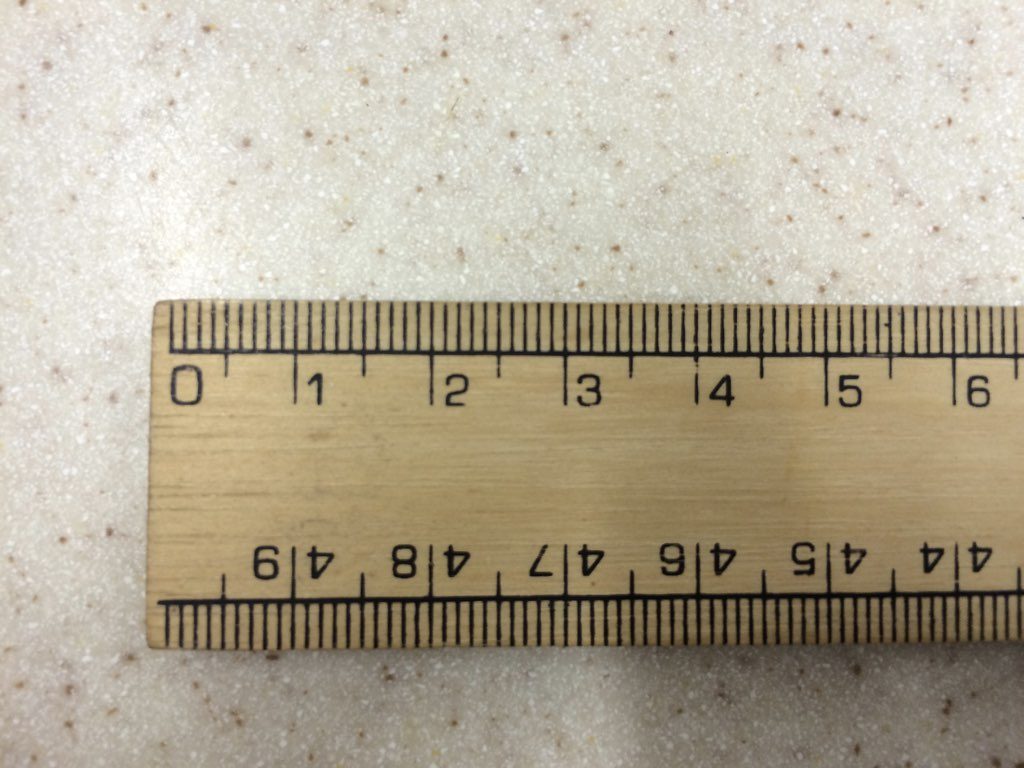
The wooden metre and half-metre rules in the Physics Labs sometimes have damaged (worn / rounded) ends and so care is needed not to introduce a zero error.
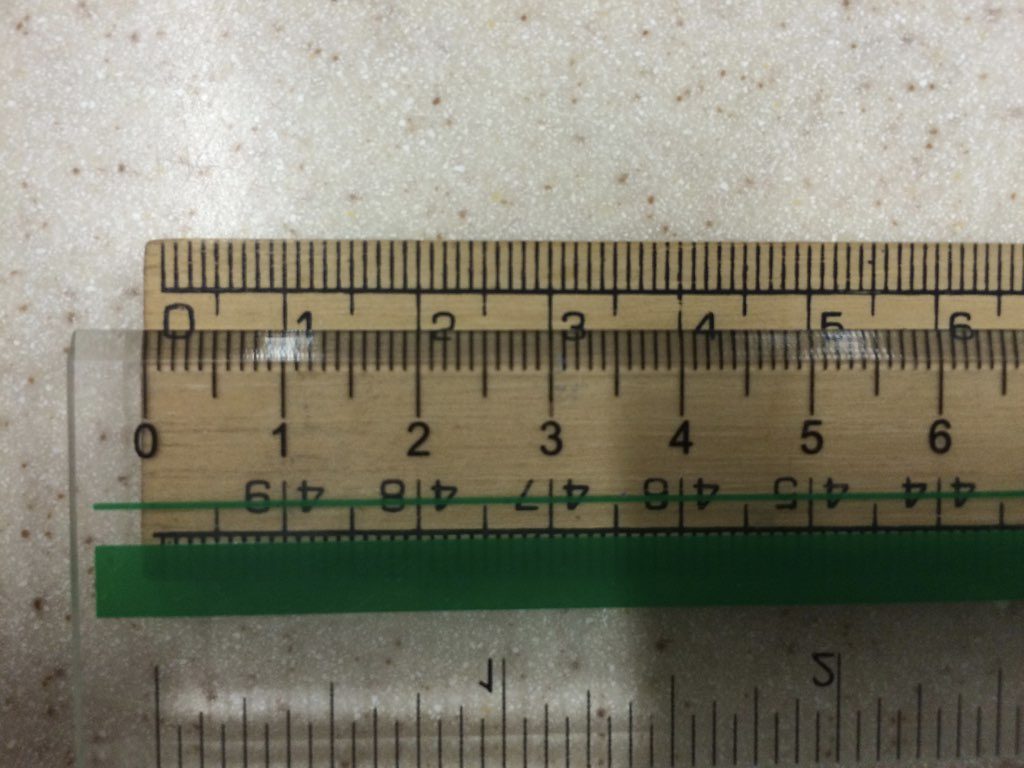
It is easy to misread the wooden rulers in the Physics Lab. The zero (end of the ruler) often does have a mark.
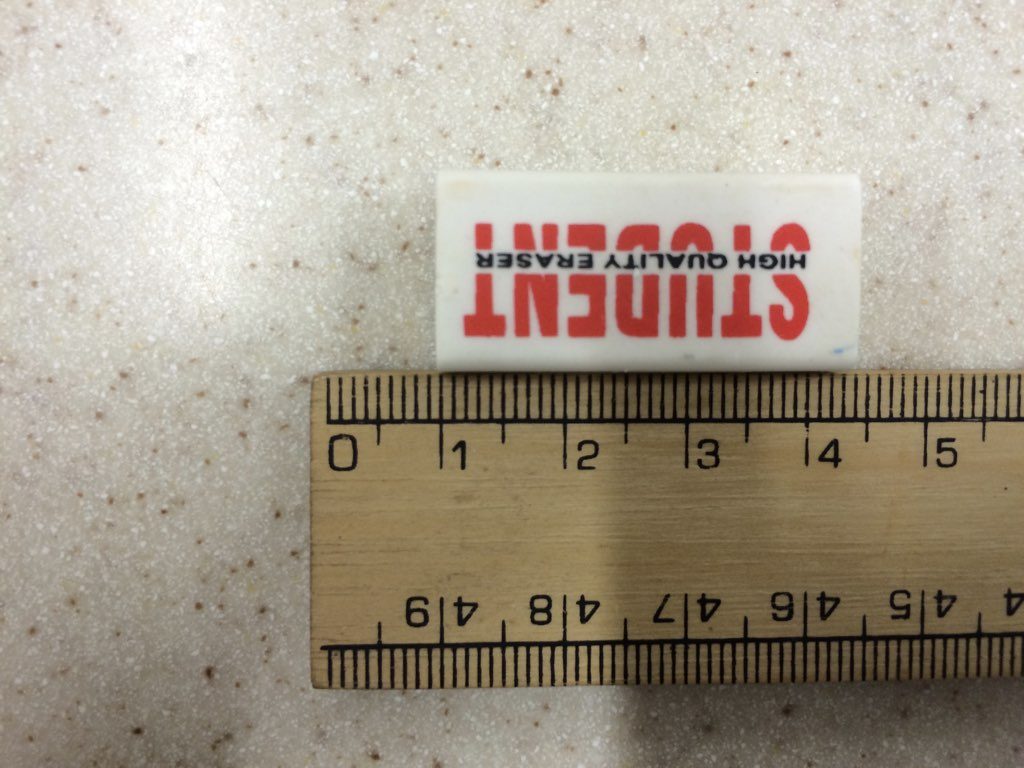
If the end of the rule is damaged it can still be used to measure.
Obviously the true length of the eraser is 4.4 cm – 1.0 cm = 3.4 cm
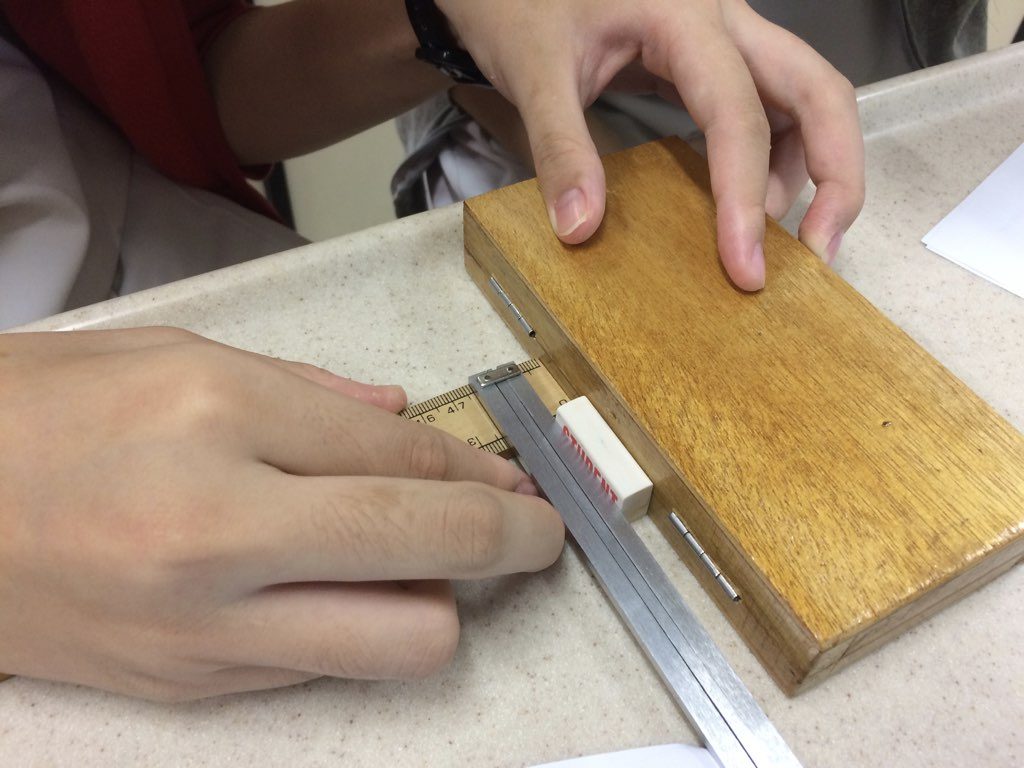
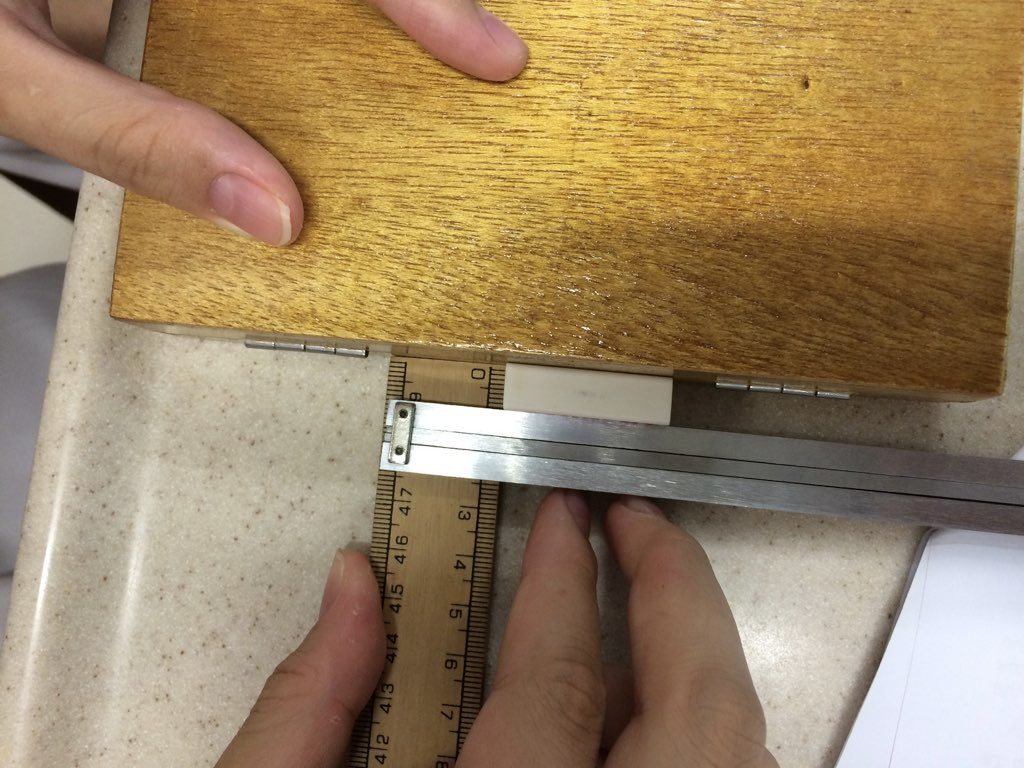
The above 2 images show how we can increase the accuracy of readings.
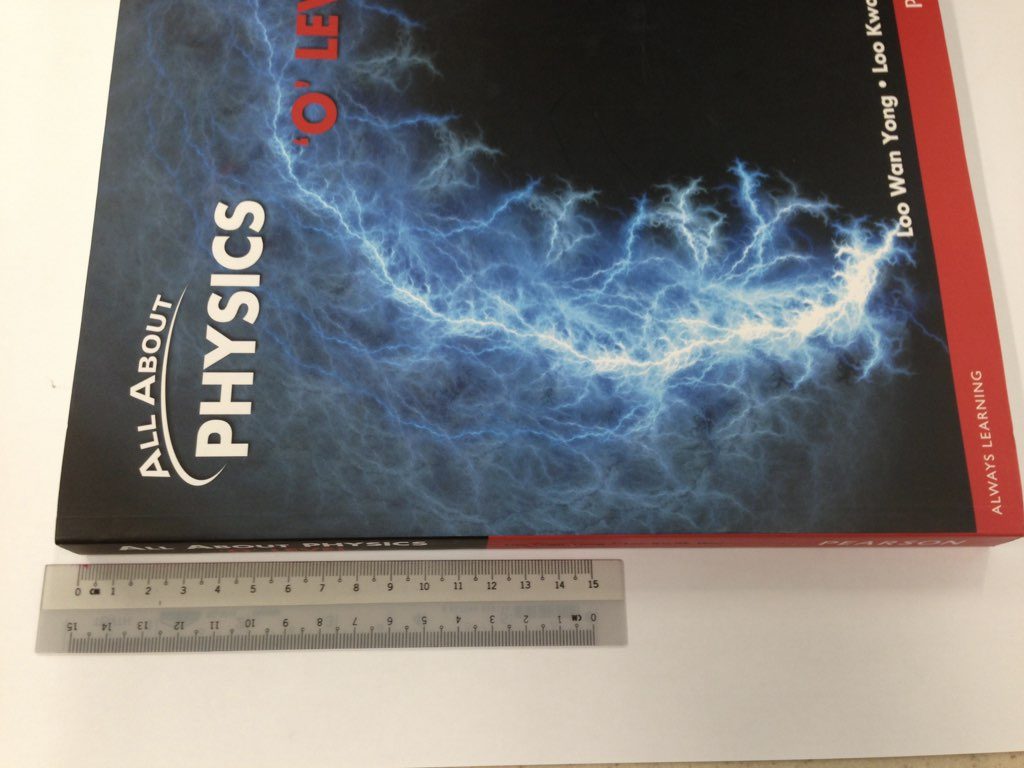
You may be tempted to use a small ruler. Don’t!
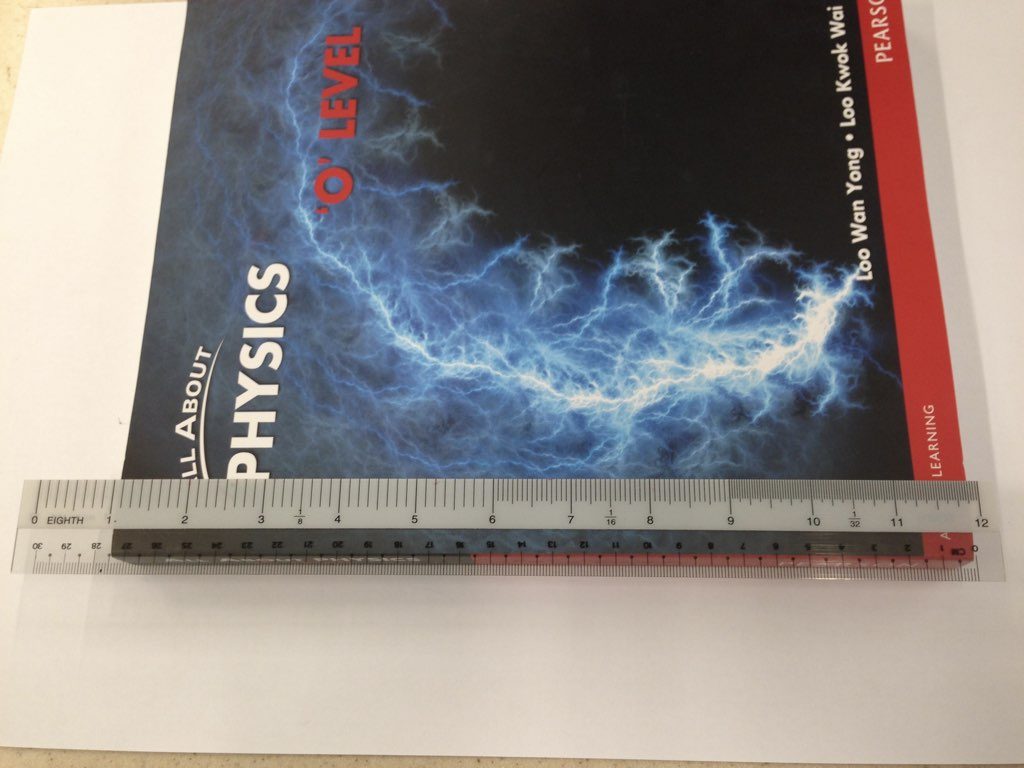
A 30 cm ruler is the correct instrument that should be used to measure this book.
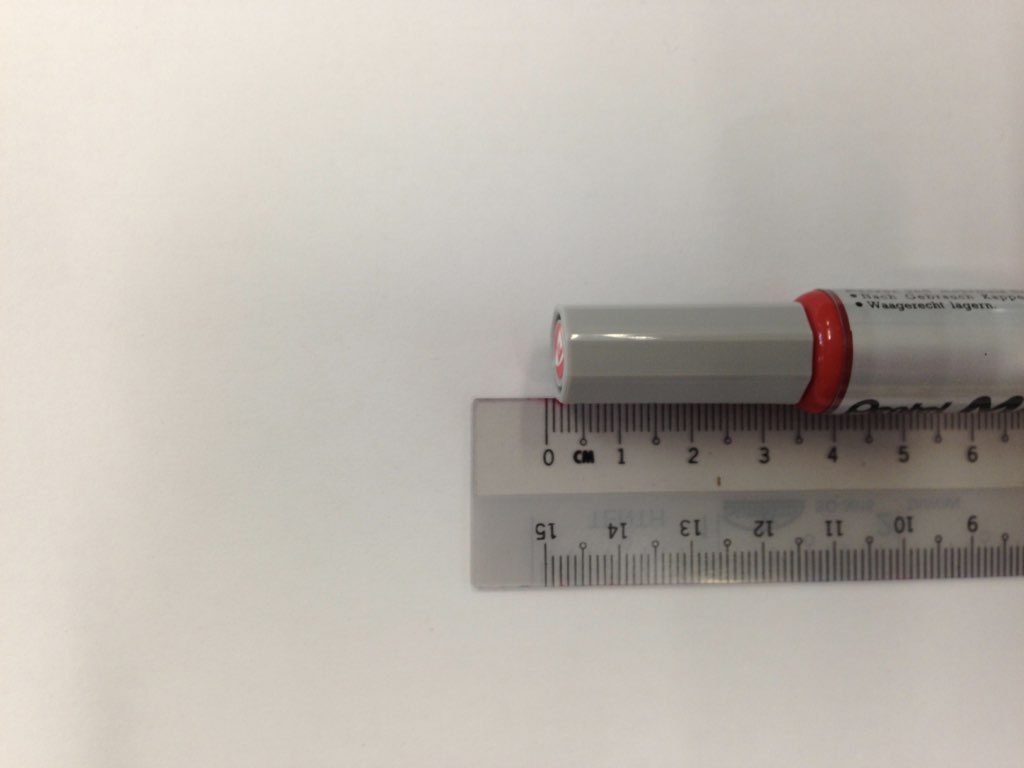
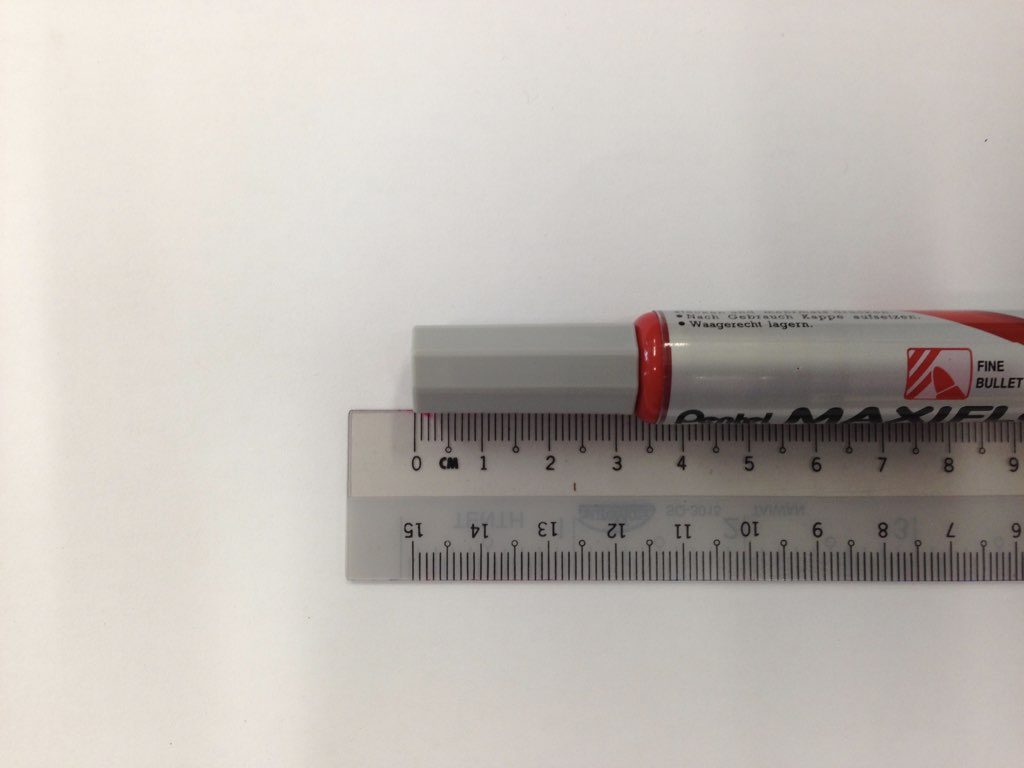
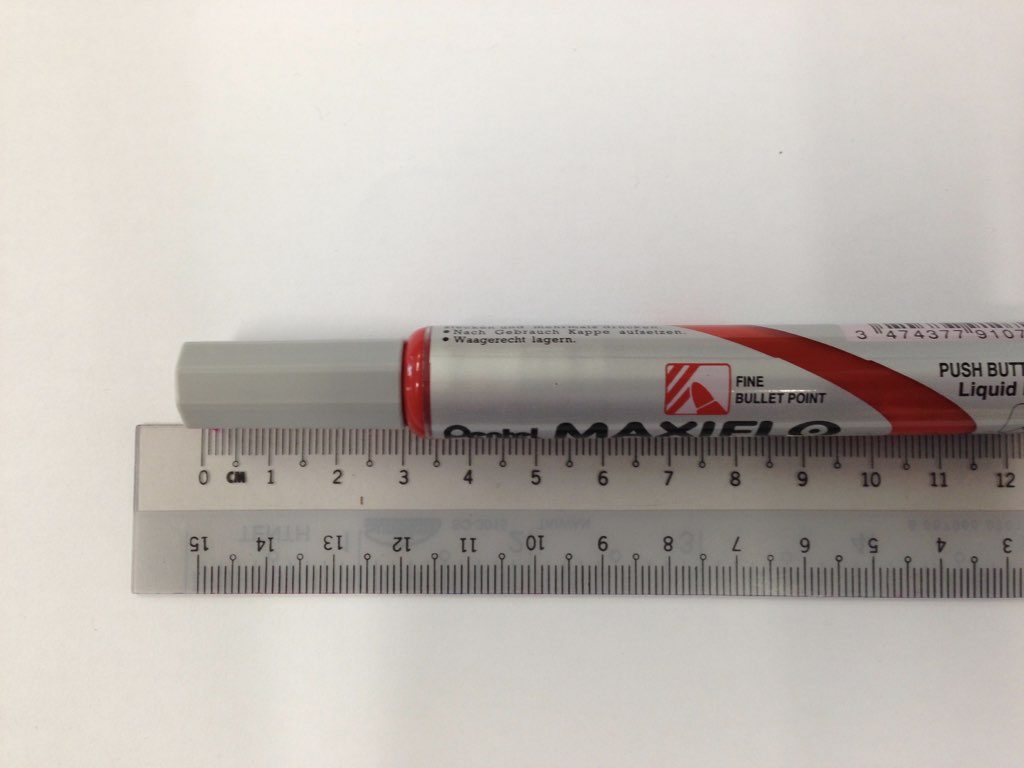
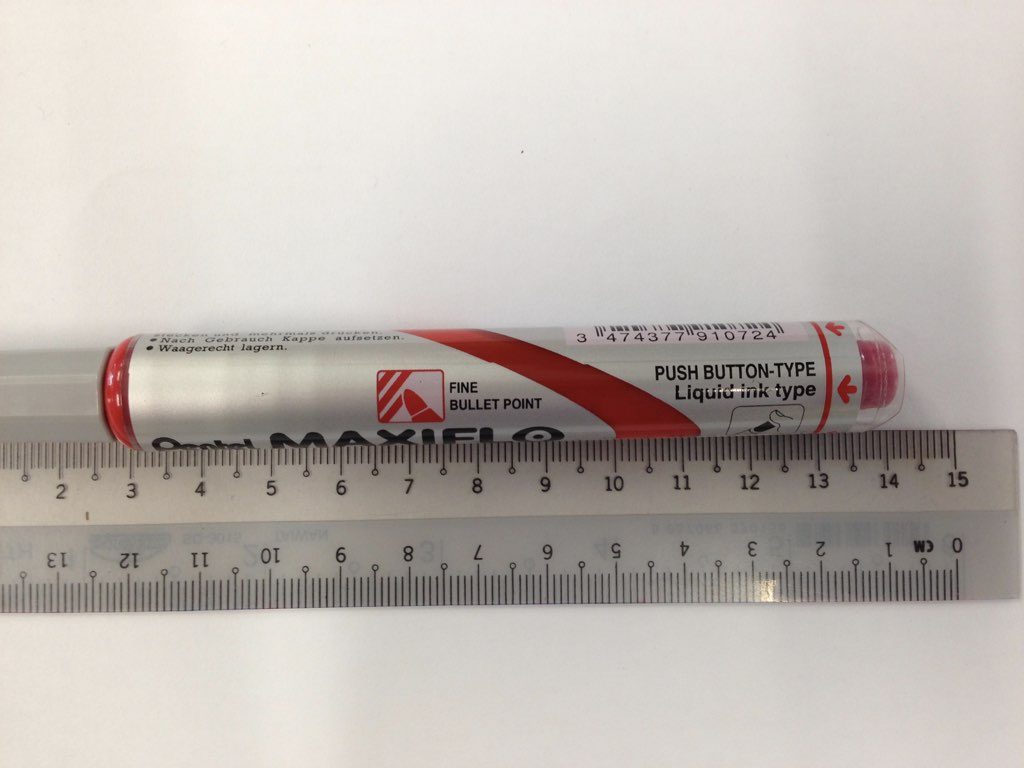
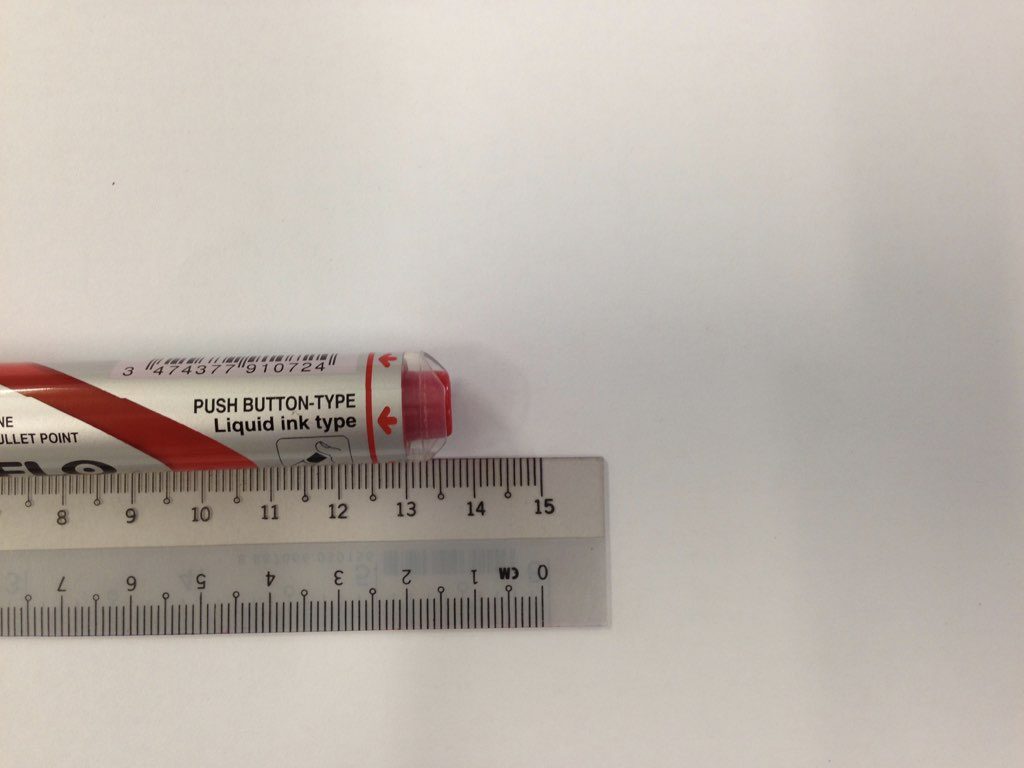
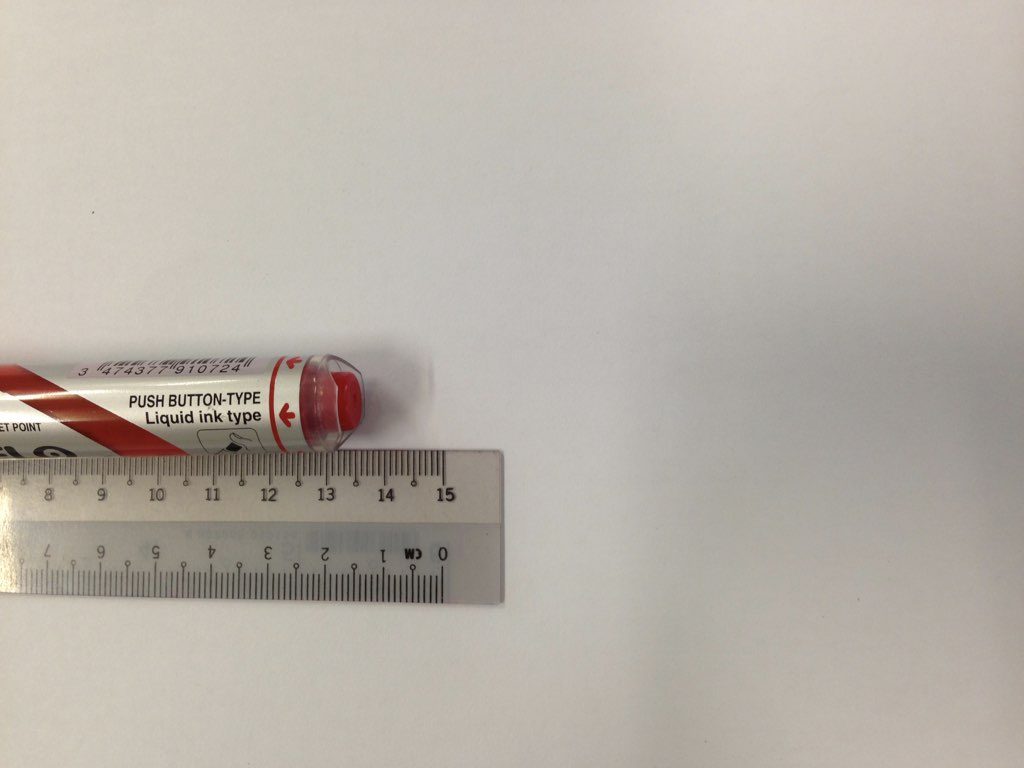
The three photos above show a marker pen placed at the end of a ruler. When viewed from different angles we could be tempted to read the values as different (+0.1 cm, 0.0 cm, -0.2 cm)!
The correct reading is the middle one where the observer is directly above the ruler at the point on which it is being read. The other two values are examples of parallax error.
The same problem can of course occur at the other end of the object.
Note: it is impossible to remain in one position and read both ends of an object. When taking measurements we often need to get out of our seats and move around!
If an object is small, a ruler may not be the best instrument to use as the precision is not too high.
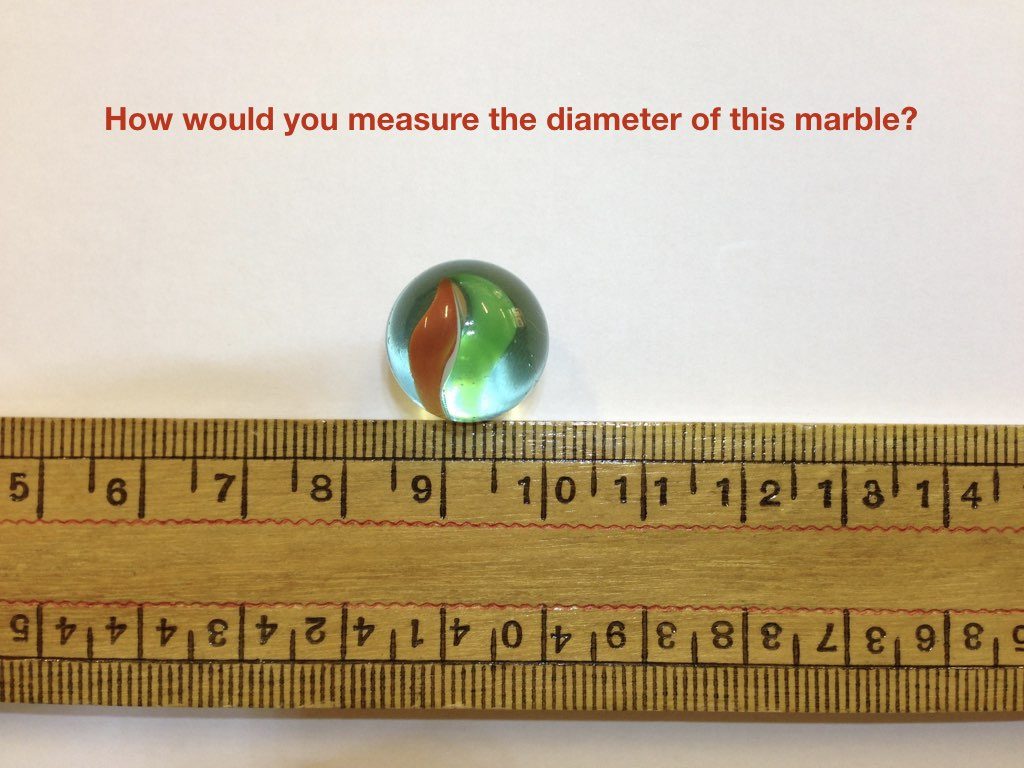
A way to get around this limitation is to measure several marbles and then an average can be found. The value obtained is likely to be of a higher precision.
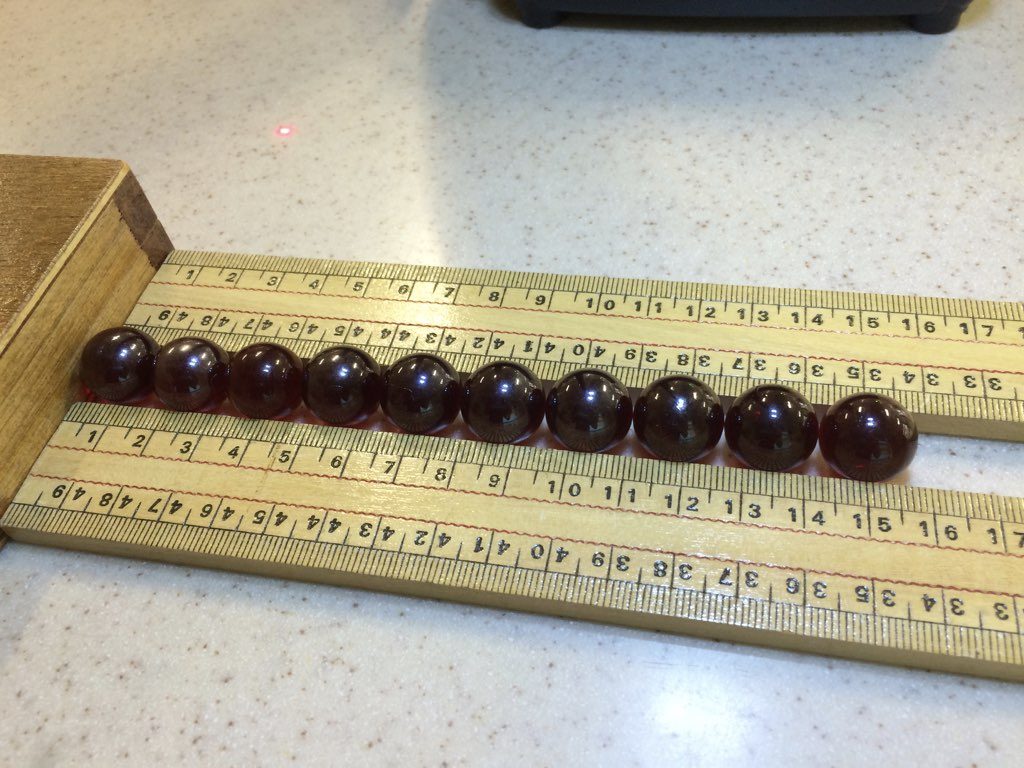
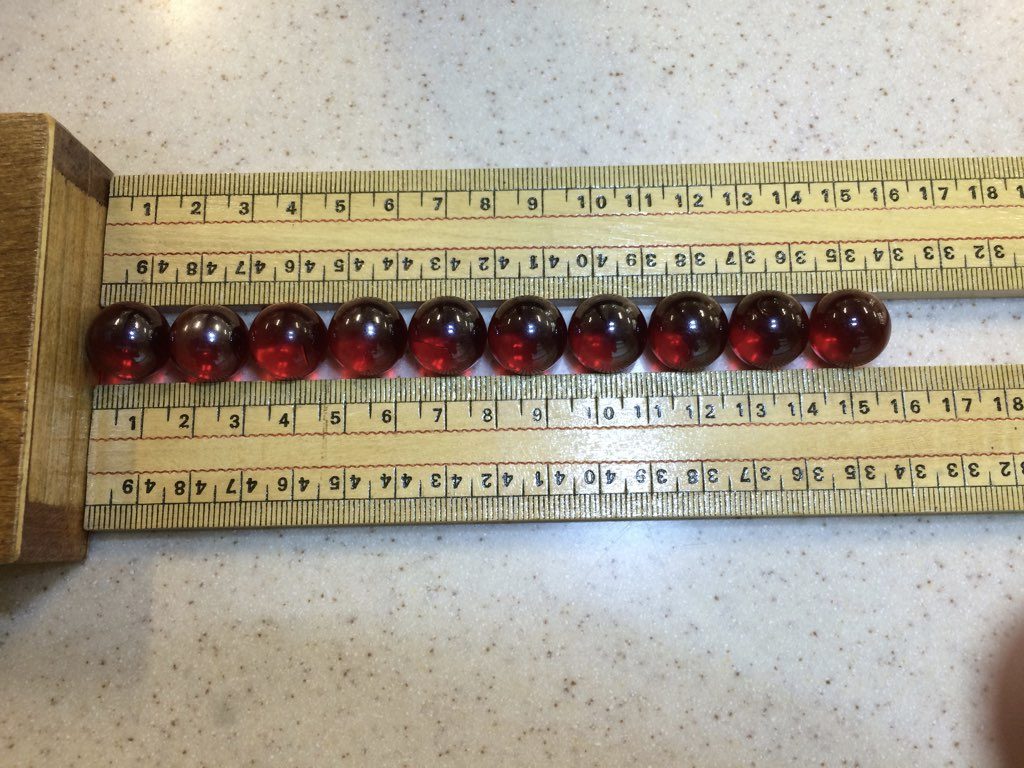
10 marbles are measured at 15.8 cm. Thus each marble has a diameter of 1.58 cm.
If a single marble had been measured with the same ruler, it would have been recorded as 1.6 cm – lower precision (1 d.p. compared to 2 d.p. in cm).
Similarly, the average diameter of a nut can be measured more precisely by averaging several.
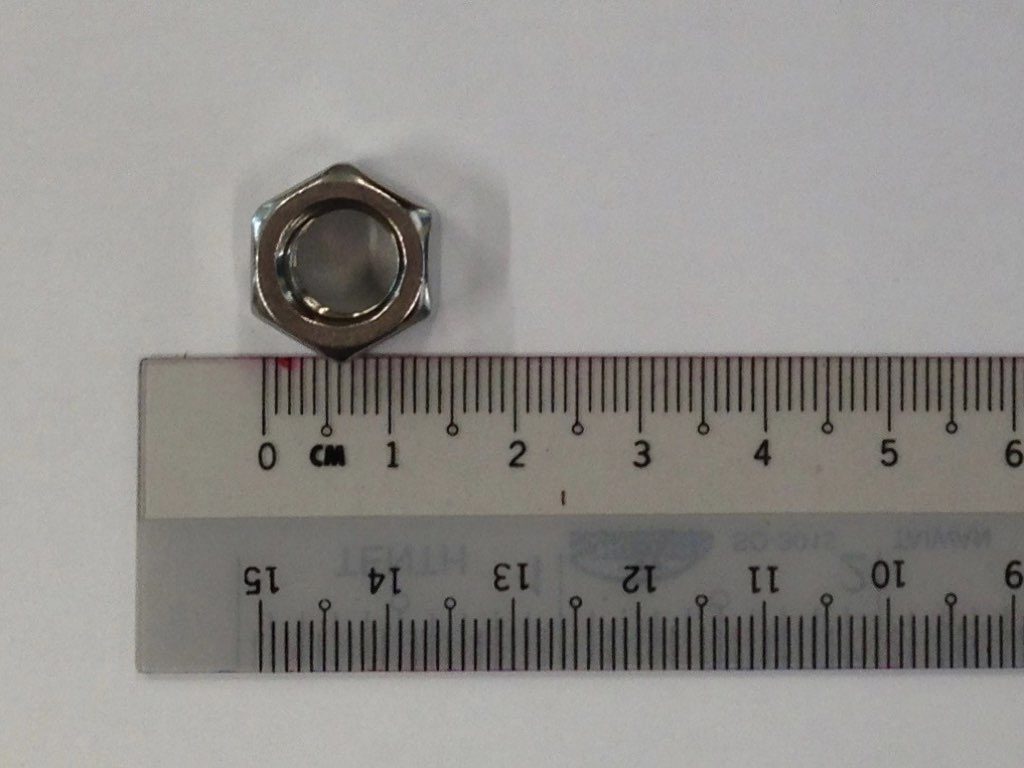
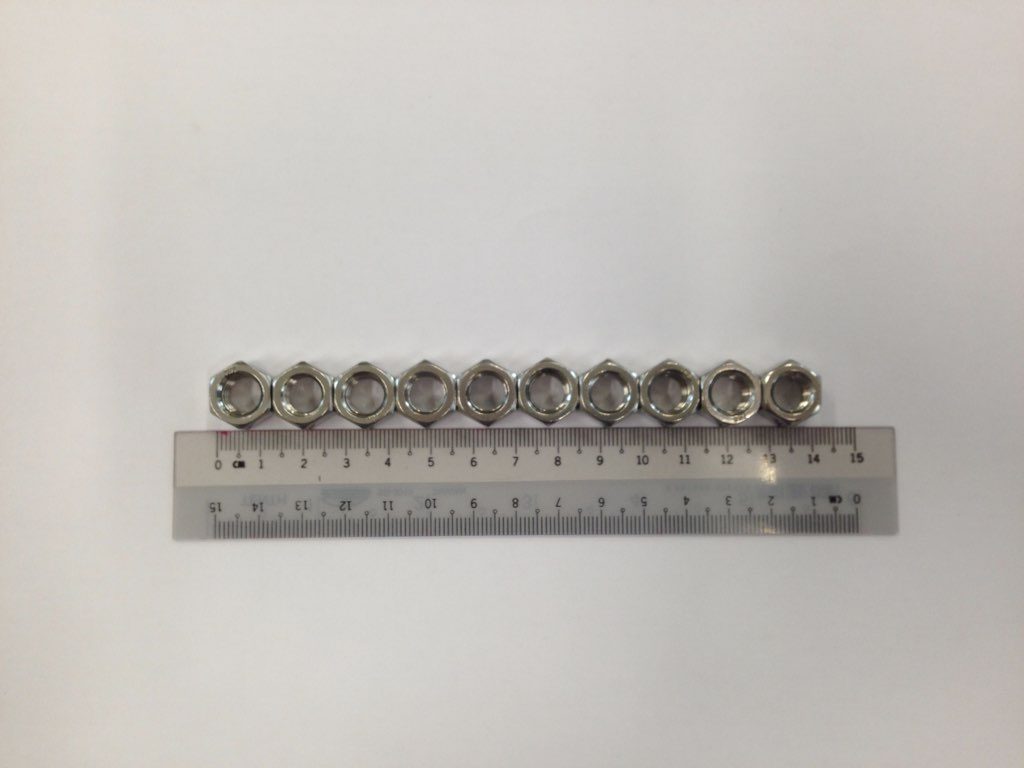
Notice how using set squares (or any other straight edge) allows us to measure more accurately.
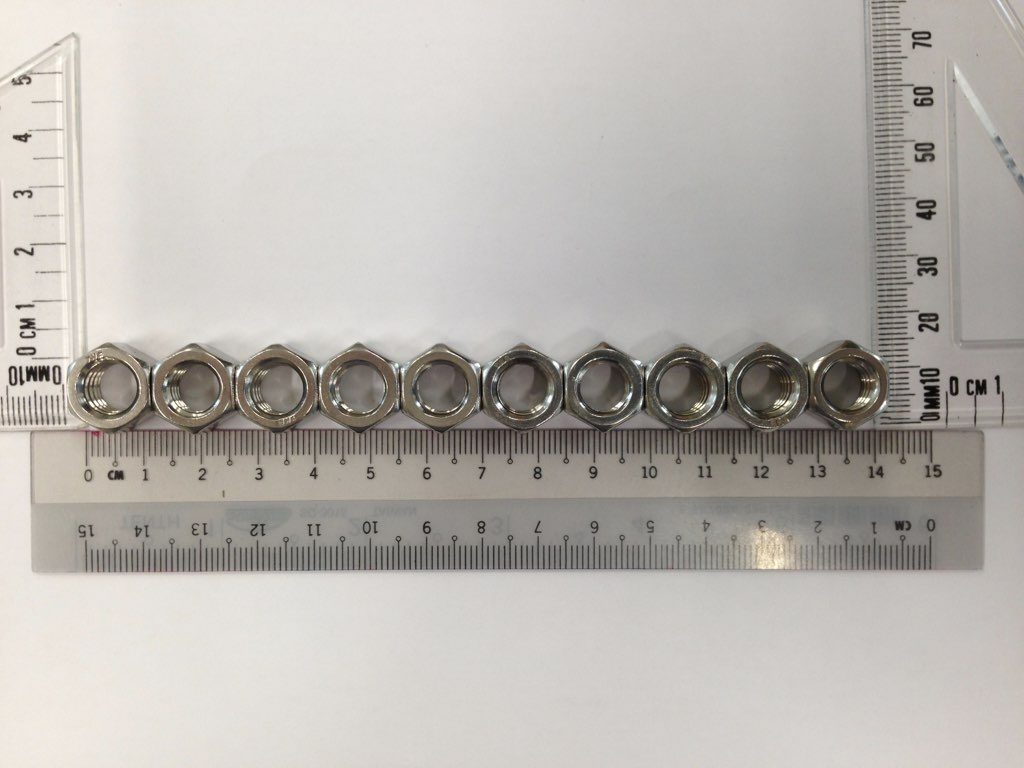
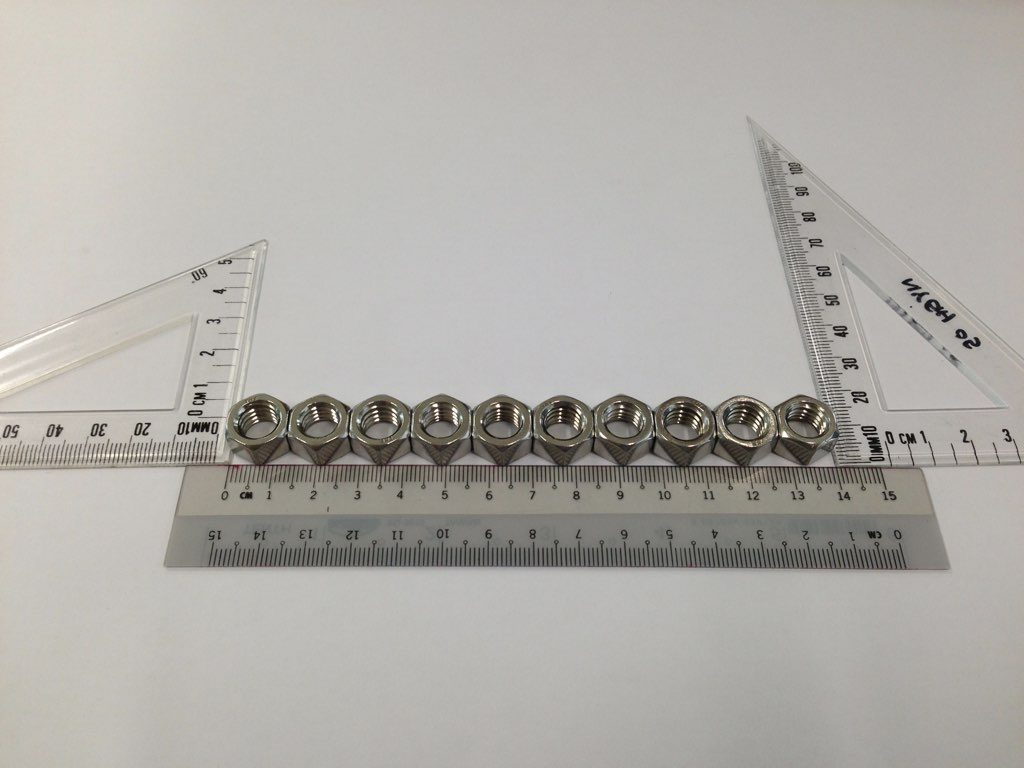
This can be applied to any object being measured.
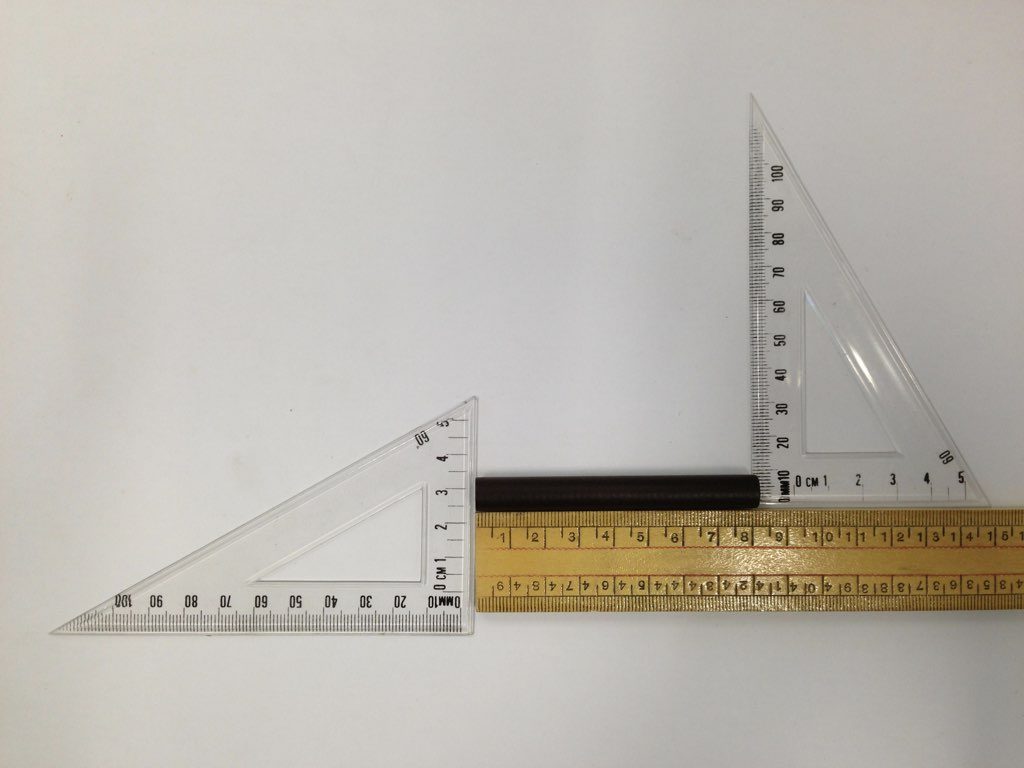
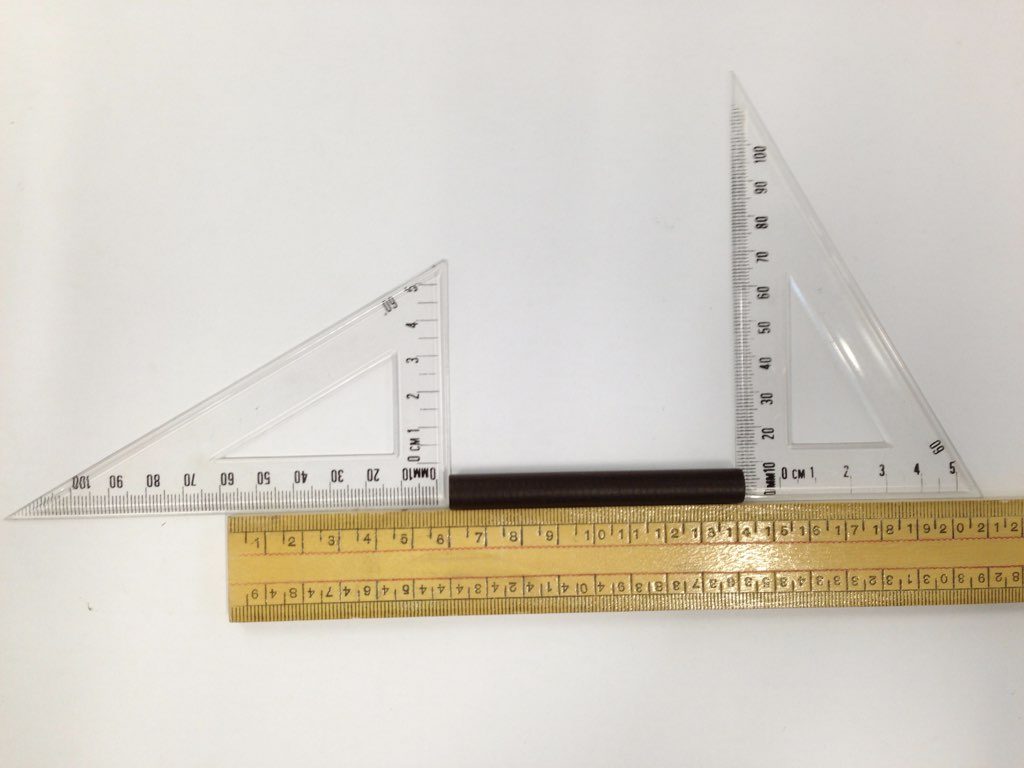
Sometimes it is more convenient not to measure from the end of the ruler (zero marking). This is sometimes necessary if the end of the ruler is damaged (a type of zero error).
| << Back | Measurement | Next >> |