Images formed from a lens can be real or virtual.
Real Image Formation
All light rays coming from the same point on the object will meet at the corresponding point on the real image after passing through the lens.
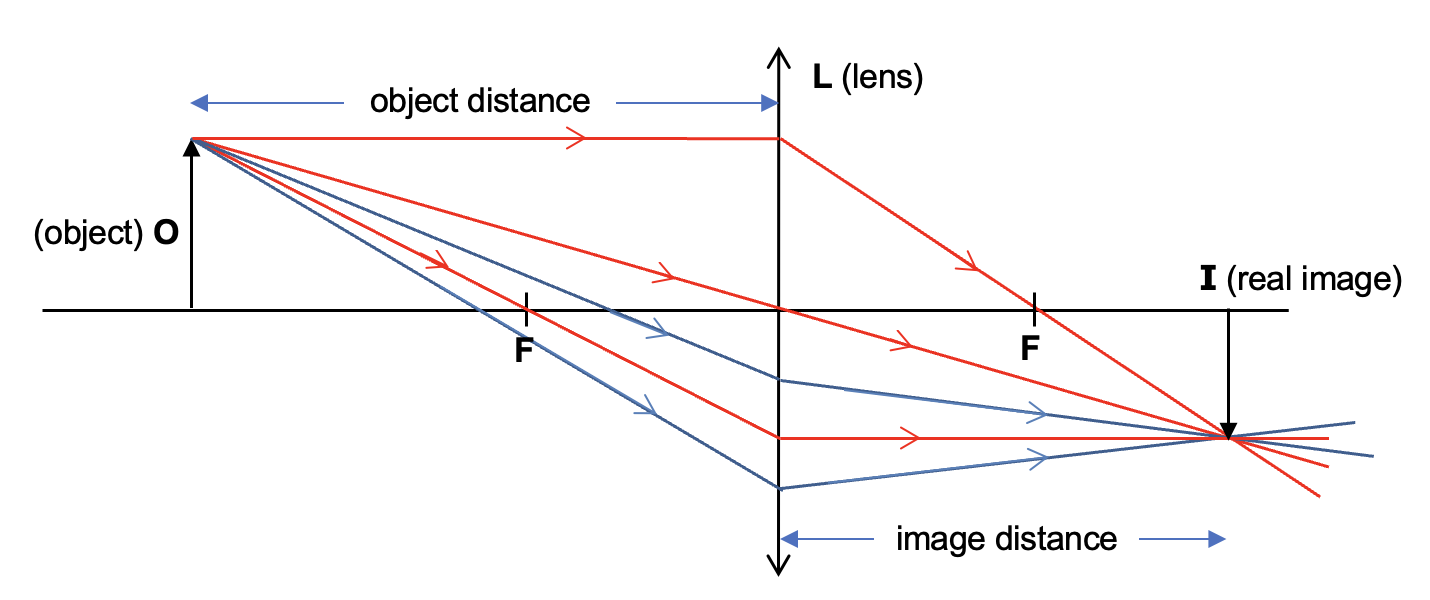
Real images can be captured on a screen.
Real images are inverted (upside-down) compare to the object.
Virtual Image Formation
All light rays coming from the same point on the object will appear to originate from the corresponding point on the virtual image after passing through the lens.
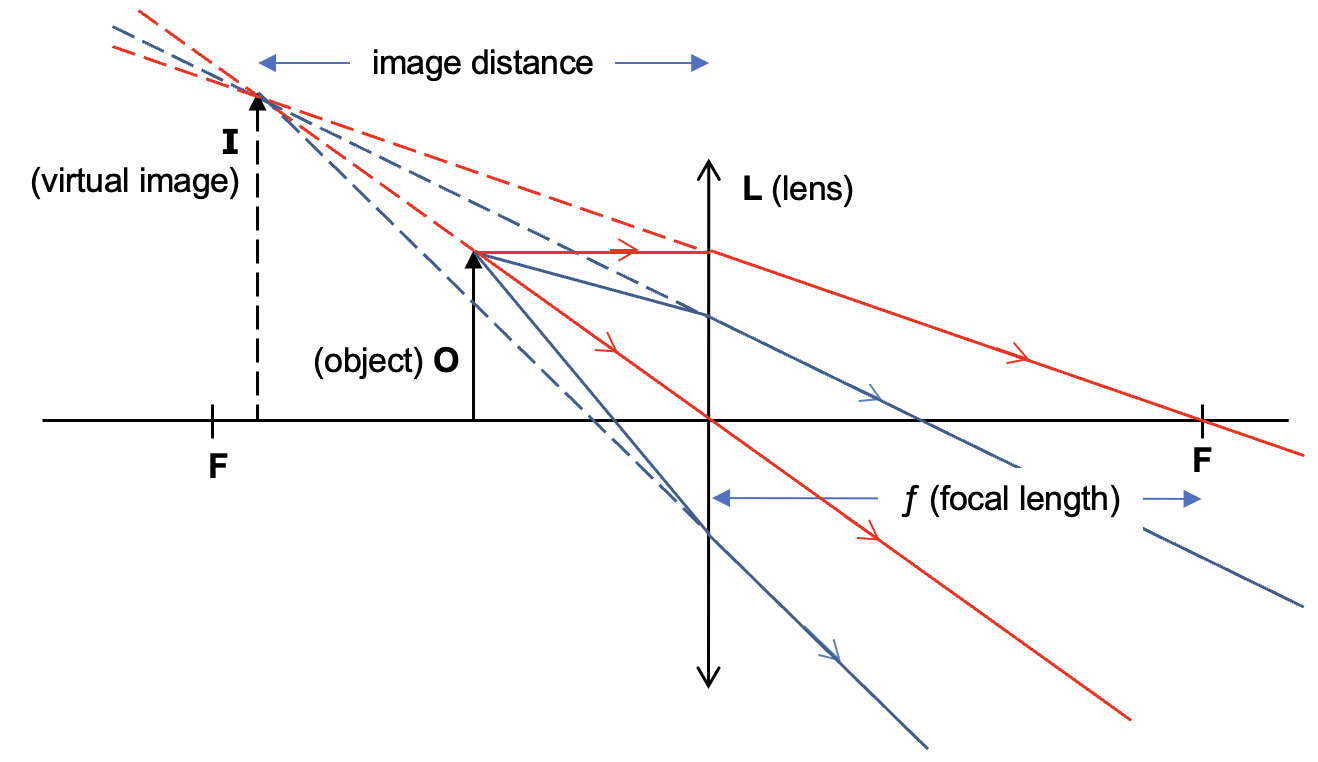 Virtual images cannot be captured on a screen.
Virtual images are upright (right-way-up) compared to the object.
Covering Part of the Lens
Consider the following formation of an image.
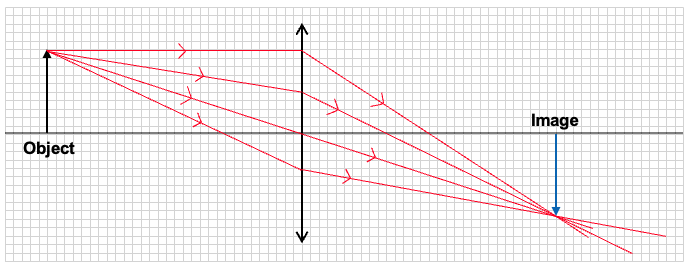
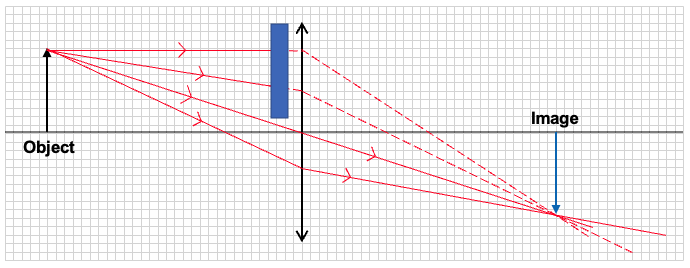 The rays shown here as dashed lines have been blocked by an object placed in from of the lens. Notice how this does not change the position of the lens, nor does it obscure part of the image. All that happens is the image will become fainter as less light from the object reaches each point of the image.
Six Ranges for an Object to be Located
There are 6 positions (ranges) in which you could place an object with respect to the lens:
(a) Object is closer to the lens than F (u < ƒ)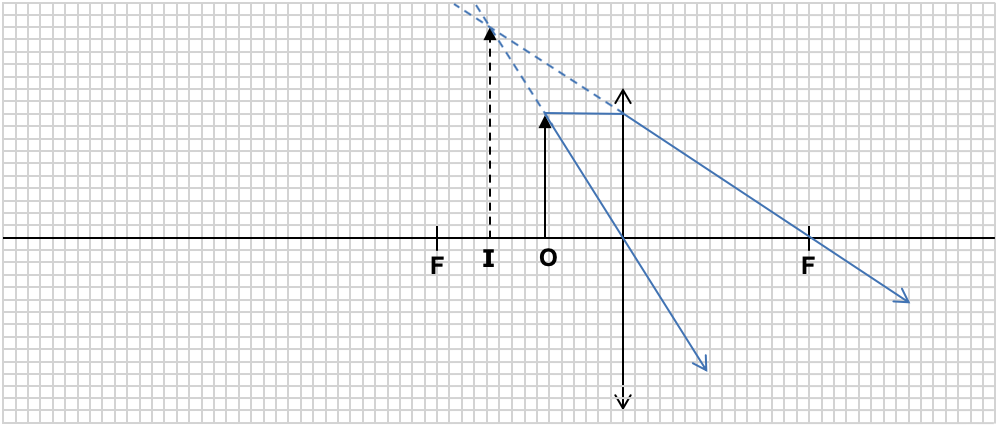
(b) Object is at the focal point F (u = ƒ)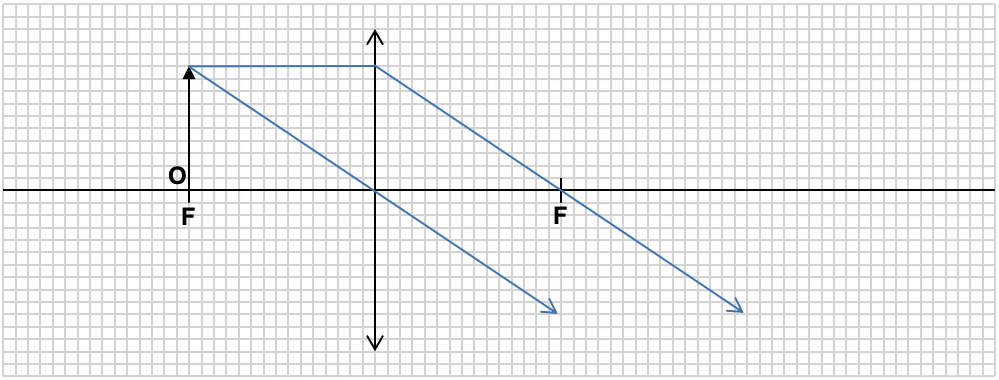
(c) Object is between F and 2F (ƒ< u < 2ƒ)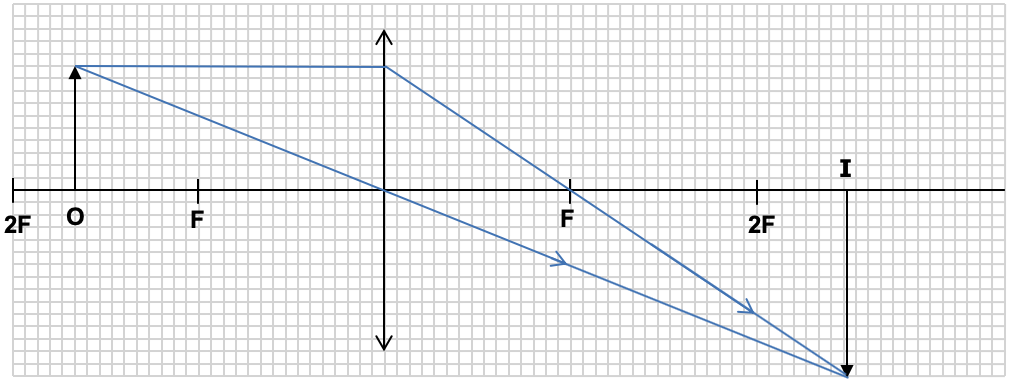
(d) Object is at 2F (u = 2ƒ)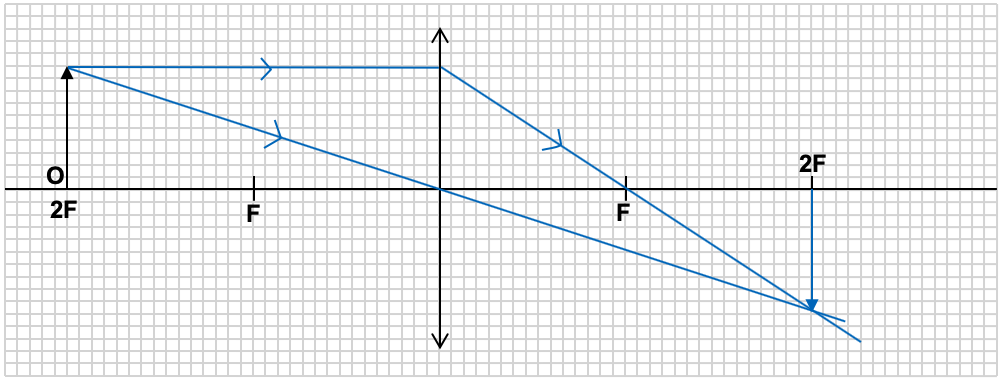
(e) Object is beyond 2F (2ƒ< u < ∞)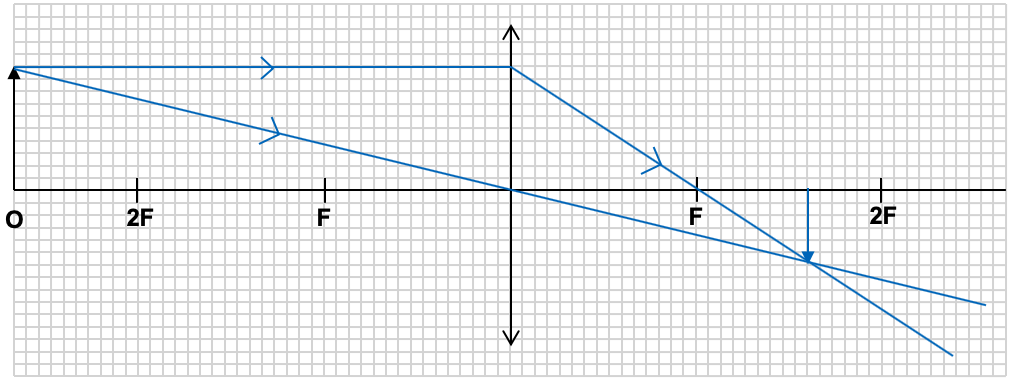
(f) Object is at infinity (u = ∞)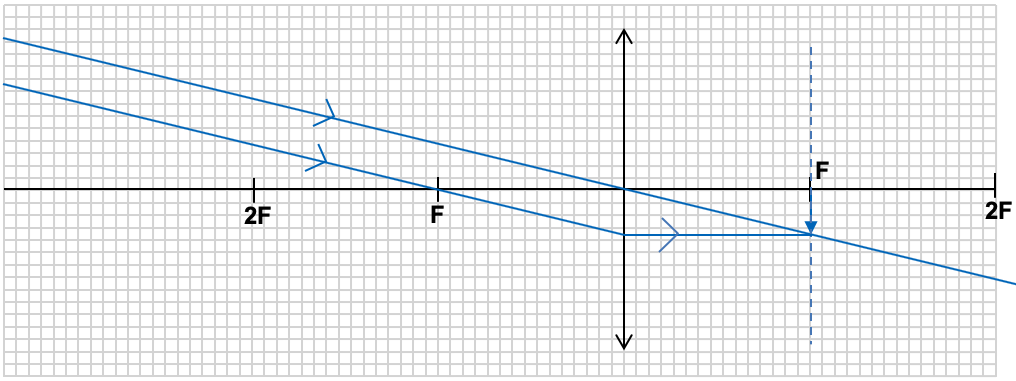
| << Back | Lenses | Next >> |