A free-falling object is one that falls under the sole influence of gravity (without air resistance or any other forces acting on the object).
Some examples of objects in free-fall:
-
- a dropped pen falling to the floor
- a ball thrown upwards into the air
- a spacecraft orbiting the Earth
Some examples that would NOT be considered to be in free-fall:
-
- a piece of paper falling to the ground
- a bungee jumper falling
- a parachutist falling to the ground
- a space rocket taking off
| Note |
|---|
| For most questions in physics regarding falling and thrown objects we will be assuming that the objects are in free-fall. |
Dropping an Object
If an object is dropped, then the initial velocity of the object is zero. (u = 0 m s⁻¹)
Consider the position of a dropped ball at regular time intervals, as shown below:
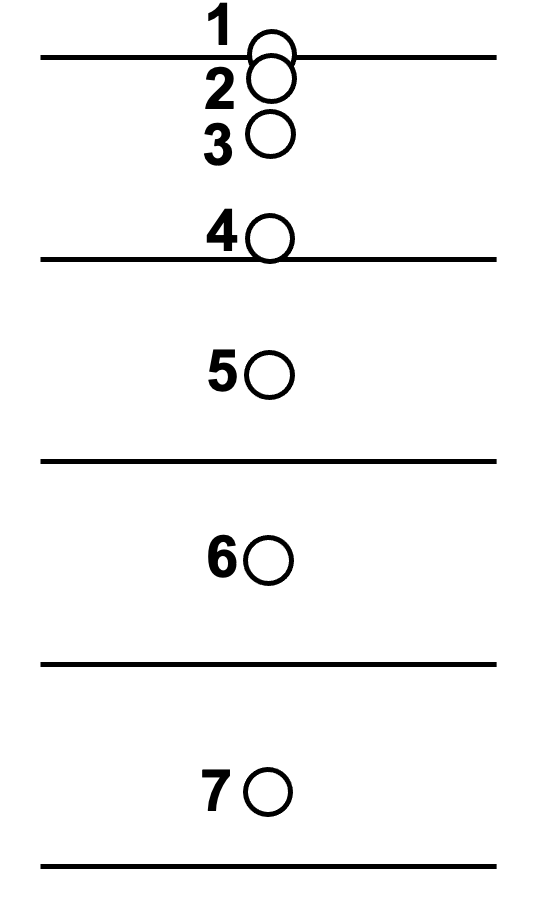
It is clear that the distance moved in succesive time interval is increasing. i.e its velocity is increasing as it falls.
In fact it can be shown that all objects in free-fall (near the surface of Earth) experience a constant acceleration of 10 m s-2.
| Example |
|---|
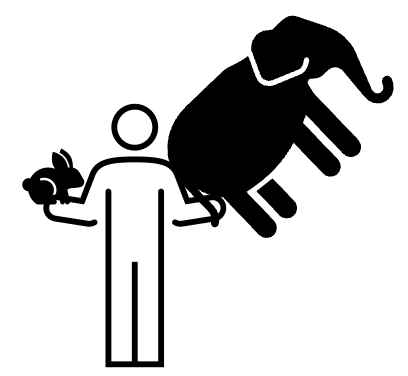
| You simultaneously drop a rabbit and an elephant from the same height.
Which will hit the floor first?
They will undergo the same acceleration and thus will hit the ground at the same time. |
| Why do some websites say g is 9.81 m s-2 |
|---|
| Actually g is not exactly 10 m s-2. It is closer to 9.81 m s⁻² and actually varies slightly from place to place depending on your distance from the centre of the Earth (the Earth is not a perfect sphere) and the density of the rocks that are below you.
Taking g to be 10 m s-2 only introduces a small error into the values we calculate (~2%) but makes all calculations much easier to compute. |
| Links |
|---|
| Watch the following video to see evidence that gravitational acceleration is a constant for objects of differing mass. |
The velocity-time graph for such a motion may look like this:
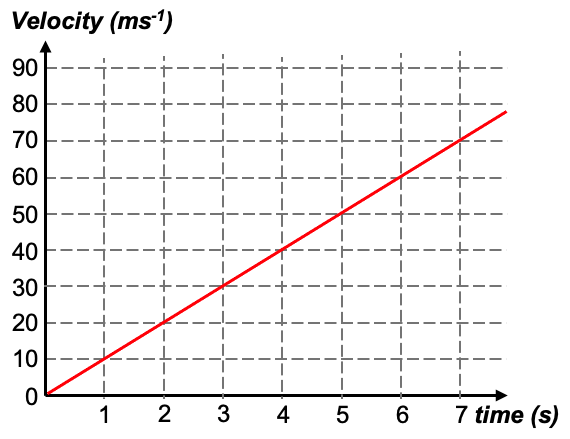 Motion of an object in free-fall
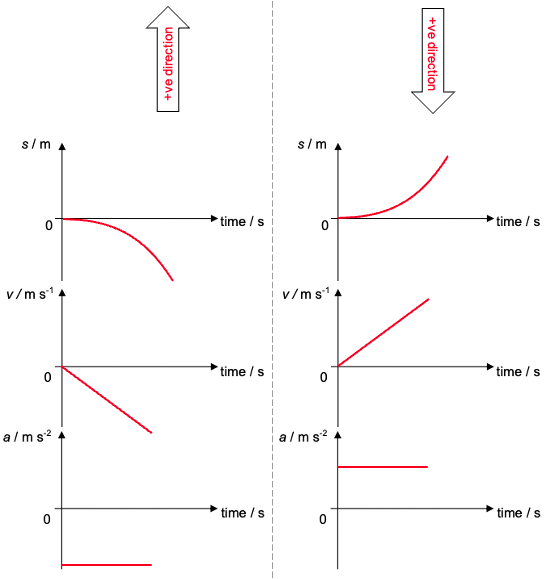
(Sign Convention: Down being taken as +ve)
The object is accelerating at a constant acceleration of 10 m s⁻². This acceleration is a result of gravity exerting a constant pull (force) on the object.
We call this the acceleration of free-fall or the acceleration due to gravity, and give it the symbol g.
ie g = +10 m s⁻² (near the surface of the earth)
Sometimes we will see the graph drawn like this:
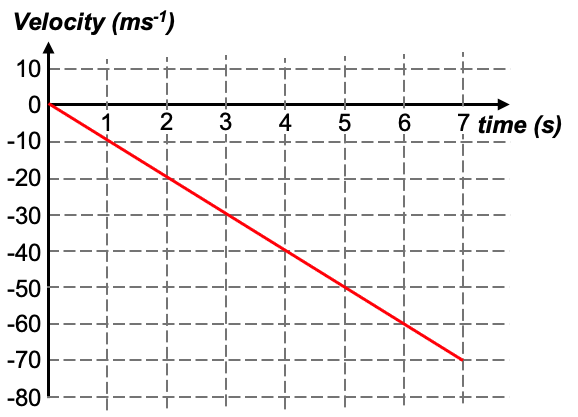
Motion of an object in free-fall
(Sign Convention: Up being taken as +ve)
In this case the gradient is negative, thus we would say g = −10 m s⁻².
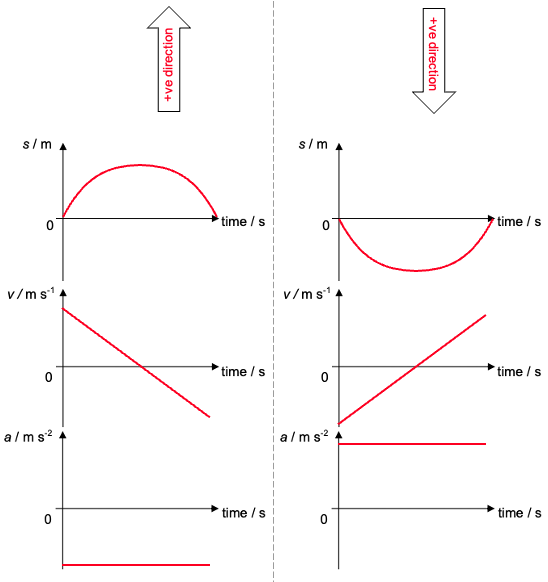
In summary, for an object falling downwards we have the following:
| Caution +10 m s⁻² or −10 m s⁻²? |
|---|
| The magnitude of g will always be taken to be 10.
Whether g is positive or negative depends upon the sign convention we choose to use. Many mistakes are made by assuming g is positive when in fact it should have been negative. |
Throwing an Object Upwards
If a question states that the object was thrown (projected upwards, etc.) then we take it that it has a (non-zero) initial velocity.
Consider the position of the thrown ball at regular time intervals, as shown below:
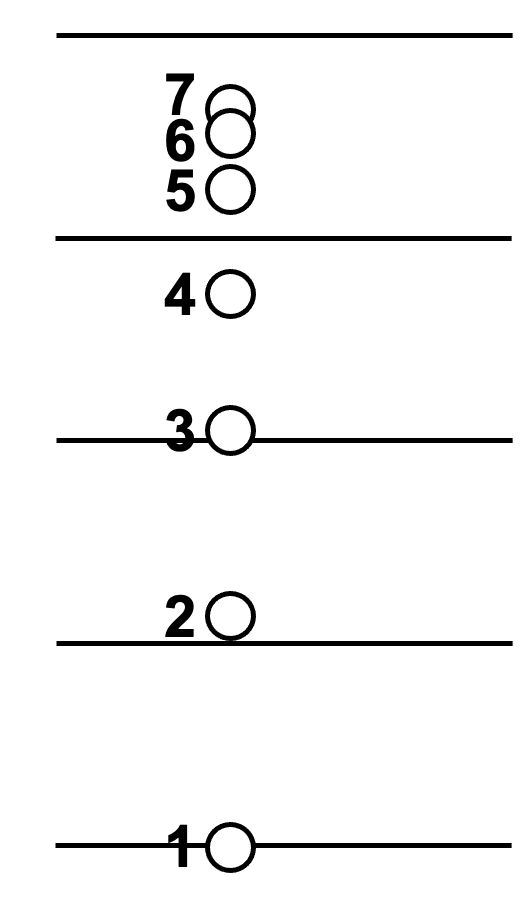
It is clear that the distance moved in successive time interval is decreasing. i.e its velocity is decreasing as it rises into the air.
In fact it is experiencing the same force from gravity as in the previous example. But this time the force of gravity is causing the ball to decelerate.
The magnitude of this deceleration is, however, still 10 m s⁻².
The velocity-time graph for such a motion may look like this:
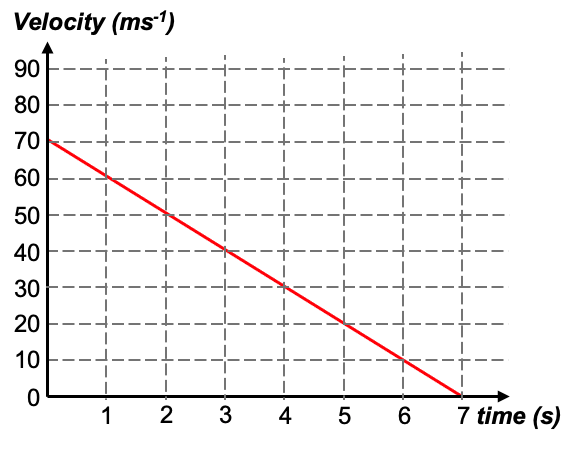
Motion of an object thrown vertically upwards
(Sign Convention: Up being taken as +ve)
If an object is projected upwards in a perfectly vertical direction, then:
-
- its velocity is 0 m/s at the highest point of its motion.
- the velocity at which it is projected is equal in magnitude and opposite in direction to the velocity that it has when it returns to the same height.
Throwing a Ball up and then Catching It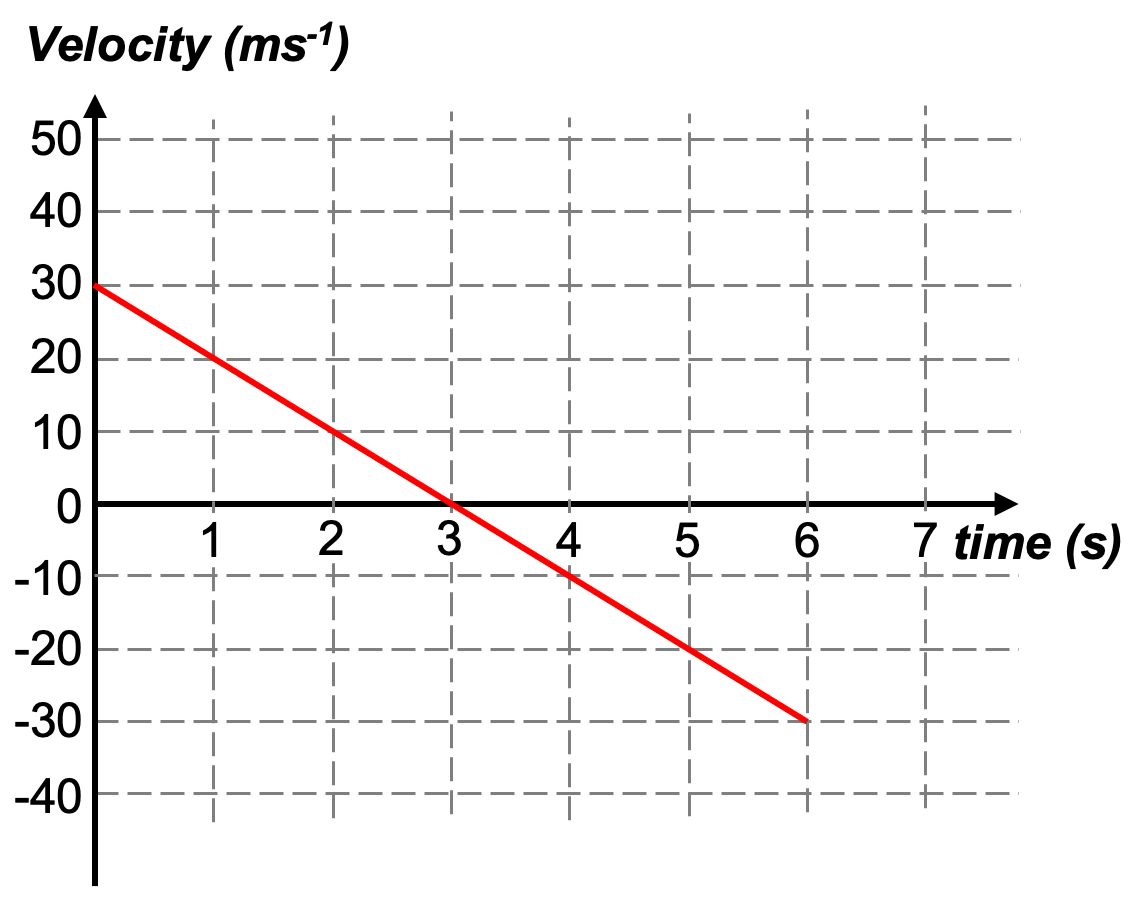
The sign convention we are using here is: upwards is positive.
Notice:
|
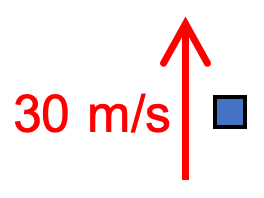
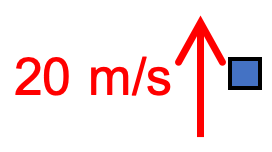
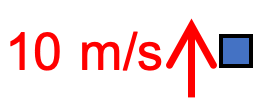
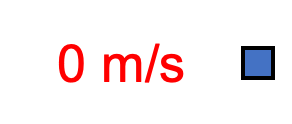
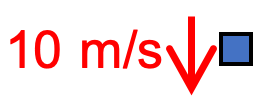
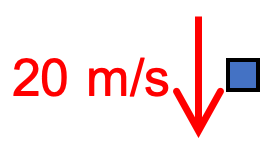
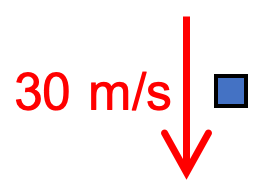
In summary, for an object thrown upwards we have the following:
| Example |
|---|
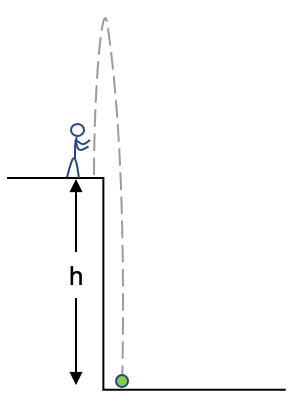
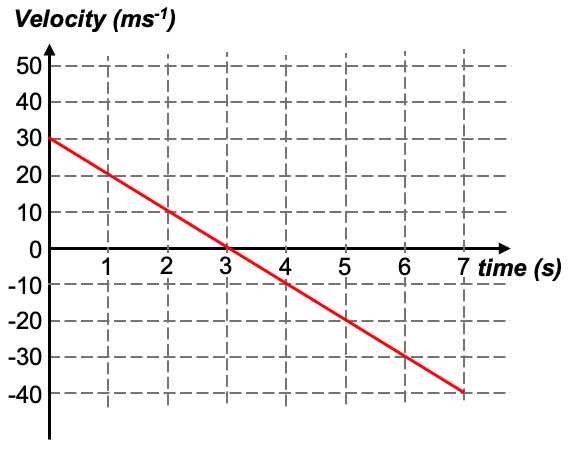
| A ball is thrown upwards at a velocity of 30 m/s from the top of a cliff and hits the ground after travelling for 7.0 s.
(a) Draw a v-t graph to show the motion of the ball during these 7 s.
(b) At what time did the ball reach the highest point?
(c) What is the velocity of the ball as it passes the thrower on its way down?
(d) What is speed with which the ball hits the ground at the bottom of the cliff?
(e) What is the height of the cliff, h? |
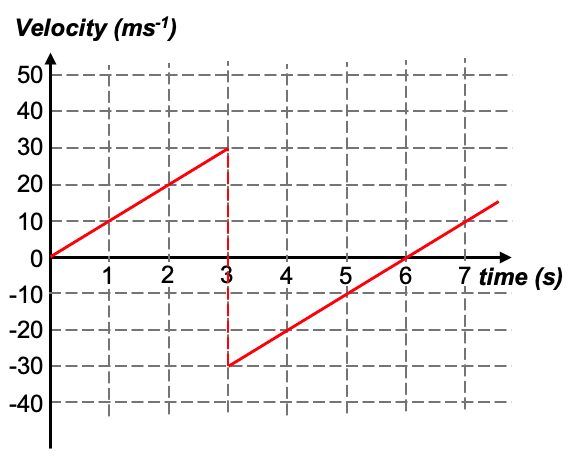
| Bouncing a Ball (Elastic)
What is the initial velocity of the ball? What is the sign convention being used here? What is the highest speed the ball obtains? What is happening at t = 3.0 s? What height was the ball dropped from? What is happening at t = 6.0 s? At what time will the ball strike the ground for a second time? What would a speed-time graph for this motion look like? |
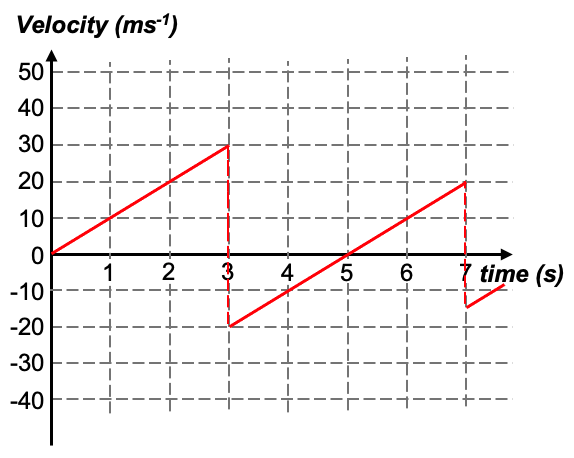
| Bouncing a Ball (Non-elastic)
Describe the differences and similarities between this situation and the example above. What would a speed-time graph for this motion look like? |
| Links |
|---|
| https://youtu.be/1HiXQrLigwo |
| https://youtu.be/sVTJNv3-mWk |
Air Resistance
In all of the above examples we have assumed there is no air resistance. This is valid in many situations, but may not be valid when:
- the mass of the object is very small
- the cross-sectional area of the object is very large
- the object falls for a very long time / large distance
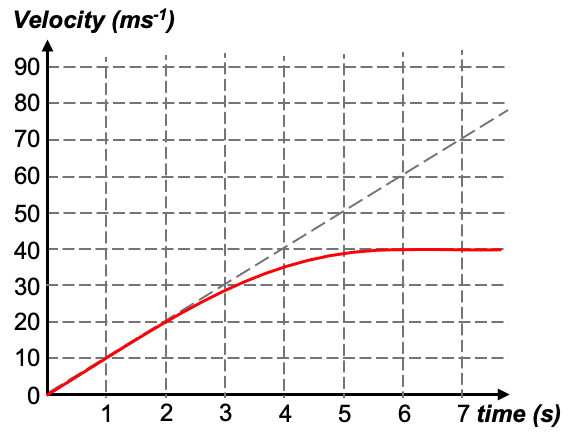
At low speeds (0–20 m/s) the object behaves similar to being in free-fall. ie undergoes constant acceleration ~10 m s⁻².
Between 2.0 s and 6.0 s the object continues to increase in speed, but is doing so at a slower rate. i.e acceleration is less than 10 m s⁻².
From t = 6.0 s onwards, the object no longer gains speed. It has reached a constant (maximum) speed. This is referred to as terminal velocity.
We will look at this in more depth in the chapter on forces.
| << Back | Kinematics | Next >> |