| << Back | Dynamics | Next >> |
- A vector quantity is a quantity that is fully described by both its magnitude and direction whereas a scalar quantity is a quantity that is fully described by its magnitude.
- Forces, velocity and acceleration are examples of vector quantities.
Unbalanced Forces
If forces are not balanced it will result in a resultant force (net force) being present on the object.
The resultant force acting on an object can be determined using the principles of vector addition.
Addition of Parallel Forces
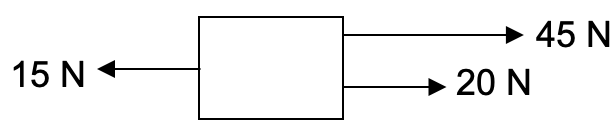
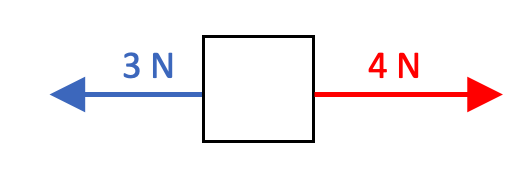
- Parallel forces the force vectors are simply added together.
- Antiparallel forces (i.e. directions 180º apart) can be dealt with by subtraction.
| Example 1: Parallel Forces (Horizontal Forces) |
|---|
| What is the resultant force acting on the box?
|
| Example 2: Parallel Forces (Vertical Forces) |
|---|
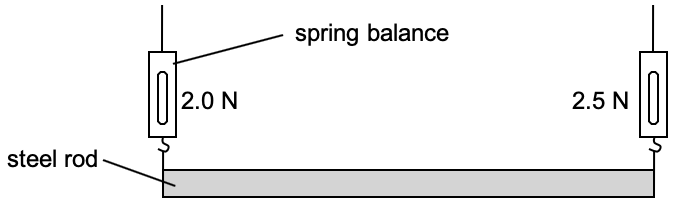
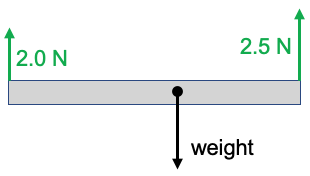
| What is weight of the steel rod?
|
| Example 3: Parallel Forces (Maximum and Minimum Resultant Force) |
|---|
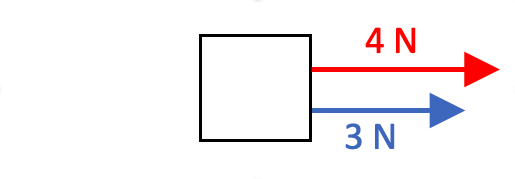
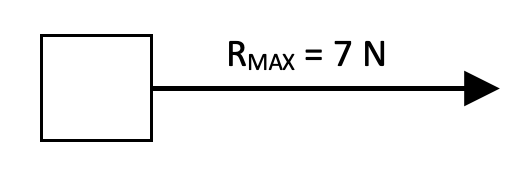
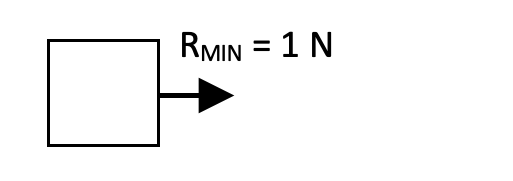
| Determine the maximum and minimum possible resultant force that can be obtained from the addition of 3.0 N and 4.0 N. |
Addition of Non-Parallel Forces
Non-parallel forces can be added by drawing a scaled diagram using an appropriate scale based on the two following drawing methods:
-
- Parallelogram Method
- Vector Triangle Method
Alternatively solutions can also be calculated using mathematical (trigonometric) methods if preferred.
Method 1: Parallelogram Method
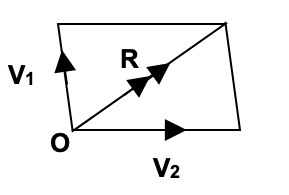
| Applying the Parallelogram Method to solve a problem:
(a) Draw 2 vectors starting from the same point O
Advantages of this method: Simple & Quick Disadvantages of this method: can only be used to add 2 vectors at once. |
| Addition of Forces: Parallelogram Method |
|---|
| What is the magnitude and direction of the resultant of the following two forces?
|
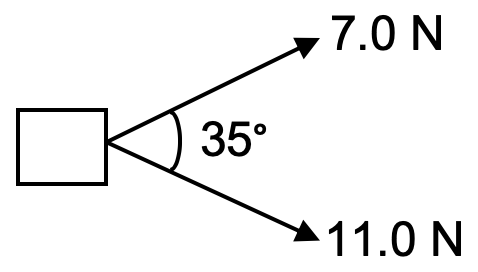
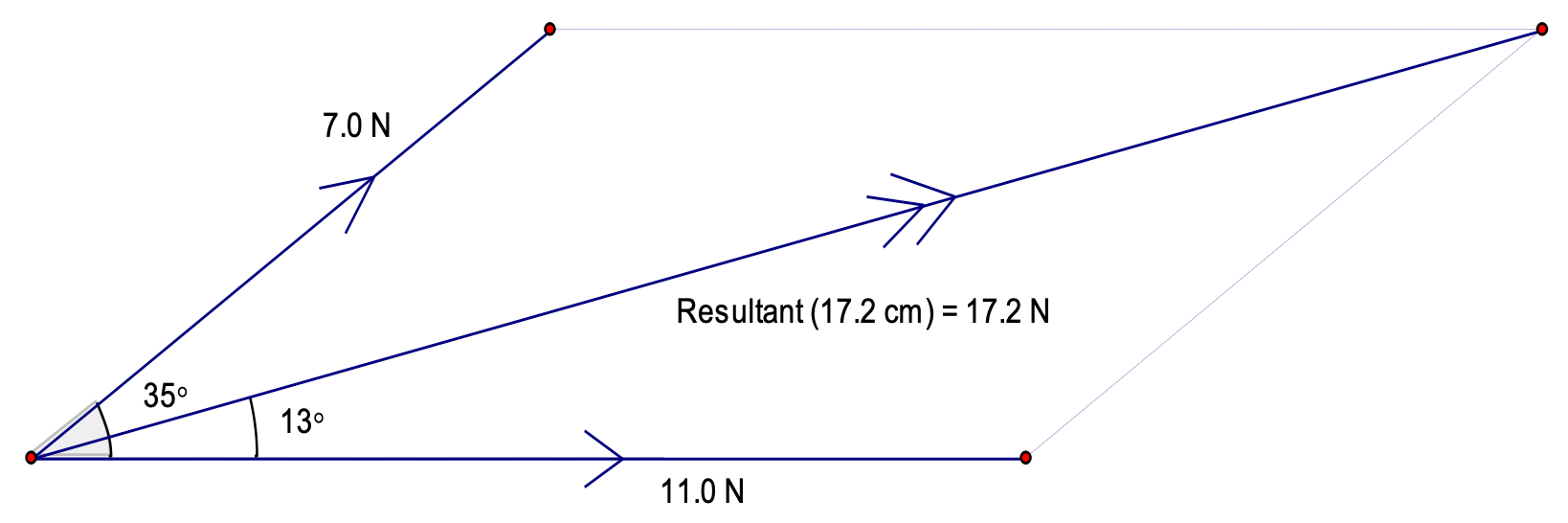
Method 2: VectorTriangle (Polygon) Method
| Applying the VectorTriangle (Polygon) Method to solve a problem:
(a) Draw one vector from A, followed by the second vector ending at B.
OR
Advantages of this method: Can be used to add any number of vectors at once. |
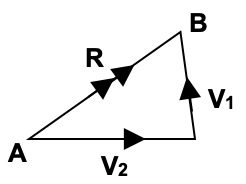
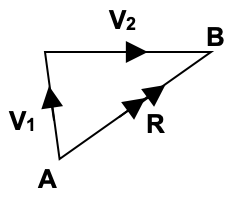
| Note |
|---|
Scale diagram should be labelled for:
|
| Addition of Forces: Vector Triangle Method |
|---|
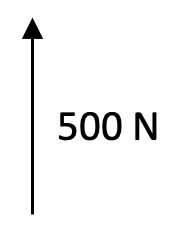
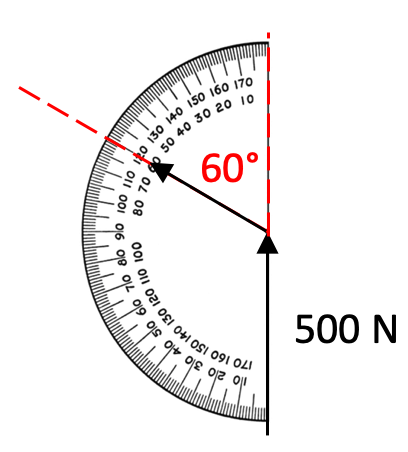
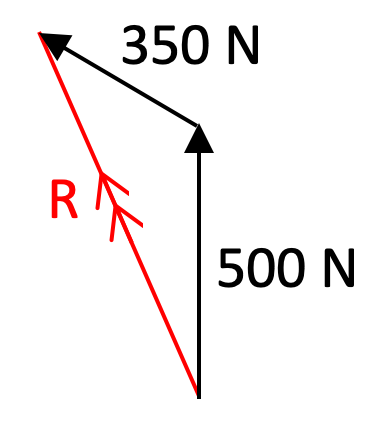
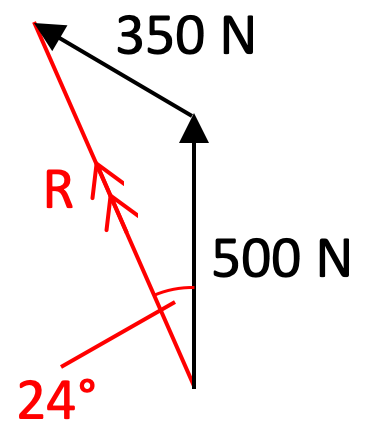
An object O is under the action of two forces. 500 N acts north and 350 N in a direction 60° west of north (or 30° north of west).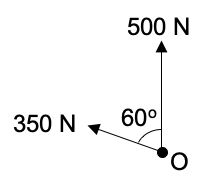 Determine the magnitude and direction of the resultant force by drawing a scale diagram using the vector triangle method. Determine the magnitude and direction of the resultant force by drawing a scale diagram using the vector triangle method.
|
Balanced Forces
- When forces acting on an object are balanced, the resultant force on the object is zero and it will not accelerate.
- Such objects are said to be in equilibrium.
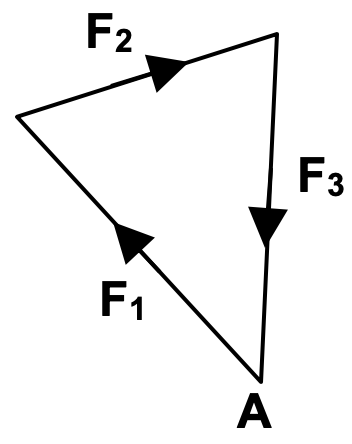
- Three non-parallel forces acting on an object at equilibrium will form a closed triangle with the arrows pointing in the clockwise or anticlockwise direction.
| To sketch a vector diagram: |
|---|
| (a) Draw any force first from a point A (b) Then draw the 2nd force followed by the 3rd force ending at A again. |
| Note |
|---|
| The order in which we draw the forces is not important. |
| Example: Vector Diagram for an object in Equilibrium |
|---|
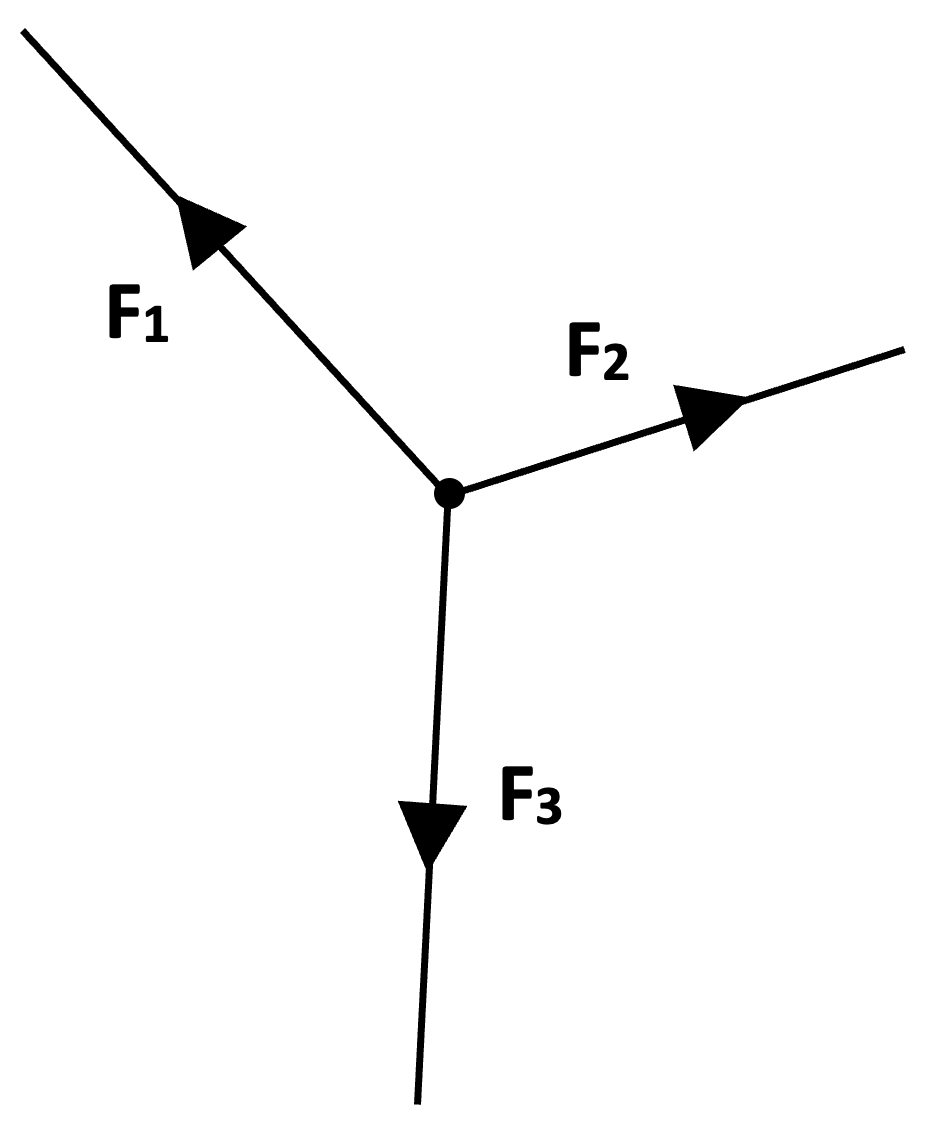
| Three forces F1, F2 and F3 act on a point to keep it in equilibrium as shown below.
Draw a vector diagram to show the addition of these 3 forces. Knowing that the object is in equilibrium we know that the resultant force is zero and so a force addition diagram will result in a closed triangle. Starting from a point A we can first draw F1 followed by F2 and then F3 and we will end up with the following closed triangle.
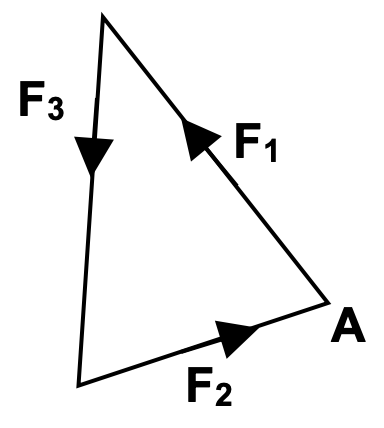
Alternatively we could have started from A and drawn F1 followed by F3 and then F2 and we would still end up with a closed triangle.
You can probably figure out what the triangles would look like for other orders of drawing the 3 forces. |
| To find an unknown force: |
|---|
| (a) Sketch the vector diagram. (b) Calculate using trigonometry formulae or draw scale diagram. (c) Describe the direction of the force. |
Comparison of vector triangles
These two triangles may look similar, but are in fact showing different concepts:
| Unbalanced Forces | Balanced Forces |
| Adding 2 forces acting on a body to give a resultant force R on the body.
|
Adding 3 forces acting on a body in equilibrium to give zero resultant force.
|
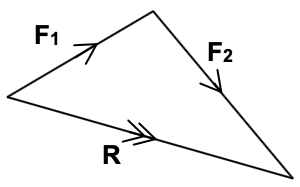
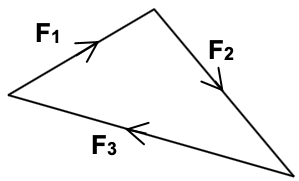
| Angled Forces |
|---|
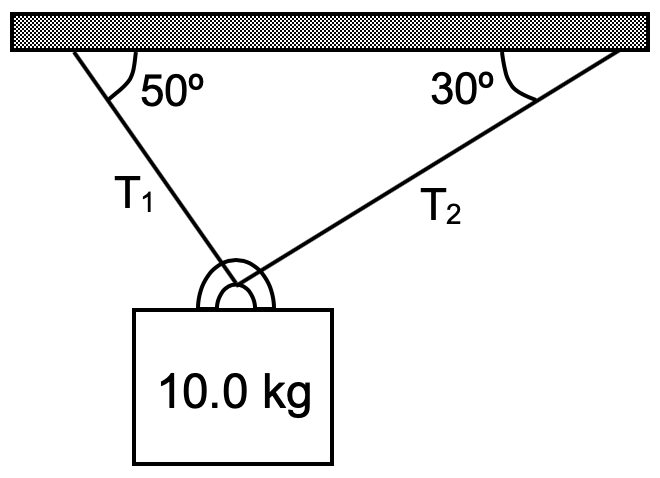
| Compare the forces T1 and T2.
b) Will T1 and T2 add up to 100 N?
c) Will the vertical components of the T1 and T2 be equal?
d) Will the horizontal components of the T1 and T2 be equal? |
| << Back | Dynamics | Next >> |