If we place a current-carrying wire between the poles of a permanent magnet, the magnetic field of the current in the wire will interact with the magnetic field of the permanent magnetic poles to produce a force on the wire. This is known as the motor effect where the force produced is perpendicular to both the direction of the current (I) and the direction of the magnetic field (B).
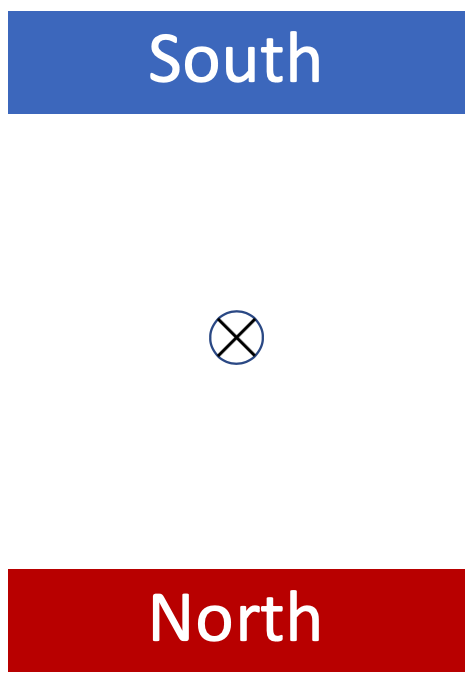
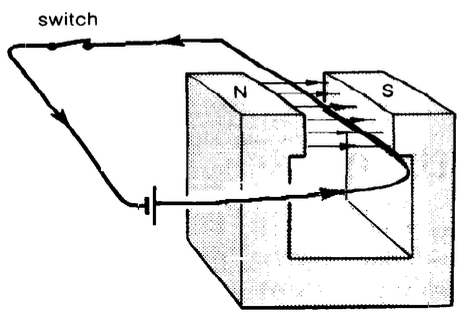
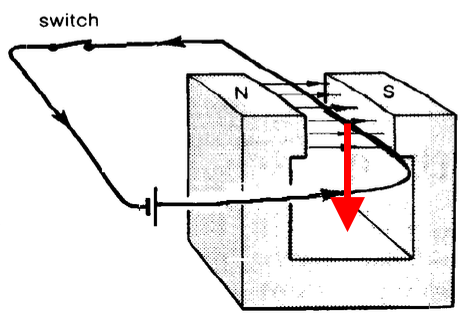
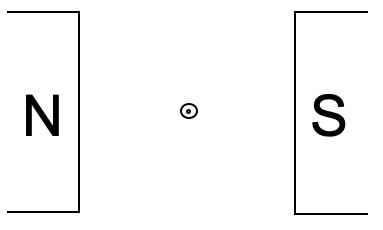
| Consider a current-carrying wire running between two poles of a magnet like so.
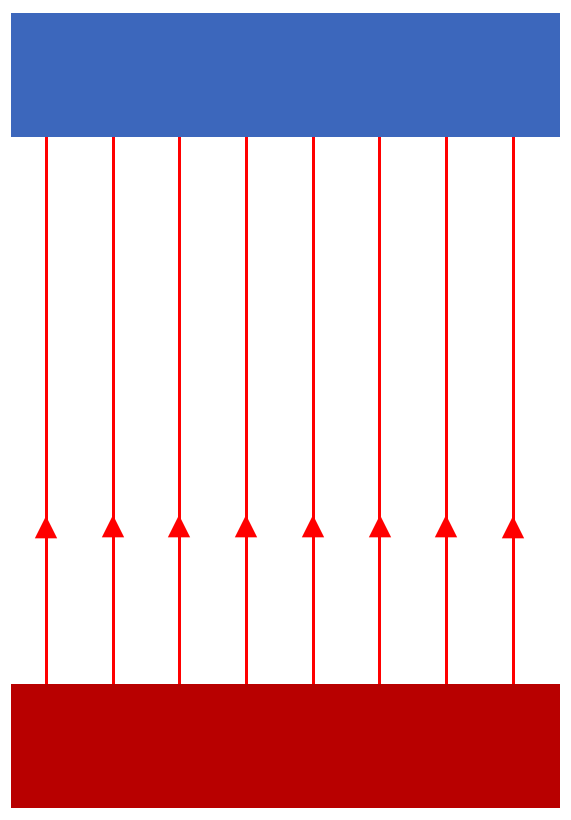
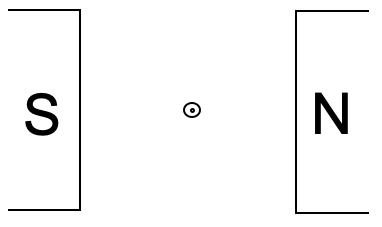
The magnetic field from the magnet poles has the following shape:
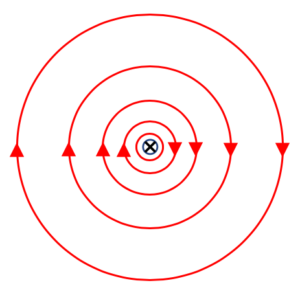
The magnetic field around the wire (due to the current flowing in the wire) has the following shape:
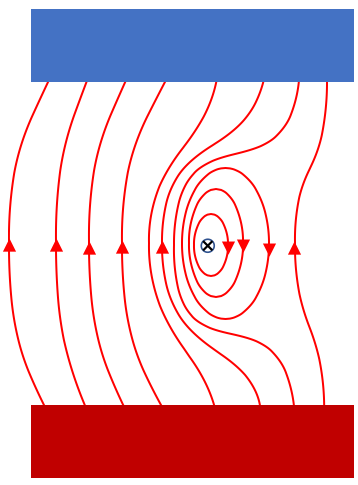
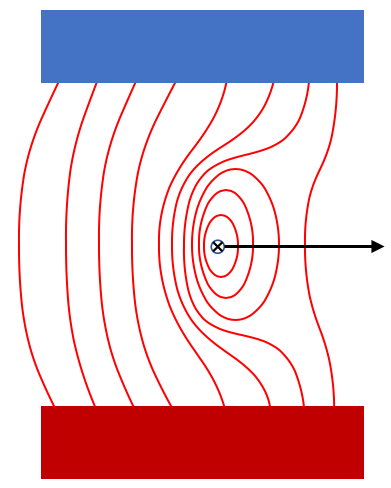
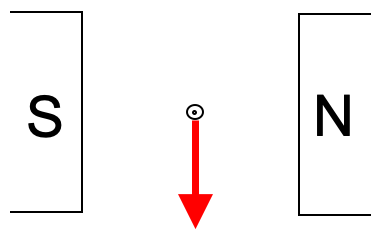
Combining these two fields we get the flowing resultant magnetic field:
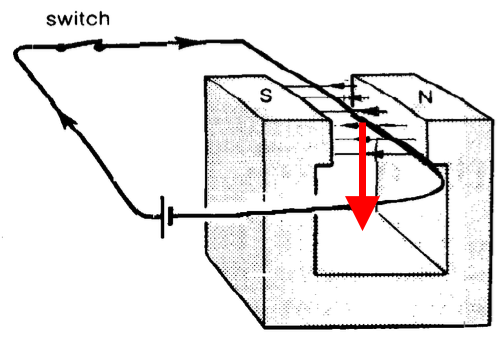
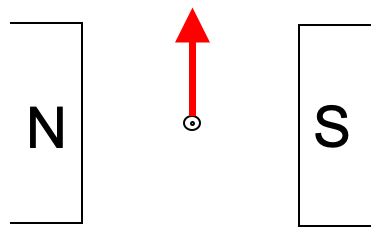
Note that the field is asymmetric. There is a higher concentration of field lines (stronger magnetic field) to the right of the wire and a lower concentration (weaker magnetic field) to the left. This results on a force on the wire. The direction of which is as shown.
|
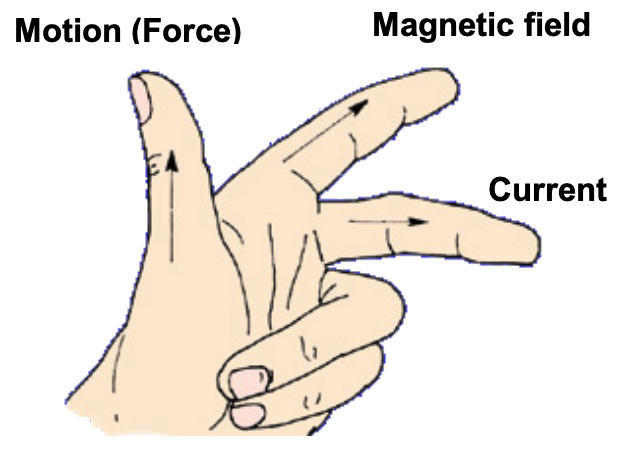
Since this is a 3D effect, the relative directions of current, field and motion are not easy to describe or memorise. Thus Fleming’s Left Hand Rule helps us to determine these correctly:
| Fleming’s Left Hand Rule |
|---|
| Fleming’s left hand rule is a useful way of remembering the relative directions of the force, magnetic field & conventional current, but it is not a law of physics.
|
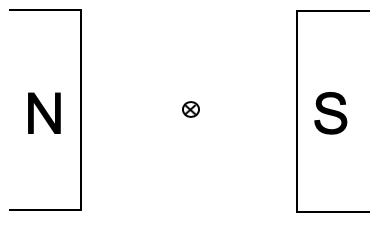
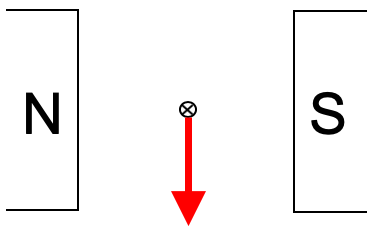
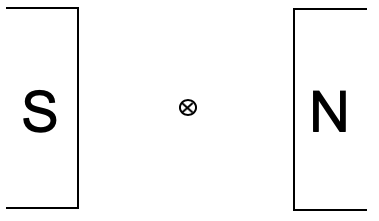
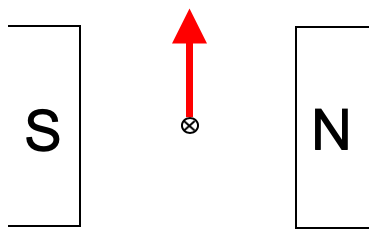
| Examples: Using Fleming’s Left Hand Rule to Determine the Direction of Force on a Current-Carrying Wire |
|---|
(a)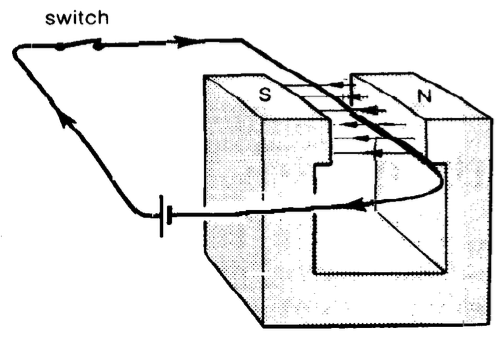
(b)
(c)
(d)
(e)
(f)
|
| << Back | Electromagnetism | Next >> |
| Links |
|---|
| http://www.youtube.com/watch?v=14SmN_7EcGY&hl=en-GB&gl=SG |