A light dependent resistor (LDR) is a resistor with resistance that depends on the intensity of light that falls on it. Its resistance decreases as the light intensity increases.
Silicon is one of the several semiconductor materials with resistance that varies with the amount of light falling on it.
The resistance changes because when light energy falls on it, extra
free electrons are released which makes it a better conductor.
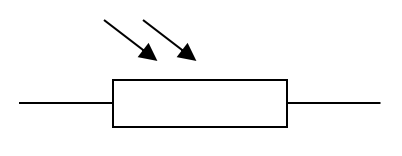 Symbol for an LDR.
Sometimes the symbol has a circle surrounding it.
| Example 1 |
|---|
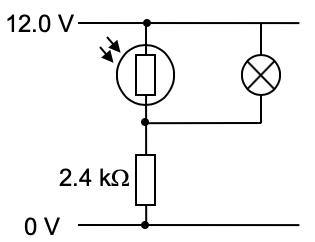
| The diagram shows how a LDR may be used in a circuit to automatically turn on a light bulb in the dark.
The LDR has a resistance of 5.0 kΩ in the dark but a resistance of 25 Ω when exposed to light. (a) Calculate the potential difference across the light bulb when the LDR is in the dark.
(b) Calculate the potential difference across the light bulb when the LDR is in the light. |
| Example 2 |
|---|
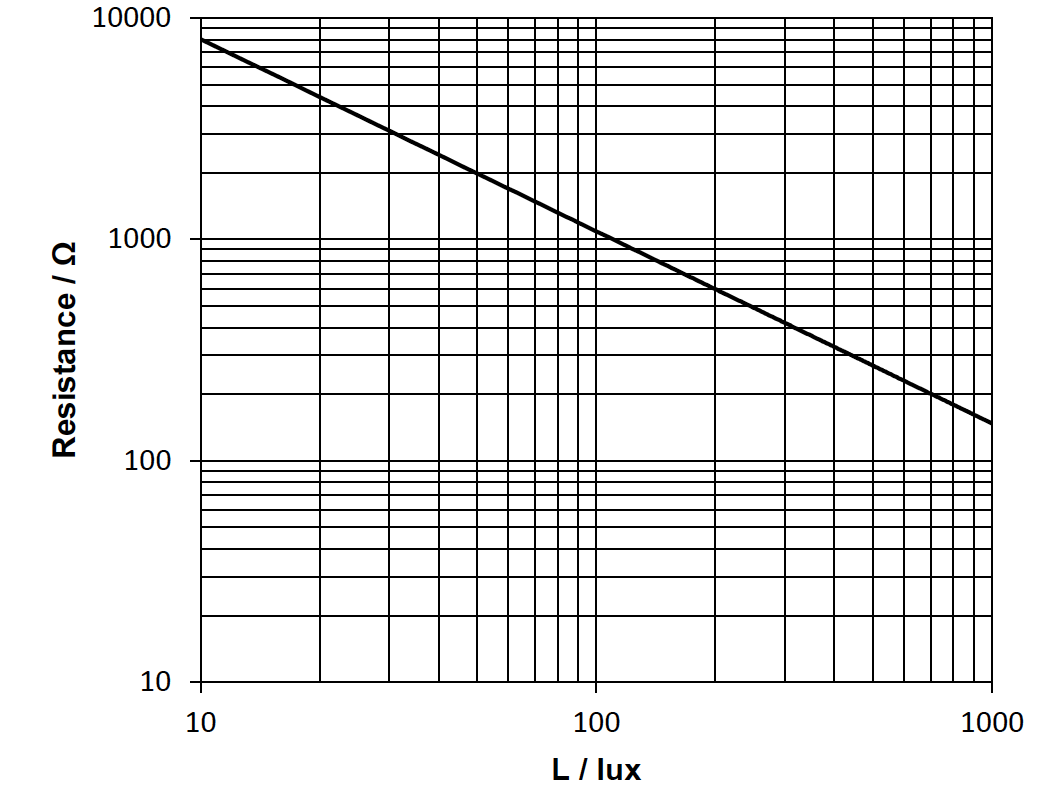
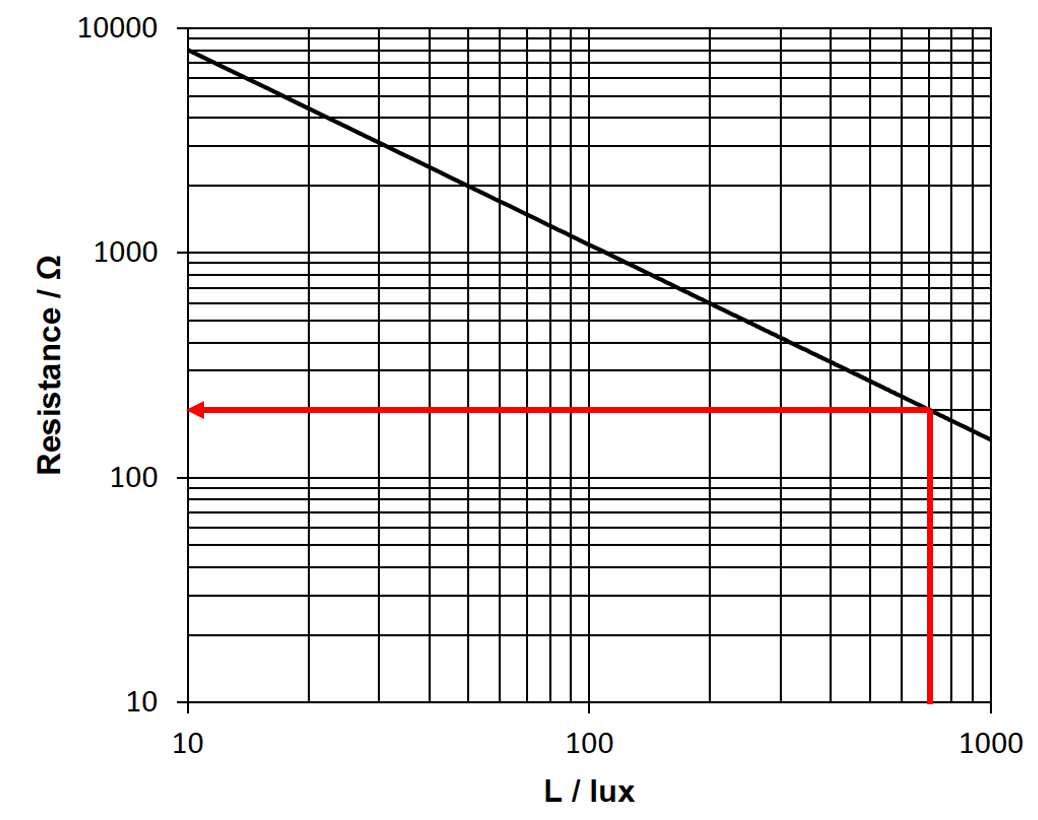
| The graph shows how the resistance of an LDR varies with brightness, L that is measured in lux.
(a) What is the resistance of the LDR when placed in Bright Light (700 Lux)
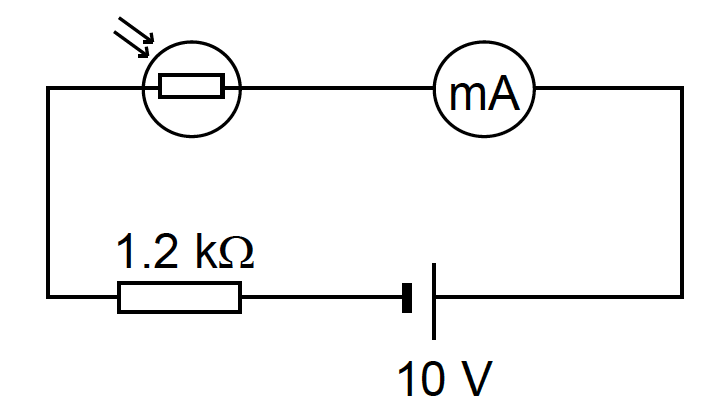
The LDR above is connected in series with a 1.2 kΩ resistor in the circuit shown:
(b) Determine the resistance of the above circuit under Bright Light.
(c) Determine the reading on the milliammeter. |
| << Back | D.C. Circuits | Next >> |