Diode is a semiconductor which only allows current flow in one direction.
It is a non-ohmic component hence does not obey Ohm’s law.
 circuit symbol for a diode
A common type of diode is a light-emitting diode (LED). These are used as a light source in more and more places as they have very long lifespans and are very energy efficient, turning most of the electrical energy into light (very little heat produced).
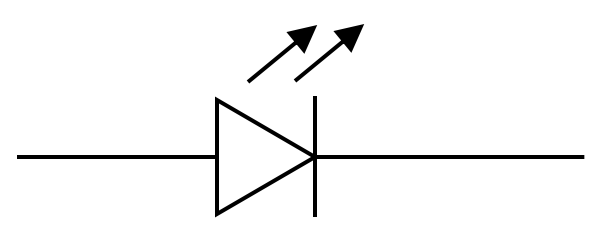 circuit symbol for LED
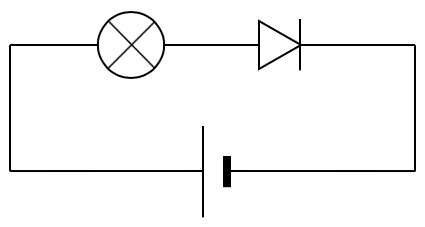
| Forward Bias |
|---|
|
We assume it has negligible resistance. The bulb will light up! |
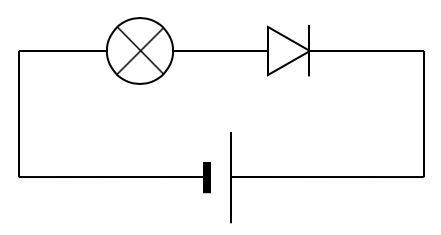
| Reverse Bias |
|---|
|
In the above circuit the diode is reverse biased and current will not flow through it. We assume it has infinite resistance. The bulb will not light up! |
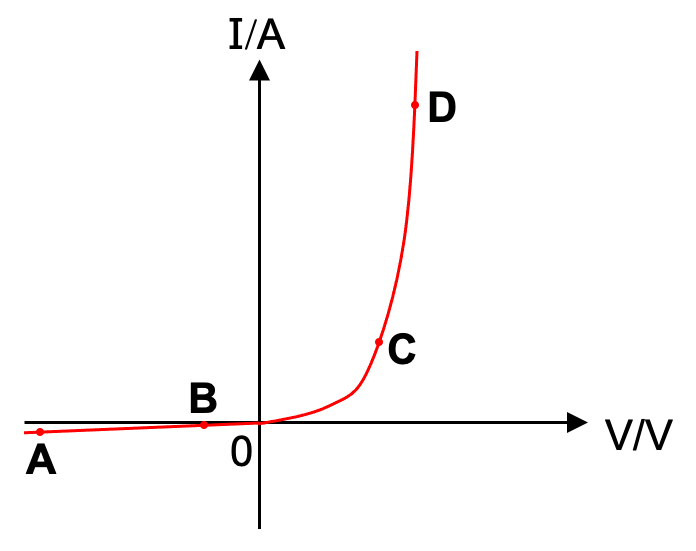
The I-V Characteristic Graph for a Diode
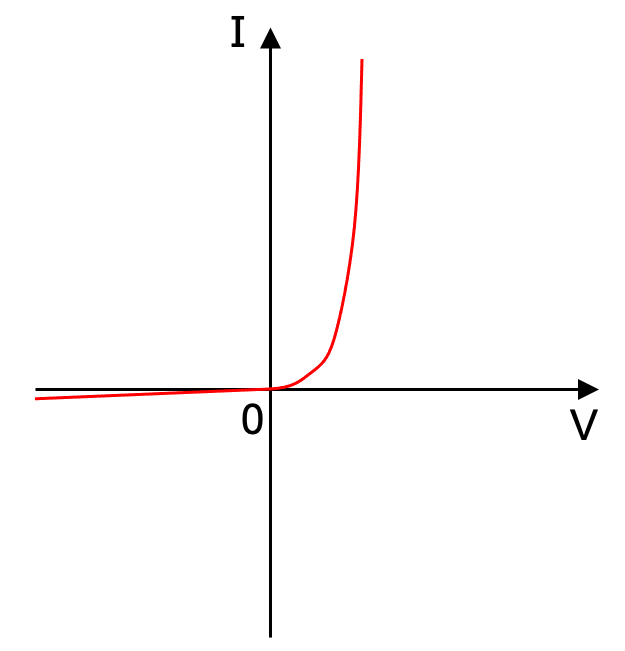
For negative p.d.s (i.e. reverse bias) the current is insignificantly small showing a very high resistance – we can approximate this to infinite resistance.
For positive p.d.s (i.e. forward bias) (at least after ∼0.5 V) the current becomes very large showing a very low resistance – we can approximate this to zero resistance.
| Example |
|---|
| At which of the following points does the diode have the lowest resistance?
|
Alternating Current & Direct Current
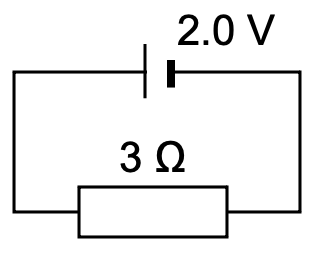
Direct Current (d.c)A battery provides a constant voltage, which will drive a constant current through a fixed resistor.
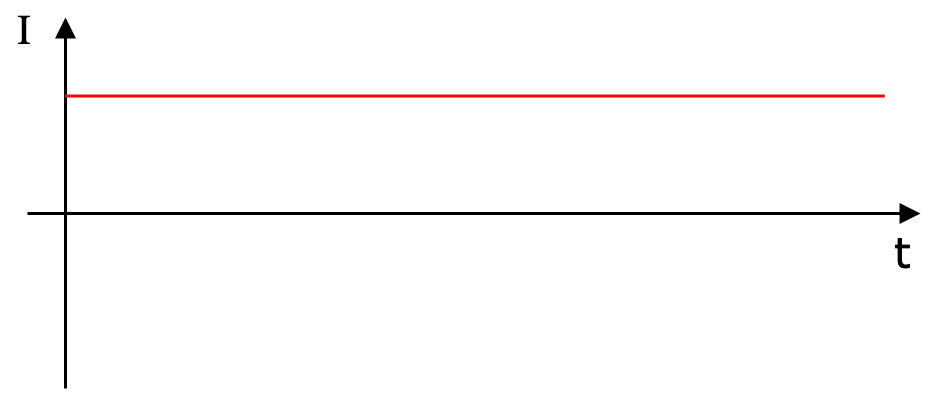
The voltage of the emf source remains at a constant value and does not change with time. The current-time graph for the current flowing through the 3 Ω resistor would look like this:
i.e. it is also constant and does not vary with time. This type of current is referred to as direct current or d.c.. |
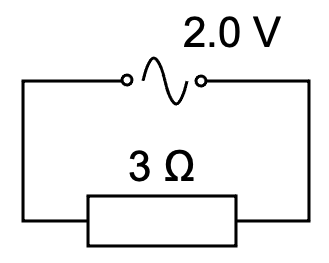
Alternating Current (a.c.)Let us now replace the battery with an alternating source:
The voltage of this source is actually constantly charging like this:
This alternating emf will cause an alternating current to flow through the circuit:
|
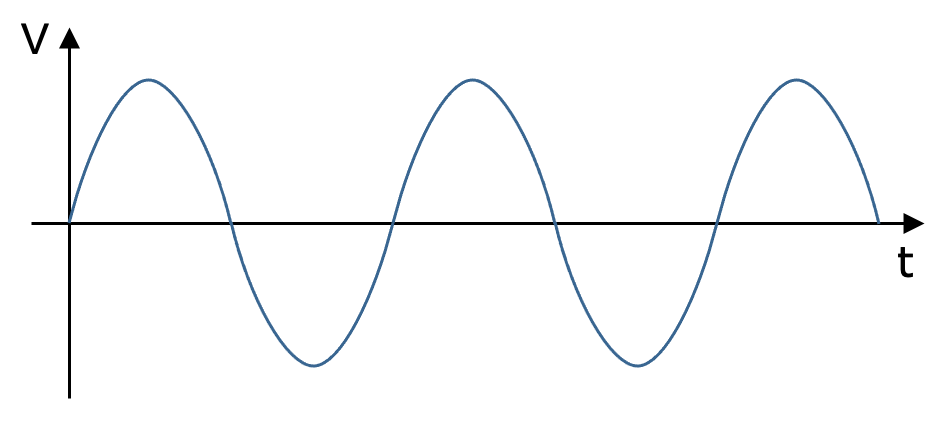
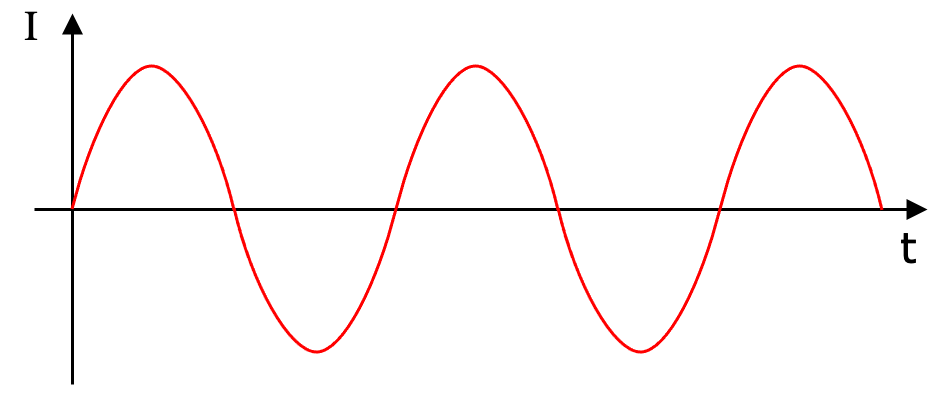
Diodes and Alternating Currents
| Alternating Current and Diodes |
|---|
| Consider an LED connected to an alternating current source.
Will the LED be lit? |
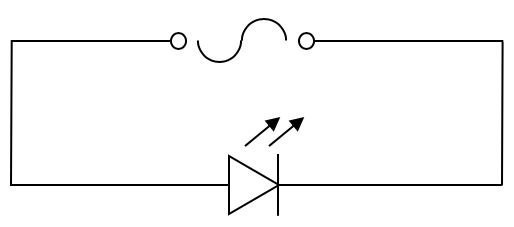
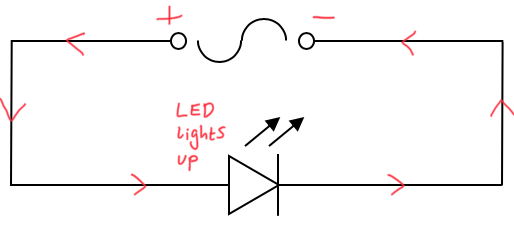
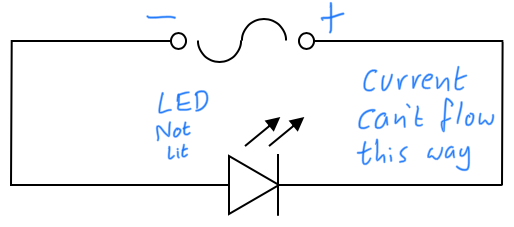
The current flowing through the LED will be similar to this:
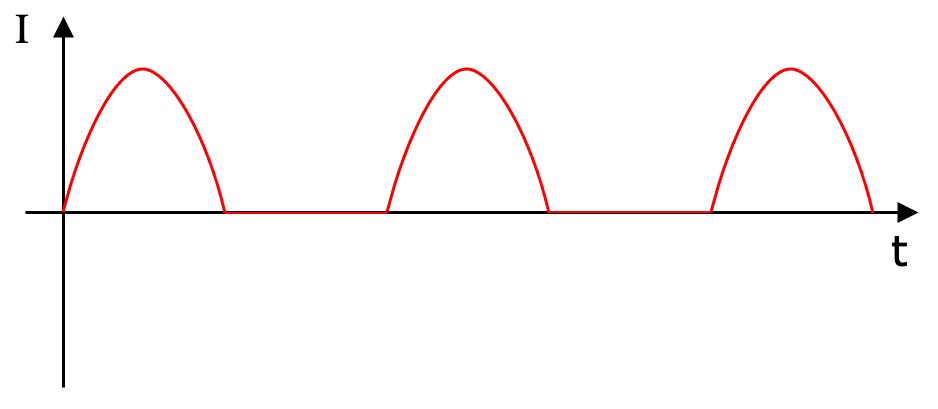 The resulting wave only has current flowing in one direction. But the current only flows for 50% of the time – for the other 50% the current is zero. This is said to have undergone half-wave rectification.
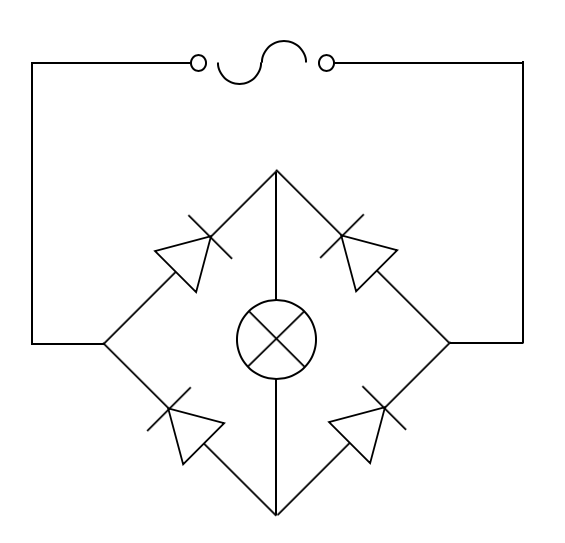
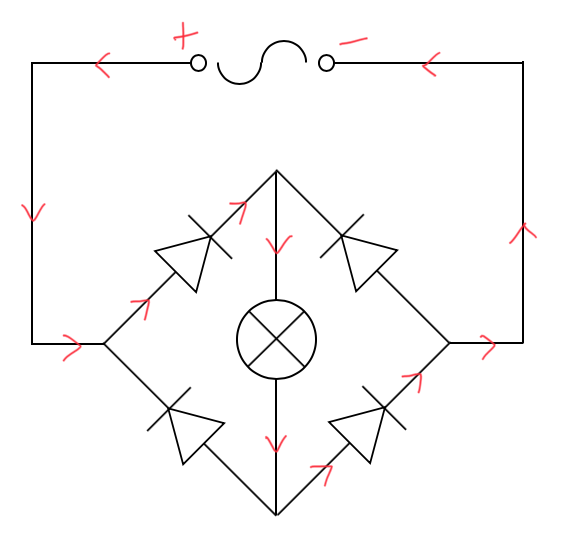
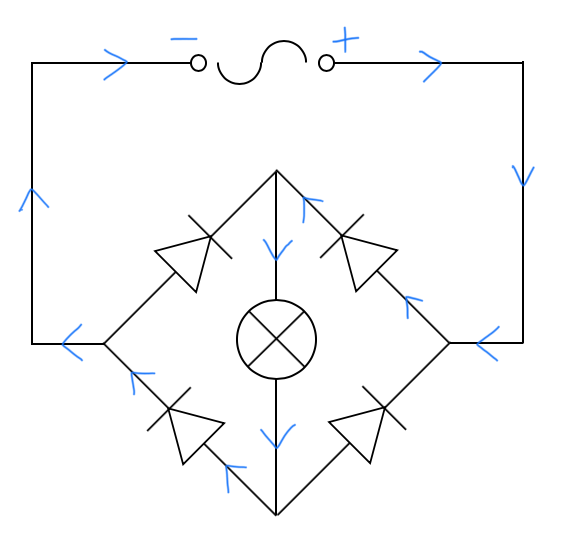
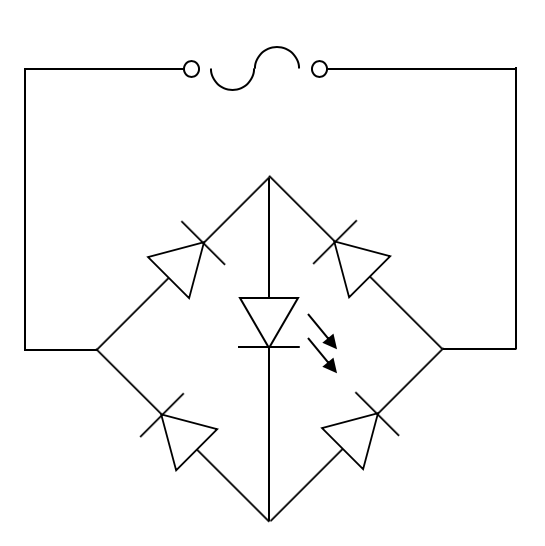
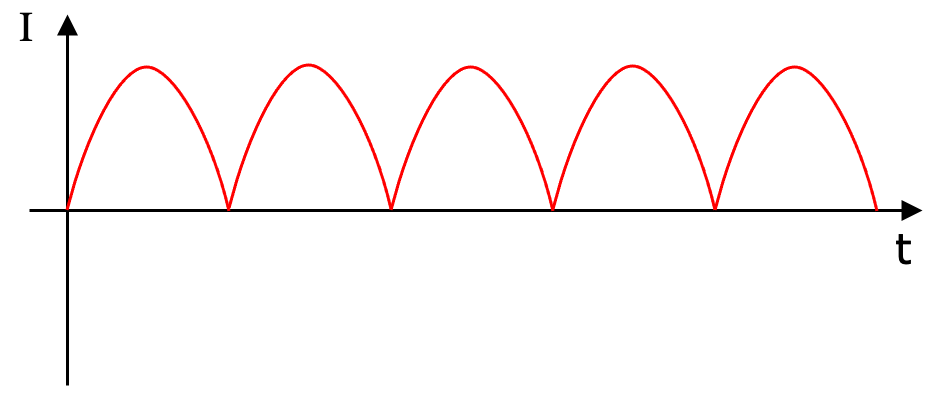
The current flowing through the centre LED would be like this:
| << Back | D.C. Circuits |