An electric circuit is a closed path through which charges (usually electrons) can flow continuously from one terminal of an electric source to the other.
Approach to Circuit Analysis
If a circuit is complicated or unusual, you may redraw the circuit to allow easy identification of parallel or series connections:
-
- Draw e.m.f. source (cell or battery) on a single branch (by itself).
- Draw all components in parallel branches.
- Identify components in series or parallel by tracing the path of the current from the e.m.f. source.
- Take note of whether switches are open or closed and if there are any short circuits.
- Redraw and simplify the circuit further if necessary to combine resistance of components.
| Example 1: Simplifying A Circuit Diagram |
|---|
| Simplify the following circuit:
|
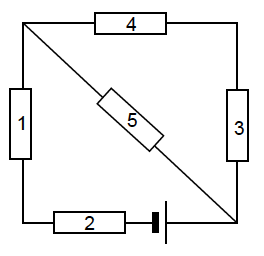
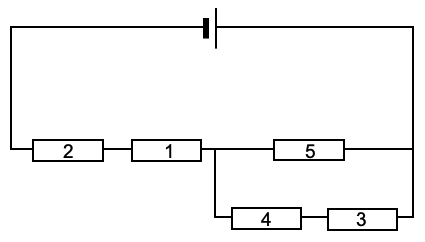
| Example 2: Simplifying A Circuit Diagram |
|---|
Simplify the following circuit: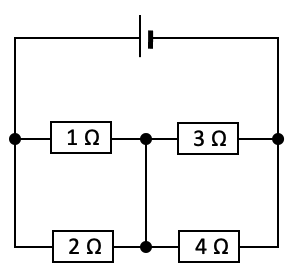
|
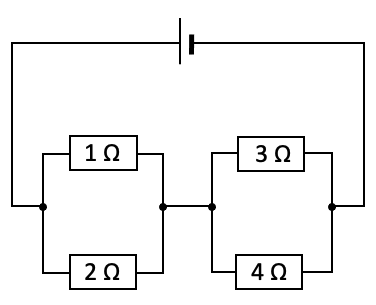
Removing ammeters and voltammeters also may make it easier to understand the circuit:
| Example 3: Simplifying A Circuit Diagram |
|---|
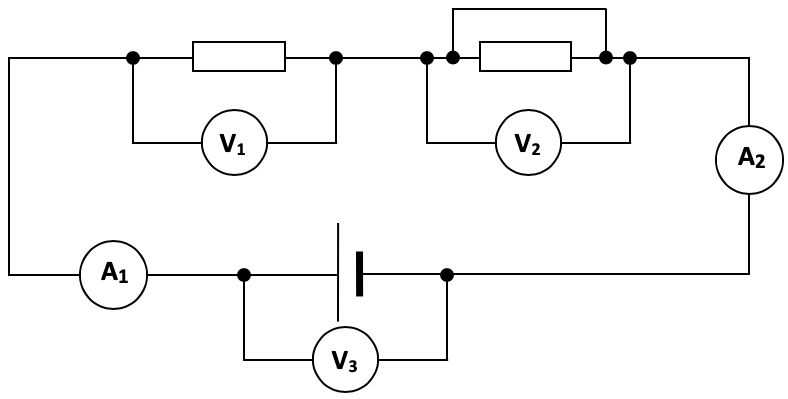
Simplify the following circuit: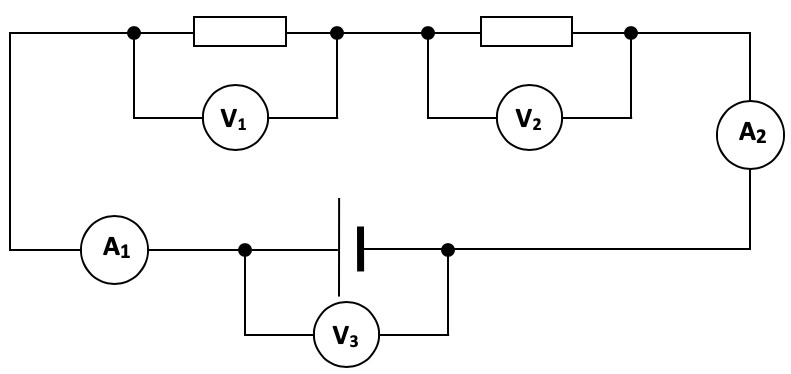
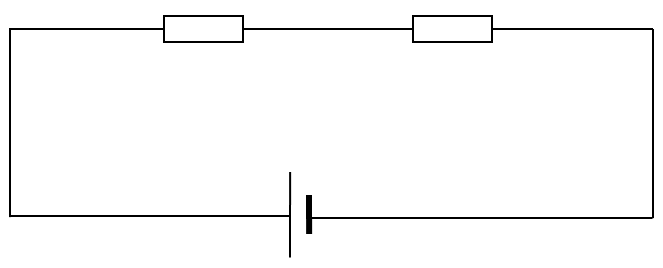
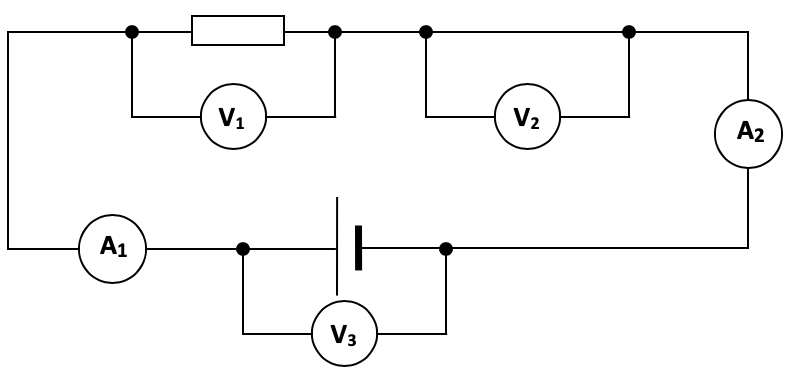
Removing all the meters we get:
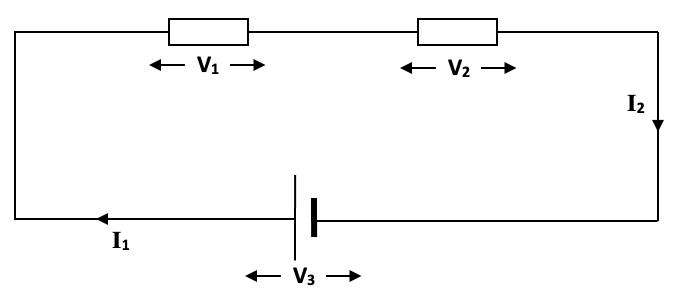
It is now very clear that this is just a simple series circuit with no components in parallel. If we are still interested to find the values on the meters, then marking the diagram like this can seem less confusing.
|
| Reminder |
|---|
| Ammeters and voltmeters don’t take an active part in the circuit. They are only there to get readings of the current and potential difference within the circuit. |
Open Circuit
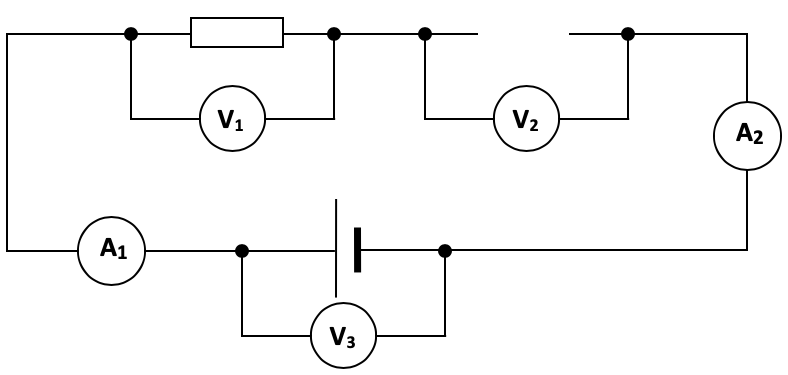
If there is no complete path for the electrons to move around the circuit then we have an open circuit.
Short Circuit
If a wire (assumed to have zero resistance) connects across a component then current will only flow through the wire and none will flow through the component.
We say there is a short circuit across the component. As this component has no effect on the circuit it can be considered to not be present in the circuit.
Circuit Symbols
You should be familiar with the basic circuit symbols. A summary of all of those that you are likely to come across is listed here.
| D.C. Circuits | Next >> |