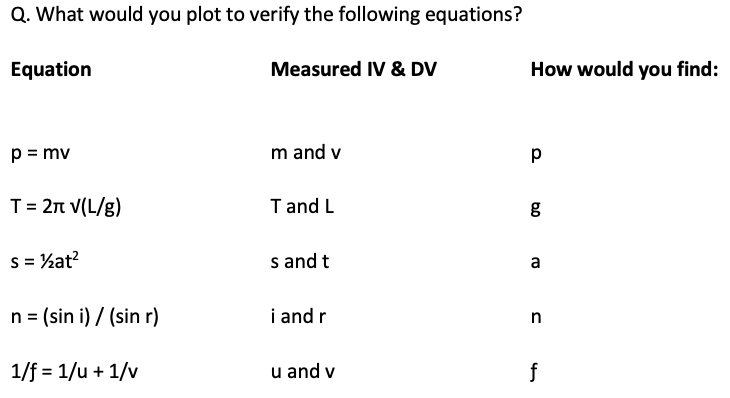
We are always trying to put the equation in to the form:
y = mx + c
a) p = mv
p/v = m
p(1/v) = m
m = p(1/v)
So to get a straight line graph we will plot m against 1/v
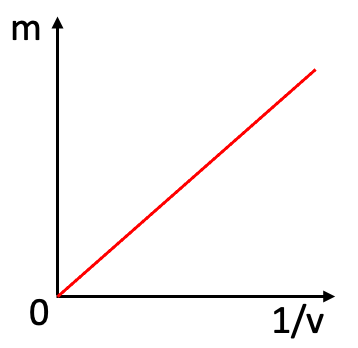
Gradient will be p.
c = 0
Therefore intercept will be (0,0)
b) T = 2π √(L/g)
T² = (4π²/g)L
So to get a straight line graph we will plot T² against L
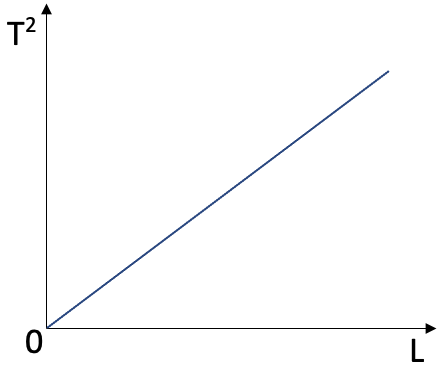
Gradient will be 4π²/g.
Thus g can be found from g = 4π²/(gradient)
c = 0
Therefore intercept will be (0,0)
c) s = ½at²
s = ½at²
So to get a straight line graph we will plot s against t²
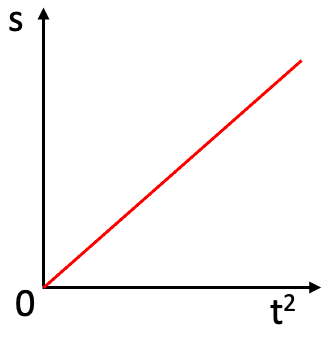
Gradient will be ½a
Thus a can be found from a = 2 × (gradient)
c = 0
d) n = (sin i) / (sin r)
(sin r)n = (sin i)
(sin i) = n(sin r)
So to get a straight line graph we will plot (sin i) against (sin r).
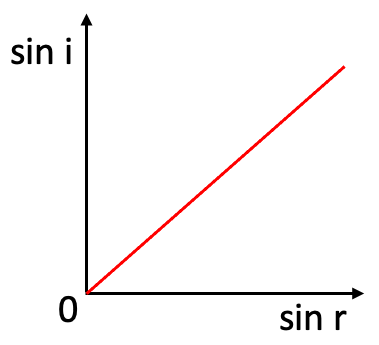
Gradient will be n.
c = 0
Therefore intercept will be (0,0).
e) 1/ƒ = 1/u + 1/v
(1/u) = (–1)(1/v) + (1/ƒ)
(1/u) = (–1)(1/v) + (1/ƒ)
So to get a straight line graph we will plot 1/u against 1/v
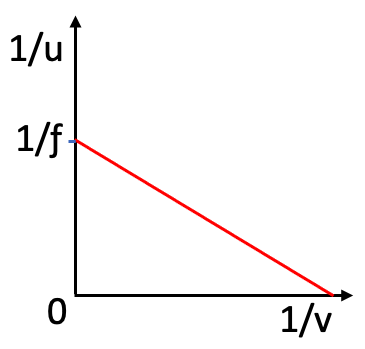
Gradient will be -1.
c = (1/ƒ)
Thus intercept will be (0,(1/ƒ))
ƒ can be found from ƒ = 1/(gradient)