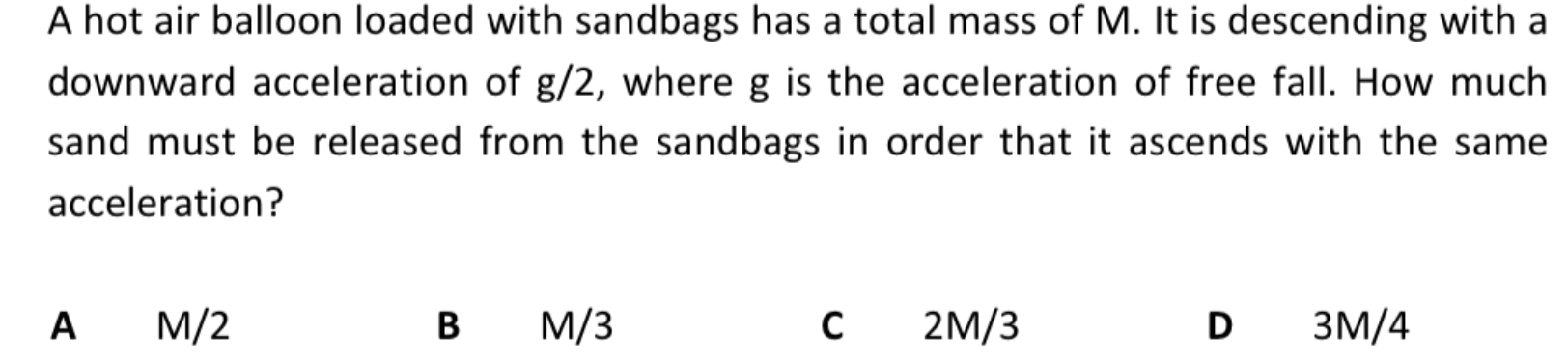
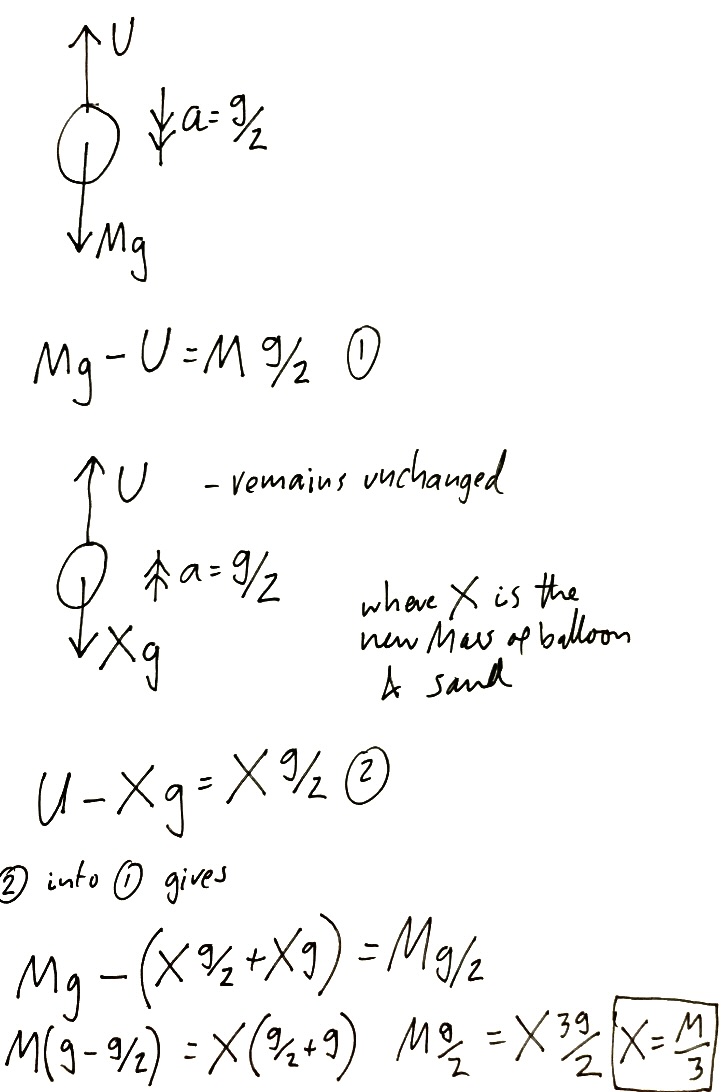
Therefore 2M/3 of sand must be released from the balloon.
Therefore 2M/3 of sand must be released from the balloon.
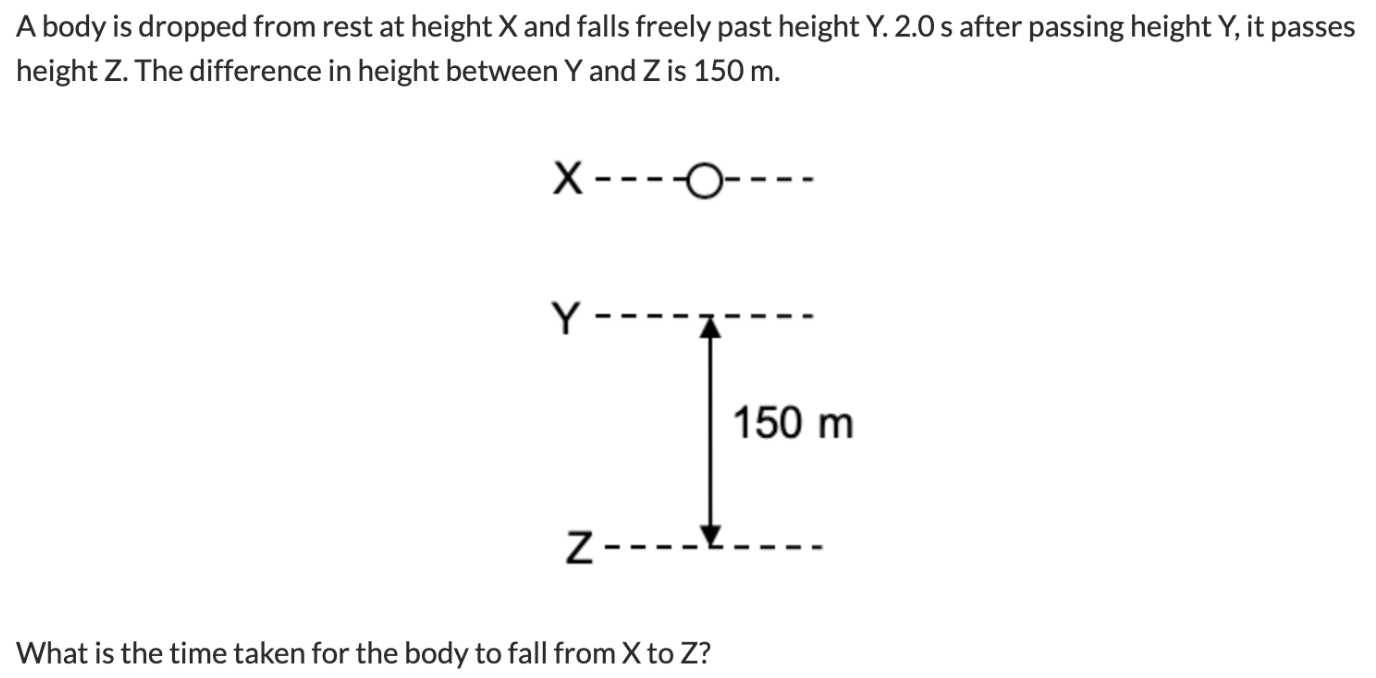
Body dropped from X at t=0 s
Passes Y at t = T, therefore passes Z at t = T+2
Between Y and Z we have:
s=150 m, t=2.0 s, a=10 m/s2, u=?
s=ut+½at²
150=2u + ½x10x2²
u = 65 m/s =>> T = 6.5 s
Thus time to fall from X to Z will be 6.5 +2 = 8.5 s
Click on the topic below to see worked examples within that area.
A converging lens is used to magnify a virtual image to four times it original size. Given then focal length of the converging lens is 20.0 cm, what is the distance of the object from the lens?
m=v/u
4=v/u => v=4u
But image is virtual, so v must be negative (ie. v = -4u)
1/f = 1/u +1/v
1/f = 1/u + 1/(-4u)
1/20 = (4-1)/4u
u = 15 cm
| In this question it is important that you recognise the image is a virtual image and thus v has to be a negative number. |

MCQ Q3:
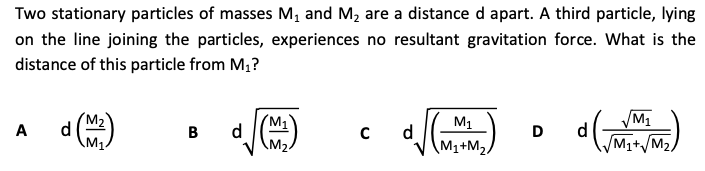
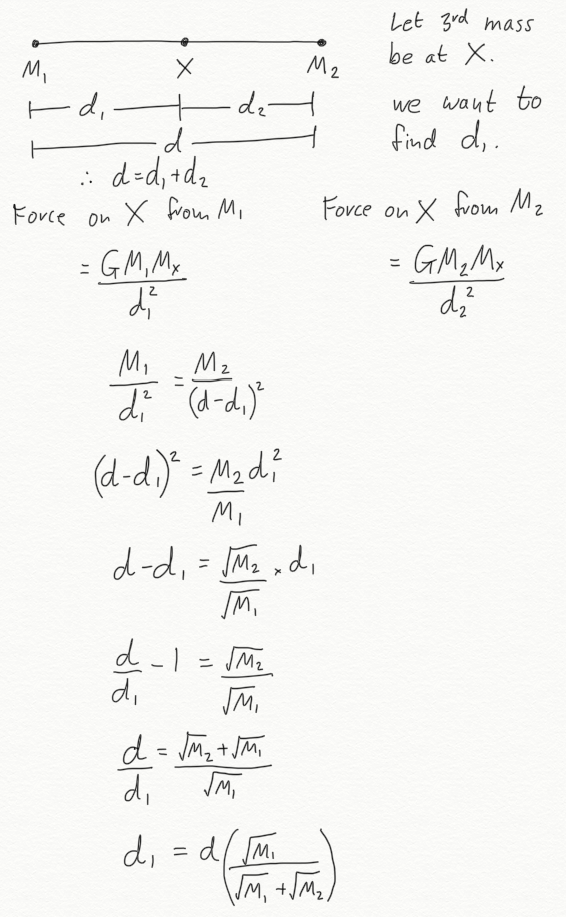
MCQ Q5:
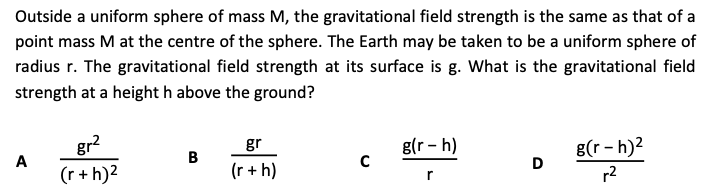
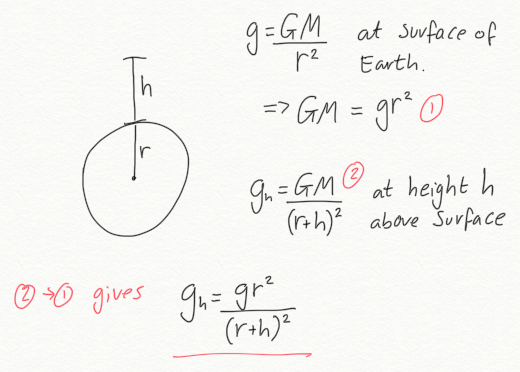
MCQ Q6:


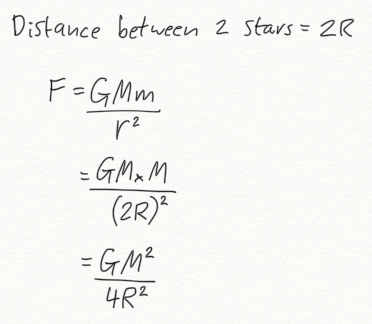
Thus the answer is C
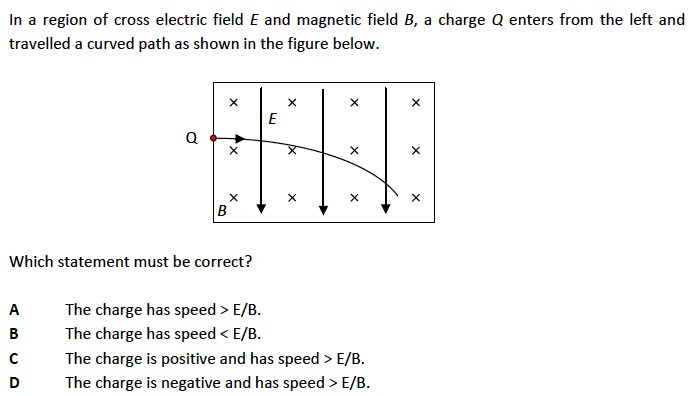
The magnitude of the force created by the electric field is given by
FE = Eq
FE = EQ (using the values in this question)
The magnitude of the force created by the magnetic field is given by
FM = Bqv
FM = BQv (using the values in this question)
Q could be +ve or -ve.
If Q is +ve, then:
This could still create the motion indicated in the diagram, however FM would need to be smaller than FE.
FM < FE
BQv < EQ
v < E/Q
If Q is –ve, then:
This could still create the motion indicated in the diagram, however FM would need to be larger than FE.
FM > FE
BQv > EQ
v > E/Q
Which is answer D